Dabbour: Jordan is a model of coexistence, one family, security, and safety
Dabbour: Christians are committed to Jordan and its leadership and reject violence
Follow Al Rai

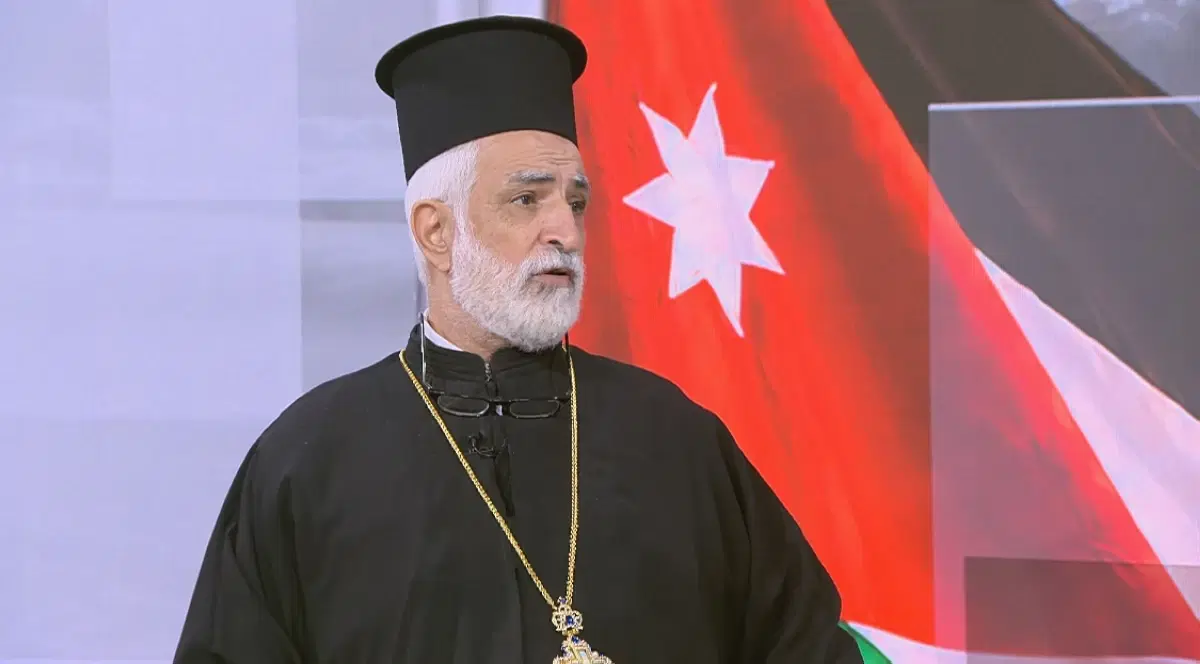
Dabbour: Jordan is a model of coexistence, one family, security, and safety
Dabbour: Christians are committed to Jordan and its leadership and reject violence
Dabbour: Jordan will remain an example of coexistence and national unity despite attempts to undermine its cohesion
Dabbour: Solidarity among Jordanians is manifested in offering condolences for the victims of the church
Dabbour: The participation of Muslims and Christians at the Sweifieh Church embodies the unity of Jordanians
Dabbour: Exploiting religion for political goals threatens the cohesion of societies
The Secretary-General of the Council of Church Leaders in Jordan, Economos Ibrahim Dabbour, said that the attack on the church in the town of Hamoud in Karak was a tragedy, emphasizing that the killing of innocent people is rejected religiously, socially, politically, and at all levels.
Dabbour added that Christians in Jordan do not fear terrorism or persecution, noting that Christianity has faced persecution since the first centuries of its inception but has remained steadfast, and that these incidents do not generate hatred, but rather strengthen commitment to faith, the church, and the homeland.
He stressed that Christians are committed to their homeland, their King, their army, and their security forces, and they reject violence and counter-violence, pointing out that hardships strengthen steadfastness in faith, love, giving, and openness to others.
Dabbour called on the government, Public Security, and the Ministries of Education and Awqaf, as well as churches, to intensify efforts to spread a culture of love, respect for others, and the rejection of intolerance, especially among children, warning against takfiri ideology and the exploitation of religious sentiments in a way that threatens national unity.
He affirmed that religious institutions bear a responsibility in consolidating national belonging and promoting coexistence, noting that the love of God is linked to the love of one's neighbor, whether Muslim, Christian, or Jewish.
He said that Muslims, Christians, and Jews lived together in Palestine before the Israeli occupation and the establishment of Israel, warning against the exploitation of religion to achieve political goals and undermine the cohesion of societies.
Know more about this story?Send us a tip
Ask about this report — answers stay grounded in its text.