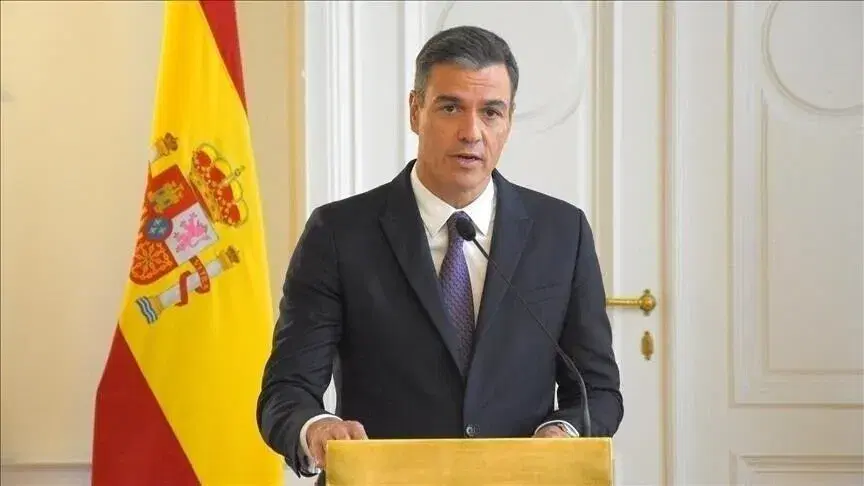
Sanchez explained that the rise of the far-right, supported by the appeasement of the traditional right, confirms the need for a leftist coalition government in Spain more than ever, to confront "reactionary forces" and ensure the preservation of citizens' rights and the welfare state.
The Spanish Prime Minister called on his party members not to be influenced by opinion polls indicating a decline for the party ahead of the general elections scheduled for next year, confirming that the party is focusing its goals and future vision on 2030.
For his part, the spokesperson for the Socialist Workers' Party in Parliament, Patxi Lopez, described the victory of the "Alternative for Germany" party as a "sad day for Europe," noting that the lead of a party that adopts pro-Nazi ideas places progressive parties before a double responsibility to stop this rise.
The "Alternative for Germany" party won the Saxony-Anhalt state parliament elections after receiving 43.8 percent of the vote, doubling its share compared to the previous elections.
Although the party did not obtain an absolute majority that would allow it to govern alone, the results confirmed the upward trend of the far-right in the country.