Salam: The state has no partner in the decision of war and peace in Lebanon
Agencies4 min read
Share
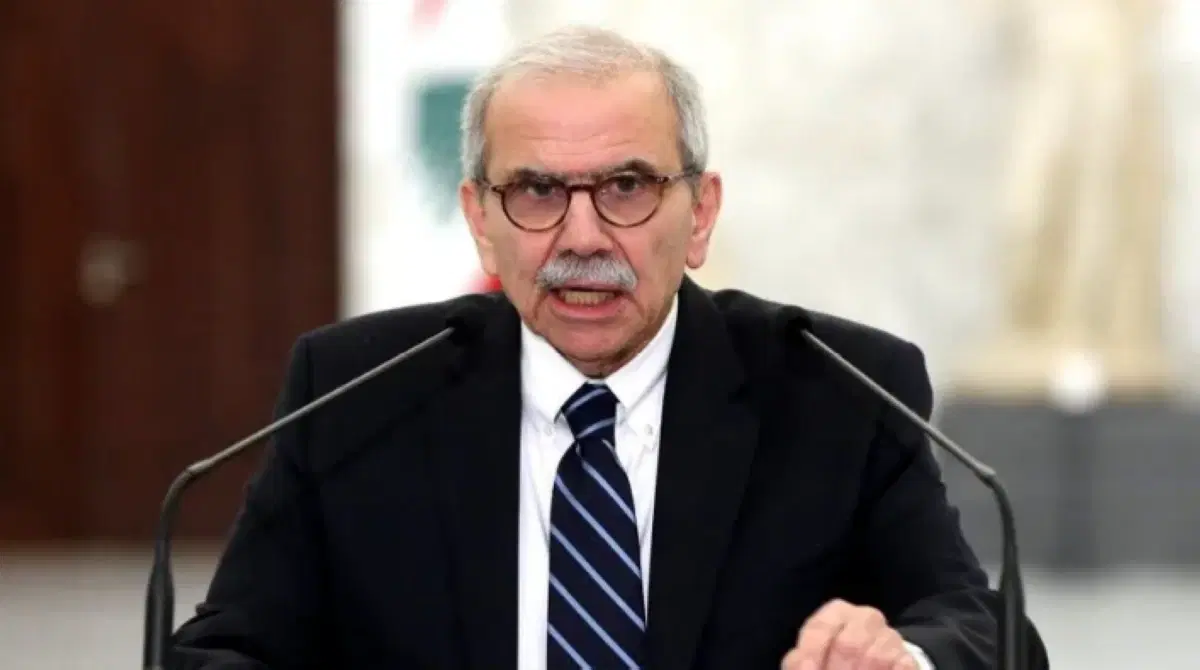
Lebanese Prime Minister Nawaf Salam said on Thursday that "the state has no partner in the decision of war and peace," stressing that restricting arms to the state constitutes "a foundation for its establishment, constitution, and laws."
This came during a cabinet session held at the Presidential Palace in Baabda, according to the official Lebanese National News Agency.
Salam said that "the exclusivity of arms in the hands of the state is fundamentally at the basis of the state's establishment, its constitution, and its laws," in addition to the Taif Agreement (1989) between Lebanese parties, UN Security Council Resolution 1701 (2006), and the declaration of cessation of hostilities concluded between Lebanon and Israel in November 2024.
He explained that the entities exclusively authorized to carry arms in Lebanon are: "the Army, the Internal Security Forces, General Security, State Security, Customs, and the Municipal Police."
He added that this principle was stated in the declaration of cessation of hostilities approved by the previous government, and his government reaffirmed it in its ministerial statement and subsequent decisions.
Salam continued: "The state has no partner in the decision of war and peace, and this is at the foundation of the country's constitution."
He pointed out that his government had previously affirmed this principle in its ministerial statement and in a number of its decisions.
Salam said that the reaffirmation of this matter comes "after all the costs the Lebanese people have incurred as a result of unilaterally dragging the country into wars from outside constitutional institutions."
He noted that the government had requested the army to prepare a plan to implement the principle of the exclusivity of arms in the hands of the state, and that the Council of Ministers welcomed it in September 2025, before confirming in March 2026 the necessity of completing its implementation in all Lebanese regions.
He stressed that "no one, whoever they may be, has the capacity or authority to reconsider this other than the Council of Ministers."
Salam also warned against storing or transporting weapons outside the official authorized entities, considering that this does not only constitute a departure from laws and government decisions, but is "a danger to public safety and threatens the security of citizens."
He emphasized that such practices require "security follow-up and judicial prosecution" and the imposition of legally stipulated penalties against their perpetrators.
Hezbollah clings to its weapons and insists that it is a "resistance movement" against Israel, which has occupied areas in southern Lebanon, some for decades.
Since last March 2, Israel has been waging an aggression on Lebanon, which has left more than 4,300 dead, 12,400 wounded, and more than a million displaced, according to Lebanese authorities.
In another file, Salam said that the government has made "significant progress" in its discussions with the Qatari side regarding an offer to address the electricity crisis in Lebanon.
He explained that the offer includes rehabilitating, developing, and modernizing electricity production infrastructure, according to a design-build-operate-transfer (DBOT) model, provided that the Qatari side undertakes the financing, implementation, and operation without imposing any upfront investment costs on the Lebanese treasury.
He added that the project will be presented to the Council of Ministers after its technical aspects are completed, announcing his intention to call for a cabinet session dedicated exclusively to the electricity file within the next two weeks.
On October 16, Qatari Prime Minister Mohammed bin Abdulrahman announced from Beirut the establishment of a comprehensive framework for cooperation with Lebanon in the energy sector.
The framework includes a major investment project to support Lebanon's economic stability and provide radical solutions to the chronic power outage crisis.