Safadi: Aid Expires on Shelves Due to Denial of Entry into Gaza
Amman3 min read
Share
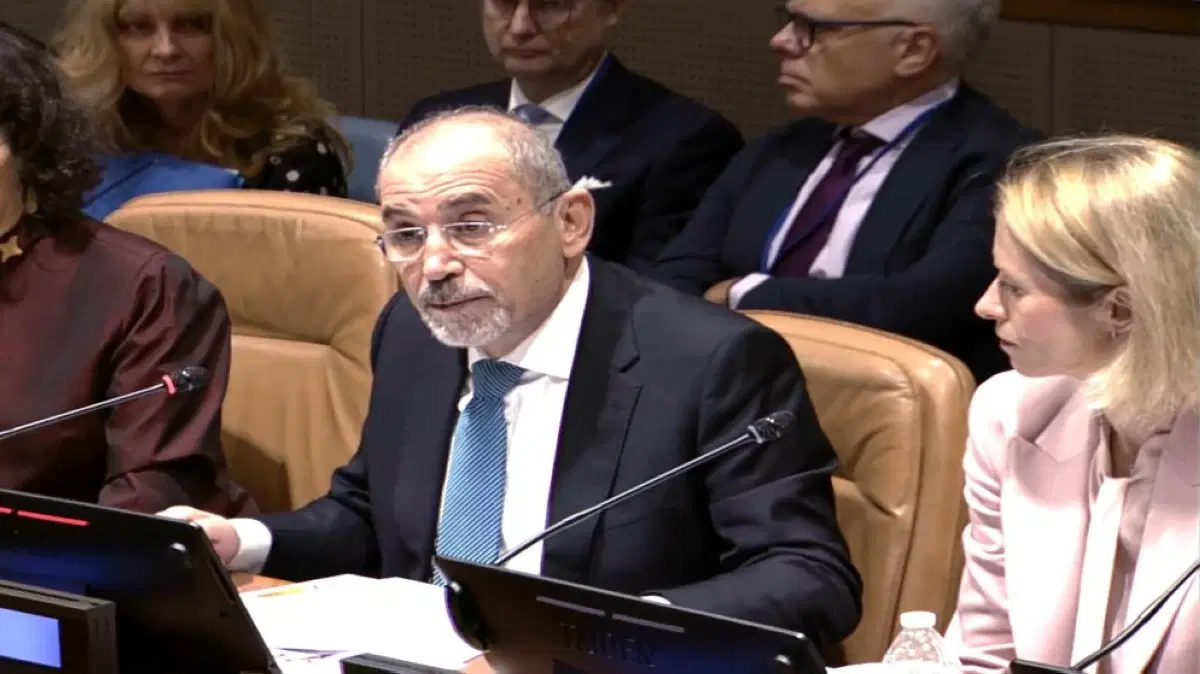
Deputy Prime Minister and Minister of Foreign Affairs and Expatriates Ayman Safadi said that "the time has come to act", using the tools provided by international law to hold violators of international and humanitarian law accountable and ensure respect for it.
Safadi participated in a panel discussion titled "Humanitarian Diplomacy to Uphold International Humanitarian Law", organized by the European Union and Ireland, on Monday, with Jordan co-sponsoring alongside the African Union, Brazil, and Canada.
Safadi said that the problem does not lie in the lack of sufficient international laws, but in the absence of accountability, noting that "violators of international law escape punishment once, twice, and then it becomes routine".
He added that the international community finds itself in a reactive position, calling for effective measures provided by international law rules to address violations and ensure people's access to their human rights to dignity, food, security, and education.
Safadi spoke about the situation in Gaza, saying that about two million people live in a "land barren of needs", pointing to the suffering of children, food shortages, and the destruction of hospitals.
He explained that 92% of housing and facilities in Gaza were damaged, 17 out of 37 hospitals were destroyed, while 20 hospitals operate partially, noting that 728,000 children do not receive any form of formal education.
Safadi said that the problem is not the inability to provide aid, clarifying that aid is available and the international community has done its best to provide it, adding that Jordan has worked as a channel for delivering aid in partnership with international entities.
He emphasized that international humanitarian law is "sufficient", and the shared humanitarian values are clear, adding that what is needed is to use the tools provided by international law, hold violators of international and humanitarian law accountable, and take effective measures to ensure respect for it.
He said that what applies to Gaza also applies to many other conflicts, considering it "incomprehensible" that the international community meets year after year to diagnose situations and provide aid, while the measures remain below the level of addressing those realities and ensuring people's access to dignity, respect, and hope.
He added that Gaza is a "tale of suffering unfolding before our eyes, and yet it continues to deteriorate", noting that people continue to suffer, while the international community continues to describe the situation and provide tools and aid without using the tools of international law to hold violators accountable and compel them to adhere to their commitments.
He pointed out that aid "expires on the shelves in the headquarters of United Nations organizations", "simply because Israel does not allow the entry of that aid into Gaza".
Safadi stressed that the meeting is "extremely important" in conveying the message that the international community, despite its inability to change the reality of the suffering experienced by many people, especially in Gaza, is "aware of the problem and determined to move forward".
He said: "We will at least name the violators of the law and work together, and hopefully collectively, to deal with these terrible realities, restore hope to the people, and put food on the tables of Gaza's children".
He affirmed that Jordan will continue to do everything it can to work with various parties to ensure that aid reaches those in need and to continue emphasizing the need to respect international humanitarian law.
Safadi concluded by emphasizing that the question is whether the international community will be content with issuing "another statement of sympathy" or will use the "effective tools provided by international law if the political will to apply them is available".