Safadi: 21 Earthen Dams in Aqaba with a Capacity of 6.5 Million Cubic Meters
To Enhance Protection Against Floods
Amman4 min read
Share
Believing in its social and economic responsibility and keen on enhancing the components of sustainable development in Aqaba Governorate, the Aqaba Development Company is working on implementing a set of precautionary measures within an integrated system aimed at raising the level of safety and protecting residents, visitors, establishments, and infrastructure from the risks of floods and sudden torrents.
These measures come in light of the topographical and geological nature of Aqaba Governorate, the surrounding basins, and the thunderstorms that the region experiences, which may cause sudden water flows, making investment in preventive infrastructure a fundamental part of protecting the city and enhancing its ability to face the effects of climate change.
These measures are of particular importance in a city that is one of the most prominent tourist and investment destinations in the Kingdom, where maintaining the safety of residents and visitors and protecting establishments, projects, and infrastructure is a fundamental factor in providing a safe and sustainable tourist and investment environment.
The CEO of the Aqaba Development Company, Hussein Al-Safadi, said in an interview with Al-Rai that the company has implemented 21 collective earthen dams within the protection system, distributed as 8 earthen dams in the Tatteen Al-Sabab basin, 10 dams in the Yatim Al-Sabab basin, and 3 dams in Wadi Al-Jasiya, with a total capacity of about 6.5 million cubic meters.
Al-Safadi explained that the importance of these facilities was clearly evident during the rain storm that Aqaba experienced in December last year, during which the maximum cumulative rainfall reached about 42 mm, where the earthen dams managed to hold back water amounting to about half of their capacity, equivalent to about 3 million cubic meters.
He confirmed that holding these amounts of rainwater contributes to reducing the speed and rush of torrent water towards inhabited areas and vital establishments, thereby reducing the risks resulting from sudden floods and protecting lives, properties, and infrastructure.
Al-Safadi pointed out that the geographical nature of Aqaba makes prior preparation and raising the level of readiness a necessity, especially in light of the phenomenon of climate change and the recurrence of heavy rainfall and sudden floods, noting that the dam system is among the precautionary measures aimed at raising the safety factor in Aqaba and enhancing its ability to deal with these circumstances.
Dam Waters Support Agriculture, Enhance Groundwater Storage, and Provide an Environment for Migratory Birds
Al-Safadi explained that the importance of earthen dams is not limited to the preventive aspect, but extends to economic, social, and environmental dimensions, as some members of the local community in the Yatim and Tatteen areas benefit from the stored water for irrigating crops using pumps, while others use it for livestock breeding purposes.
He added that the Aqaba Special Economic Zone Authority has recently worked to attract funded agriculture projects around the earthen dams, enhancing the use of accumulated water and supporting agricultural activities in the surrounding areas.
He pointed out that holding rainwater behind the dams also contributes to recharging groundwater storage, in addition to providing a temporary aquatic environment that attracts migratory wild birds, adding an environmental dimension to the system.
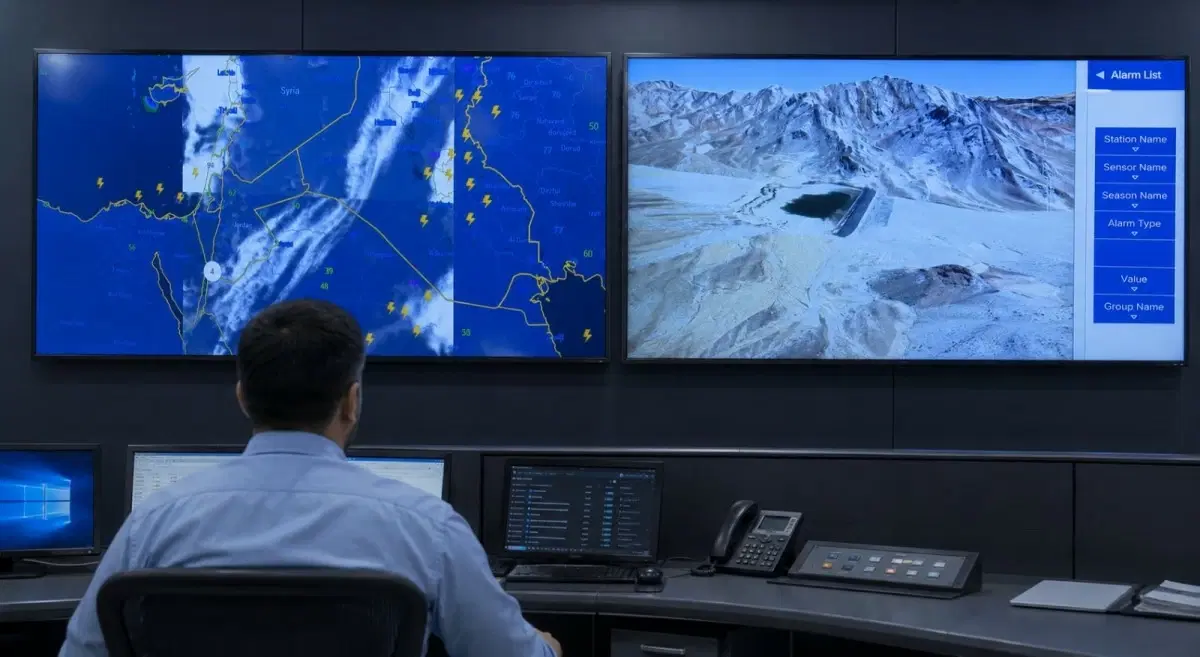
Al-Safadi confirmed that the company continuously monitors the condition of the earthen dams, conducting field visits after the winter seasons to ensure their safety, while currently carrying out maintenance and rehabilitation work on part of the Yatim dam system that needs maintenance.
He pointed out the presence of a guard from the local community who was specifically employed to monitor the dam system continuously, enhancing field follow-up and quick response to any observations, in addition to conducting periodic maintenance of the monitoring systems every three months to ensure their efficiency and continuous operation.
Al-Safadi emphasized that investing in preventive infrastructure is part of the economic and social responsibility of the Aqaba Development Company, confirming that protecting people, establishments, and reducing flood risks form the basis for maintaining the sustainability of tourism and investment activities and enhancing the confidence of investors and visitors in Aqaba as a safe city capable of facing climatic and natural challenges.