Rainwater harvesting from rooftops: Every drop becomes a resource for life and production
Amman6 min read
Share
Domestic water harvesting through collecting rainwater from rooftops and storing it in wells emerges as a true lifeline and a strategic choice that helps alleviate financial burdens on citizens, reshapes climate change adaptation, and achieves water abundance from atop homes and residential neighborhoods.
Rooftop rainwater harvesting is considered one of the best ways to help families cut water costs, encourage home gardening, and contribute to meeting personal needs while improving domestic life quality and general hygiene.
Water and agriculture experts, speaking to the Jordan News Agency (Petra), called on citizens to capitalize on rooftops during the winter season to store water, emphasizing the importance of preparing the requirements for this harvesting prior to the onset of winter, whether by digging wells or connecting rooftop drainage to ground collection tanks.
They added that limited water resources and fluctuating rainfall pose ongoing challenges to the water and agricultural sectors in Jordan, as efforts aim to maximize rooftop utilization and turn rainwater from a seasonal resource into one that can be harnessed to meet water needs year-round.
The Ministry of Water and Irrigation, in cooperation with the United Nations Development Programme (UNDP) and the Food and Agriculture Organization of the United Nations (FAO), has commenced the implementation of construction packages for the "Building Resilience to Climate Change in Jordan" (BRCCJ) project, which focuses on deploying rainwater harvesting systems at the household and farm levels, funded by the Green Climate Fund (GCF).
The comprehensive financing and preparatory framework for the project was first launched in late 2022 to span seven years, by providing grants to citizens in the areas most affected by climate change across four key governorates within the Dead Sea basin—Karak, Madaba, Tafilah, and Ma'an—to construct wells for storing rooftop rainwater and provide water storage wells.
The Ministry of Agriculture is also working on implementing household water harvesting projects through rainwater collection wells, aiming to provide an additional water resource that helps meet part of the agricultural sector's water needs and supports the requirements of farmers and farms, particularly during periods of rainfall deficit and water need.
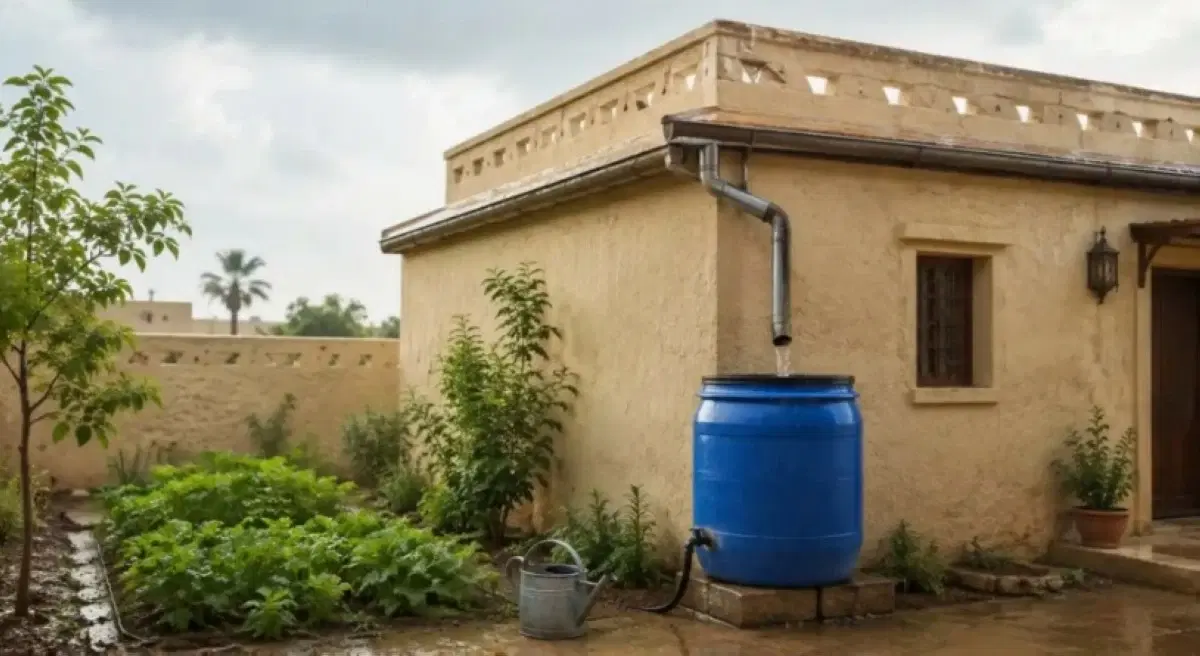
The concept of these projects is based on an integrated system that starts with collecting precipitation on the rooftops of houses and farms, directing it through gutters and pipes into rainwater collection wells, and subsequently storing, managing, and utilizing it according to agricultural needs.
The significance of the project is not limited to providing water, but extends to supporting water resource management in the agricultural sector and linking harvested water with crop needs and irrigation processes. This aids in coping with periods of water scarcity, supporting the continuity of agricultural activity and production, and enhancing the efficiency of utilizing available water resources.
Deputy Director of the Water and Soil Directorate at the National Agricultural Research Center, Dr. Hassan Al-Khreisat, stated that digging wells is an utmost necessity for citizens living in open, rural, and Badia areas where well digging is feasible, in order to secure a strategic water reserve. He urged urban residents living in apartment buildings to partner and set up ground tanks—which can easily be made of plastic—to collect rooftop water from buildings for use by building caretakers for general building cleaning.
He called for not connecting household drainage pipes to the sewage network, but rather collecting the water to make use of it, pointing to the importance of promoting the concept of partnership among apartment residents and raising their awareness of the necessity of water harvesting and managing it for cleaning both inside and outside the building.
Regarding criteria for establishing and supporting storage wells, Assistant Director of the Capital Agriculture Directorate and Head of the Projects and Rural Development Department at the directorate, Eng. Amin Al-Sa'oub, affirmed that selecting the location of the storage well, the catchment roof area, precipitation amounts, collectible water volume, beneficiary needs, intended water use, and targeted agricultural use are criteria that help determine the appropriate storage capacity of the well.
He explained that the efficiency of the well is linked to the soundness of the collection and conveyance system, including gutters, pipes, and water channels, as proper design and implementation help minimize losses before rainwater reaches the well and maximize the volume of utilized water. Furthermore, the integration of system components from the catchment point to storage constitutes a fundamental element in achieving project efficiency and linking the available water resource to the farm's actual needs.
Al-Sa'oub stressed that project sustainability does not end with construction; it requires maintaining and servicing the well through regular inspection and cleaning, monitoring the collection and conveyance system, ensuring the integrity of the well, and mitigating leaks and potential contamination sources. He added that planning, implementation, and maintenance are interconnected links that ensure the rainwater harvesting well remains a usable and beneficial resource, supporting the project's continuity in serving the agricultural sector.
The agricultural value of stored water becomes even more apparent during periods of rainfall deficit or delay, according to agricultural engineer Yazeed Al-Raqqad, who added that the value of storing rooftop water becomes strongly evident during phases of acute water demand in the summer, whether for trees or crops.
He explained that determining crop water requirements and growth stages helps regulate irrigation timing and amounts, ensuring stored water is used when genuinely needed rather than being consumed randomly or daily. He called for considering crop type, soil nature, climatic conditions, and irrigation methods to help farmers boost water use efficiency and benefit from the available volume for the longest possible period, thereby supporting water management at both farm and agricultural sector levels.
According to plant production engineer Enas Al-Jbour, rooftop water harvesting manifests its true impact when the rainwater collection well transitions from a mere water storage tool into an actual on-farm resource. She added: "A farmer can integrate water harvesting into irrigation and production operations during times of need, tailoring it to the farm's reality and requirements."
She believes providing an additional water source can alleviate pressure on groundwater wells that are being depleted by daily extraction to cover citizens' needs. Such harvesting also helps farmers during periods of rainfall shortages. She explained that managing this water according to crop needs, farm conditions, and domestic demands becomes part of the production system, improves home living standards, and mitigates the severity of damage occasionally caused by water shortages or delayed deliveries to homes.