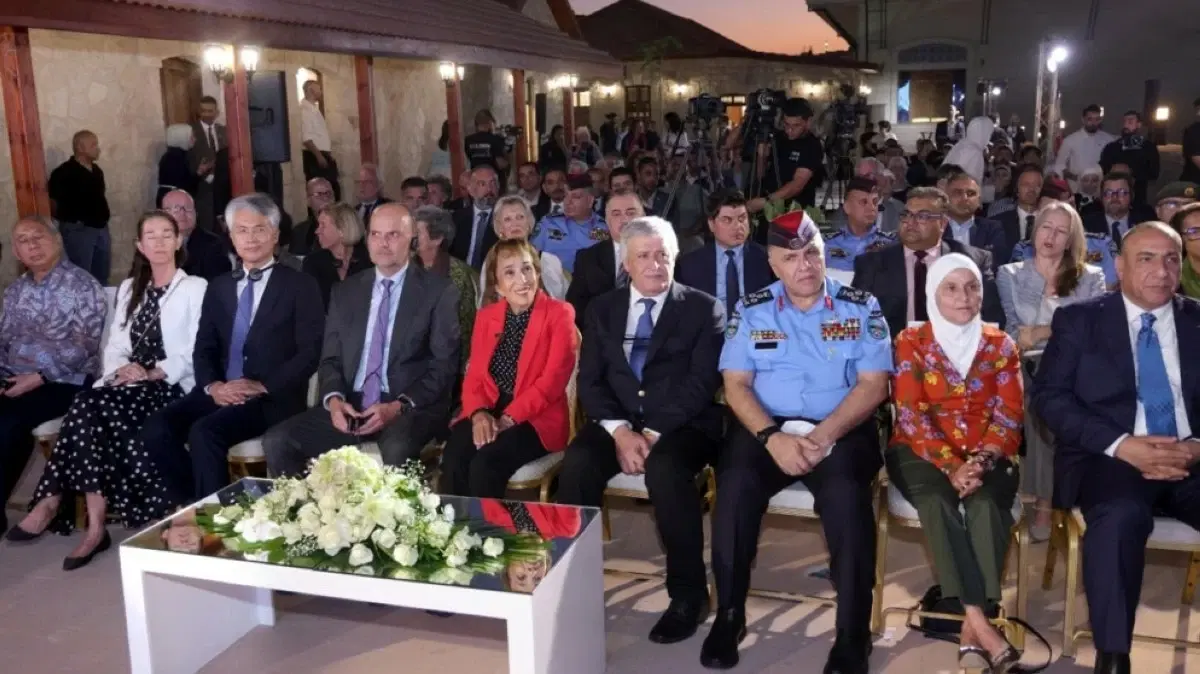
Her Highness added, in the presence of Minister of Transport Nidal Al-Qatamin and a number of ambassadors, that the unknown fate of a loved one is one of the harshest human experiences; it is an experience whose weight is difficult to describe and whose depth is only understood by those who have lived it, amidst the psychological, social, and economic challenges that may burden families' lives for many years.
The Princess said that by commemorating this occasion, we remember all those who are absent yet remain present in the hearts of their families despite their unknown fate, affirming solidarity with the families who continue to live with the pain of waiting and loss.
Her Highness noted that women bear the greatest burden of loss in most cases, which places additional caregiving and breadwinning responsibilities upon them, reflecting resilience and the strength to continue living and holding onto hope.
The Princess pointed to the importance of sustainable support for the families of the missing, referring to the "Accompaniment" program implemented by the ICRC and the continuous support it provides to these families to assist them in all circumstances.
For his part, the Head of the ICRC Delegation in Jordan, Yann Fridez, said that the pain of not knowing the fate of a loved one is a wound that does not heal. He affirmed the committee's commitment to helping the families of the missing reach the answers they deserve about their loved ones and providing the support they need to overcome their suffering.
Fridez highlighted the committee's role in supporting Syrian families residing in Jordan who have missing relatives in Syria, by helping them learn the fate and whereabouts of their missing loved ones, providing necessary information, and offering psychological and social support to help these families deal with the legal and administrative challenges resulting from the loss of a family member.
The event included a live sand art performance by artist Maher Al-Shuaibi, which embodied the emotional journey experienced by the families of the missing, in a visual narrative experience that conveyed the suffering of waiting and the uncertainty these families live through.
It also included an interactive and artistic exhibition to explore the journey of the families of the missing through personal testimonies, photos, and visual materials, aimed at raising awareness about the challenges associated with living in a state of uncertainty and reflecting the resilience and adaptability of the families of the missing despite not knowing the fate or whereabouts of their loved ones.
The "Mozaika" choir also presented a musical performance featuring a collection of songs that addressed the issue of the missing, highlighting the profound human impact of losing a loved one without knowing their fate.