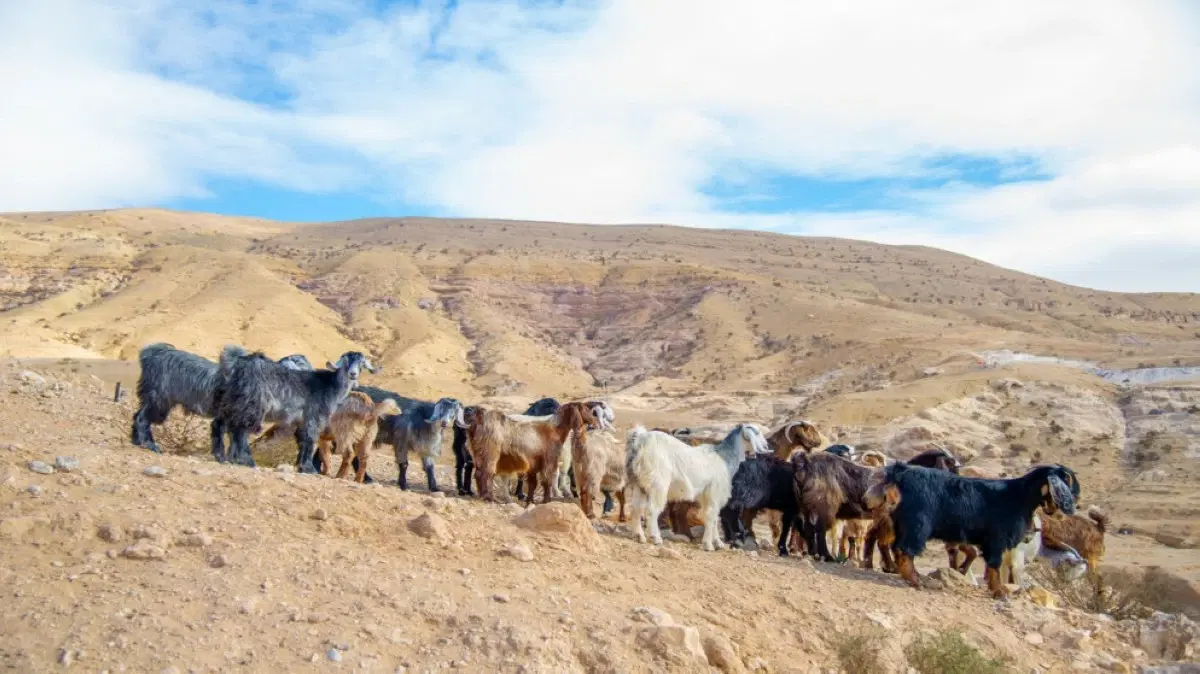
Hijazi added on Sunday that the Khanasri Station is a research station and rangeland reserve covering an area of 4,200 dunums, established in 1958 as a pastoral reserve. Its research activities expanded since 1973 in cooperation with international entities, culminating in genetic improvement programs that began in 1993, aiming to preserve local breeds, increase their milk and meat productivity, and transfer modern technologies to breeders to enhance production levels and advance livestock wealth.
Hijazi explained that the station seeks to achieve the general objectives of the National Agricultural Research Center (NARC) within its geographical area of operation, by preserving local breeds of Awassi sheep and Baladi goats, and conducting applied research and studies on sheep and goats, alongside rehabilitating and preserving the rangeland reserve, assessing biodiversity within the station, and ensuring the optimal utilization of its resources, thereby contributing to maintaining ecological balance, improving the productivity of local breeds, preserving them, and disseminating research findings locally and globally.
Hijazi reviewed the station's most prominent achievements and projects, which include the project for investing in small ruminants to lift rural households out of poverty, and the rangeland improvement project within the Water Scarcity Initiative (WSI) project, under which a water harvesting technology laboratory was established, noting the planting of 35,000 saltbush (Atriplex) seedlings to improve pastures.