Lebanese military delegation to participate in tripartite meeting with Washington and Tel Aviv on Tuesday
Agencies3 min read
Share
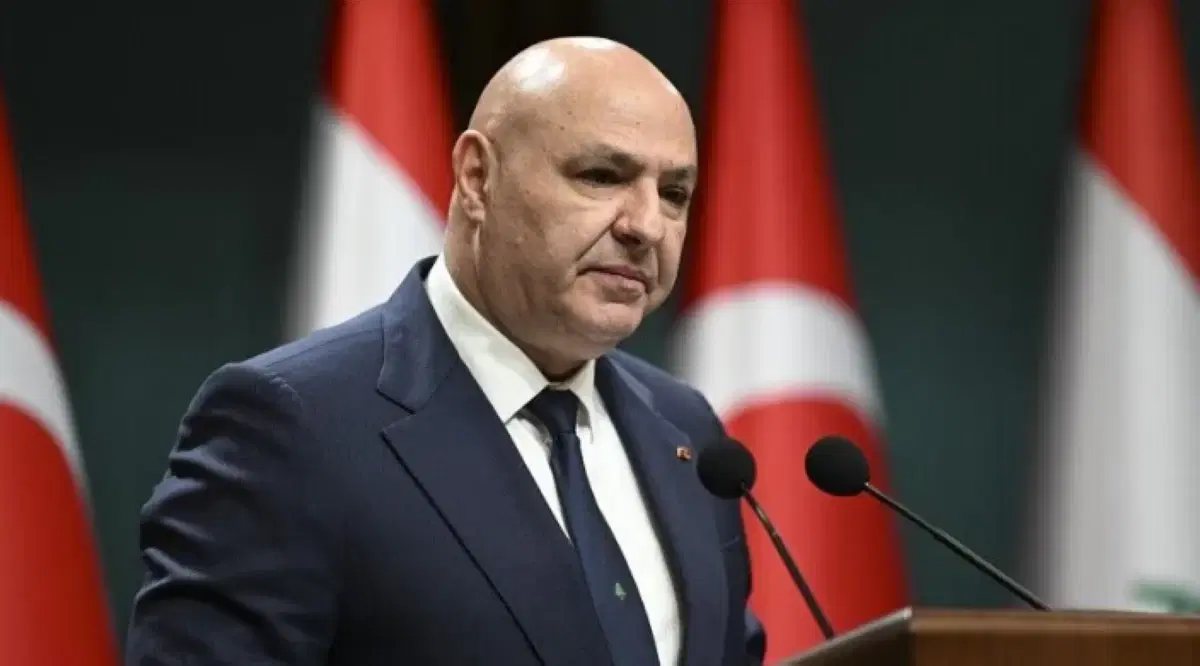
Lebanese President Joseph Aoun announced on Saturday that a Lebanese military delegation will participate in a tripartite meeting with the United States and Israel in Tampa, Florida, next Tuesday.
Aoun's remarks came as he received a French ministerial delegation headed by Foreign Minister Jean-Noël Barrot, who arrived in Beirut on Saturday for a two-day visit, according to a statement by the Lebanese presidency.
During the meeting, Aoun stated that "Israel continues its attacks on southern villages and towns, leveling operations, destruction of houses, and preventing farmers from accessing their lands, and has not abided by the terms of the framework agreement reached under American sponsorship."
He added that "the continued occupation and tension in the south prevent the Lebanese army from deploying up to the southern international border, in implementation of Resolution 1701."
Resolution 1701, adopted by the UN Security Council in August 2006, sets the international framework for the cessation of hostilities at the time between Israel and Hezbollah, and includes security arrangements relating to the area between the Blue Line and the Litani River, and the role of the Lebanese army and international forces in southern Lebanon.
Aoun revealed that "the Lebanese military delegation will participate in the tripartite meeting in Tampa on October 20th to put Lebanese demands to halt Israeli escalation on the table, in the hope of achieving results consistent with the framework agreement."
He pointed out that "Lebanon desires to extend the mandate of the international forces (UNIFIL) or continue their security tasks during 2027 designated for their withdrawal, and welcomes, if that is not possible, any formula that guarantees an international presence in the south, prevents a vacuum, and avoids placing the Lebanese army in direct contact with the Israeli army in occupied areas."
Aoun welcomed "any French effort within the United Nations and the Security Council to reach a formula consistent with the Lebanese desire to prevent any vacuum (in southern Lebanon)."
Under a UN Security Council resolution, the mandate of the United Nations Interim Force in Lebanon (UNIFIL) ends on December 31, 2026, after which the force will begin a gradual and orderly withdrawal process spanning one year, so that the Lebanese government becomes the sole entity providing security in southern Lebanon.
For his part, Barrot said during the meeting that "France's support for Lebanon's sovereignty, stability, and security is steadfast, and it is committed to working toward the full implementation of the cessation of hostilities agreement concluded on June 26, 2026, and UN Security Council Resolution 1701," according to the Lebanese presidency's statement.
The French minister stressed "the necessity of establishing a new international architecture to support Lebanon's sovereignty, assist the redeployment of the Lebanese Armed Forces, and avoid the emergence of a security vacuum that could entail serious consequences."
He indicated that "France is ready to play its full role in this framework," according to the same source.
On March 2 last year, Israel launched an aggression on Lebanon, leaving more than 4,300 dead, 12,400 wounded, and over a million displaced, according to Lebanese authorities.
On June 26, Beirut and Tel Aviv signed a "framework formula" under American sponsorship, providing for a gradual Israeli withdrawal from Lebanese territory, the deployment of the Lebanese army, and the disarmament of Hezbollah.
Despite the agreement, Israel continues its aggression in southern Lebanon and still occupies areas there, some for decades and others seized during recent wars and military operations.