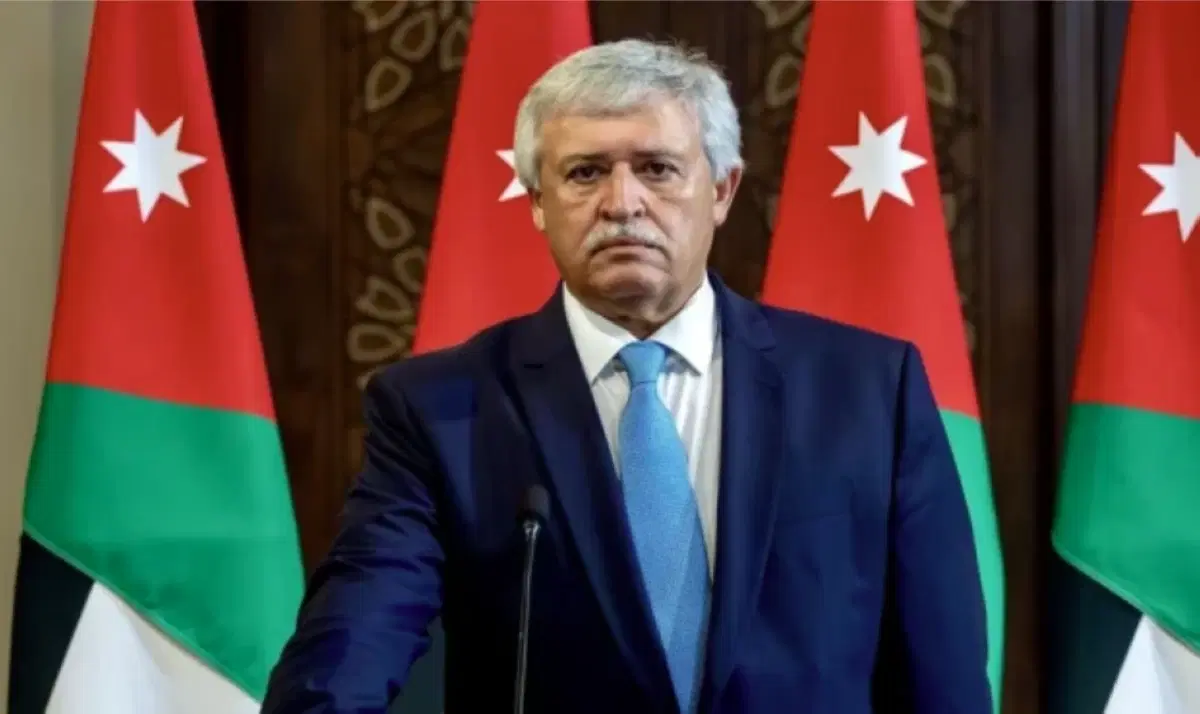
Qandah told the Jordanian News Agency (Petra) that the idea of the index stems from the fact that GDP, growth rate, inflation, unemployment, investment, and public debt, despite their importance, do not alone provide a complete picture of the nature of the economy and its ability to transform, which necessitates looking at the components of the economy, the relationships between them, and the level of its diversity, complexity, and productivity.
He added that the index seeks to answer a set of fundamental questions, including: What distinguishes one economy from another? What sectors form its economic structure? How interconnected are these sectors? Is the economy moving towards greater diversity, complexity, and productivity? Does it have the ability to transition from one economic phase to another? He explained that the economic identity represents, according to the framework on which the index is based, what can be described as the 'DNA of the economy', i.e., the set of interrelated structural and productive characteristics that distinguish one economy from another, and constitute its ability to produce value, diversify its activities, increase productivity, and transition from one economic phase to another.
According to this framework, the index provides a complementary perspective to traditional economic indicators, as it does not merely measure the results of the economy, but rather tries to read the structure behind these results by combining a number of structural and productive characteristics within a single framework.
The index focuses on five main dimensions: sectoral structure, production linkages, economic diversification, economic complexity, and total productivity of production factors, whereby these dimensions are converted into a composite index of 100 points, with the possibility of tracking changes in the components of economic identity over time.
The pilot phase of the index application included six Arab economies: Jordan, Saudi Arabia, the United Arab Emirates, Morocco, Egypt, and Tunisia, during the period 2010–2025, with the aim of testing the framework in economies that differ in their nature, structures, and levels of development.
Qandah emphasized that the importance of the index lies not only in the final number, but in its ability to help decision-makers understand the sources of strength and structural bottlenecks and identify areas that need development, beyond merely reading short-term economic indicators.
He said that the index can be used as a supporting tool in evaluating national economic strategies, monitoring structural transformations over time, and measuring whether economic policies are leading to a real change in the structure of the economy, not just a temporary improvement in some performance indicators.
He pointed out that the index can be particularly important in countries implementing economic transformation programs, as it provides a framework for monitoring transformation from a different angle, based on monitoring changes in the identity and productive structure of the economy.
Qandah explained that the index does not aim to replace or compete with existing international economic indicators, but rather to add a new and complementary perspective to economic analysis, focusing on the relationship between economic structure, productivity, diversification, complexity, and the ability to transform.
The framework also allows, as it continues to develop, the construction of a time series of the economic identity of the country, which helps in monitoring the direction of structural transformation and not just measuring the level of the economy in a specific year.
In the context of documenting the research and preserving its intellectual rights, the research on the index was deposited with the Jordan National Library, and an official deposit number was obtained, as well as an international standard number (ISBN) for the research, which documents the research work and preserves it within the accepted frameworks for intellectual and research production.
Qandah added that work on the index will continue in the coming phase to expand its scope of application, develop its databases, and conduct broader comparisons between economies, thereby enhancing its potential use in economic studies and public policies.
He emphasized that the goal of launching the Global Economic Identity Index is to move from the traditional question 'How much did the economy grow?' to a deeper question: 'How did the economy grow, what changed in its structure, and to what extent has it become more capable of creating value, productivity, and sustainable economic transformation?'.
He said that the 'DNA of the economy' is not fixed, but can evolve with changes in the structure of sectors, improved production linkages, and increased diversity, complexity, and productivity, which makes monitoring economic identity over time an important tool for understanding the direction of economic transformation.
The launch of the Global Economic Identity Index is a research step towards developing a new concept in economic analysis, based on the idea that each economy has structural and productive characteristics that distinguish it, and that understanding these characteristics represents a fundamental step towards designing policies more closely linked to the nature of the economy and its needs.
The index summarizes its philosophy in the transition from measuring the performance of the economy to understanding its economic identity, and from reading indicators to reading the 'DNA of the economy' that explains its ability to transform and grow.