Minister of Industry: The recorded economic indicators reflect the ability to grow despite the challenges
Amman5 min read
Share
The Minister of Industry, Trade, and Supply, Engineer Ya'rub Al-Qudah, said that the economic indicators recorded during the past period reflect the strength of the Jordanian economy and its ability to continue growing despite regional challenges and global economic conditions.
He added during a morning business meeting organized by the Jordanian Businessmen Association recently, that the government is looking forward to maintaining this upward trend and enhancing it during the coming period, relying on positive economic and sectoral indicators achieved during the first half of this year.
He emphasized that the performance of the export sector is one of the most positive indicators, as total exports increased during the first half of the year by more than 14 percent, compared to the same period last year, after recording growth of about 11.5 percent during 2025 compared to 2024, reflecting the continued export momentum of the national economy for the second consecutive year.
He explained that national exports recorded a growth of 6.2 percent, reflecting an increase in manufactured or locally produced products directed to foreign markets, while re-exports increased by 44 percent, confirming Jordan's success in enhancing its position as a regional logistics and commercial center serving the region's markets.
He pointed out that these results were achieved despite the challenges imposed by regional conditions on supply chains, transportation, and logistics services, in addition to increasing competition in global markets, reflecting the ability of the Jordanian private sector to adapt and continue to reach foreign markets.
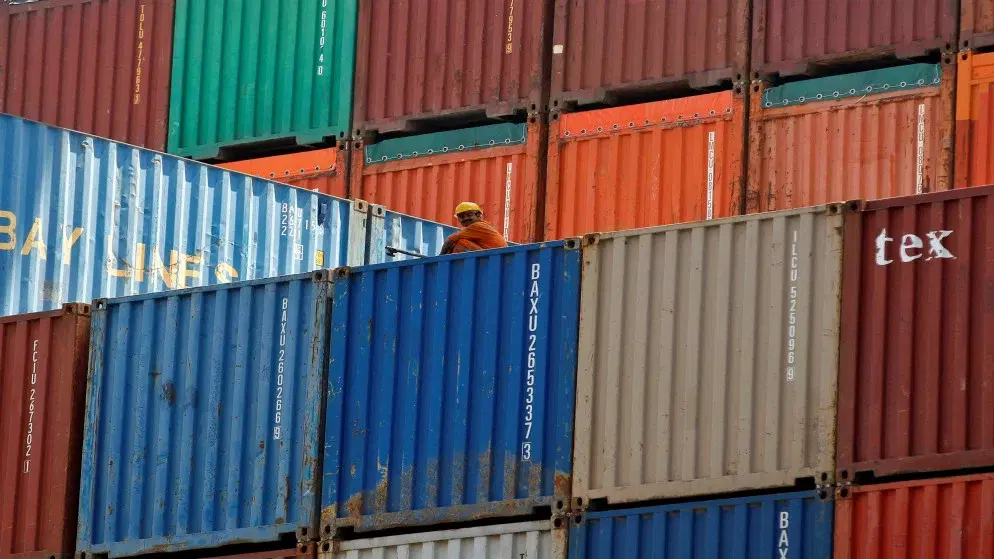
He noted that the Port of Aqaba is witnessing a noticeable improvement in operational efficiency, as the volume of container handling during the first nine months of the year increased by more than 5 percent, compared to the same period last year, reflecting the development of logistics performance and the port's ability to absorb the growing growth in trade movement.
He emphasized that the diversification of Jordanian exports represents one of the strengths of the national economy, indicating that more than 12 industrial sectors recorded an increase in their exports during the past period, enhancing the economy's ability to face external fluctuations and reduce dependence on a limited number of products or markets.
He added that the government is working in parallel to expand the base of export markets through trade agreements and obtaining preferential treatment for Jordanian products in target markets, benefiting from the network of free trade agreements linking Jordan with the United States, the European Union, the United Kingdom, Arab countries, and Canada.
He pointed out that the government is also moving towards opening new and unconventional markets for Jordanian exports, announcing work on signing two preferential trade agreements before the end of this year, the first with Rwanda, which opens new horizons in the markets of East and Central Africa, and the second with Uzbekistan to be a gateway for Jordanian exports to Central Asian markets.
He also revealed the start of talks with the Eurasian Economic Union, which includes a number of major countries in that region, with the aim of reaching a preferential trade agreement that enhances the access of Jordanian products to new markets with high purchasing power and promising growth opportunities.
He emphasized that the government's strategy in the economic file is based on two main axes, the first of which is diversifying export markets and opening new destinations for Jordanian exports, and the second is diversifying exported products and increasing local value addition, which enhances the competitiveness of the national economy and its ability to adapt to regional and international changes.
In the context of stimulating economic growth, Al-Qudah explained that the government is working to launch a package of major projects in partnership with the private sector during the next 3-4 years, with an investment volume estimated at about $10 billion, within the framework of public-private partnership (PPP).
He said that these projects will form a strong boost to the national economy and contribute to stimulating investment and creating job opportunities, noting that their scope includes projects in the water, energy, transportation, infrastructure, and public services sectors.
He explained that one of the most prominent of these projects is the National Water Carrier project and the natural gas pipeline project to transport gas from the Risha field to various regions of the Kingdom, expecting the project to contribute to raising the self-sufficiency rate of natural gas to about 80 percent by 2028.
He pointed out that exploration work is continuing in the areas surrounding the Risha field, enhancing the opportunities for increasing national production of natural gas in the coming years.
He explained that the Airport City project represents one of the strategic development projects, which aims to establish an integrated urban and economic center that provides a modern environment for housing, work, and investment and contributes to absorbing urban growth and alleviating pressure on the capital, Amman, in addition to creating new economic and development opportunities.
Al-Qudah stressed that the government is continuing to implement its economic programs in partnership with the private sector, with the aim of enhancing economic growth, increasing exports, stimulating investment, and improving the competitiveness of the national economy, in line with the targets of the Economic Modernization Vision.