«Karak Female Institute».. Continuous Efforts to Enhance Training and Employment Opportunities
Amman3 min read
Share
The Karak Vocational Training Institute – Females, affiliated with the Vocational Training Corporation, continues to strengthen its partnerships with national institutions and partners supporting the vocational training sector in the governorate. This comes in line with the corporation's vision and plans to develop training programs and expand the horizons of cooperation to provide quality training opportunities for young men and women in various professions, keeping pace with technological developments and meeting the requirements of the labor market.
The Institute's Director, Engineer Shireen Al-Batoush, told «Al-Rai» that the institute is intensifying its efforts to provide qualitative training programs, build applicable professional skills, and support economic empowerment and employment trends through cooperation with national institutions and supporters of the vocational training sector. This contributes to building a generation equipped with knowledge, skills, and the ability to keep pace with the future of industry.
In this context, she pointed out that the institute, in partnership with Mutah University – Women in Engineering, held a specialized training course in digital manufacturing using 3D printing, as part of the female and people with disabilities empowerment participation program. This aims to enhance cooperation in linking the academic side with practical application, supporting the female students' specializations and granting them modern technical skills that align with the rapid developments in the labor market and industry.
She explained that the course targeted 15 female students from the university's Faculty of Engineering with the aim of developing their knowledge and practical skills in the field of digital manufacturing, and acquainting them with 3D printing applications as well as laser cutting and engraving techniques. This contributes to refining their expertise and enhancing their technical capabilities, alongside promoting the concepts of applied learning and innovation, and empowering them to employ digital manufacturing techniques in executing engineering ideas and projects and transforming them from digital models into tangible products.
In a related context, Engineer Al-Batoush stated that the institute has started holding a specialized training course on the «Fundamentals of Lockstitch Machine Operation» in cooperation with the Development and Employment Fund. The course, implemented in the sewing workshop of Al-Shihabia Charity Association, targets 20 trainees, who are provided over the course of
200 training hours with theoretical knowledge and practical applications to develop their skills and raise their efficiency, thereby enhancing their opportunities in the labor market.
In the agricultural sector, she indicated that the institute continues to support and empower young men and women and qualify them to engage in the agricultural labor market. Recently, a jam and pickle manufacturing course was implemented in cooperation with the Ministry of Agriculture, as part of the activities of the «Ardi» agricultural project. The project aims to develop practical skills and open new horizons for trainees by building their skills to enable them to obtain job opportunities and a sustainable source of income.
She pointed out that the female participants in the course underwent practical applications that enabled them to transform agricultural produce into value-added food products according to appropriate production, processing, and packaging methods, culminating in products ready for display and marketing.
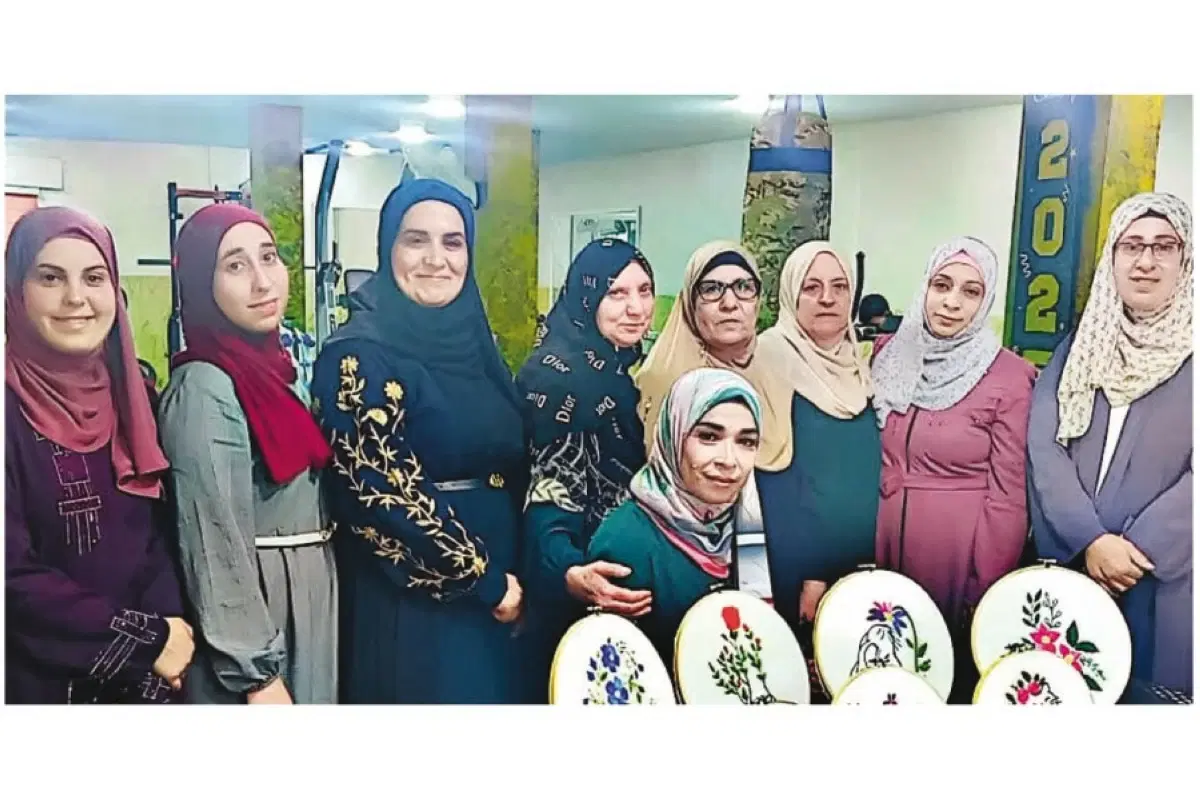
Regarding the institute's role in promoting the preservation of handicraft heritage, Al-Batoush stated that a traditional hand embroidery course was implemented for a group of women and girls at the Al-Adnaniyah Charity Association. They were equipped with practical skills in traditional hand embroidery, alongside being qualified to invest these skills in developing marketable products and paving the way for them to start their own projects and achieve a sustainable source of income.