Israeli anger over film "NAZA"... Legal action and threat to revoke directors' citizenship
Amman7 min read
Share
The Israeli documentary film "NAZA" (NAZA), which deals with Israeli army and intelligence operations in the Gaza Strip, has sparked widespread anger in Israel, moving from political criticism to a move within the army to investigate legal action and investigate the possibility of leaking classified information, in parallel with an Israeli minister threatening to seek to revoke the citizenship of the film's directors.
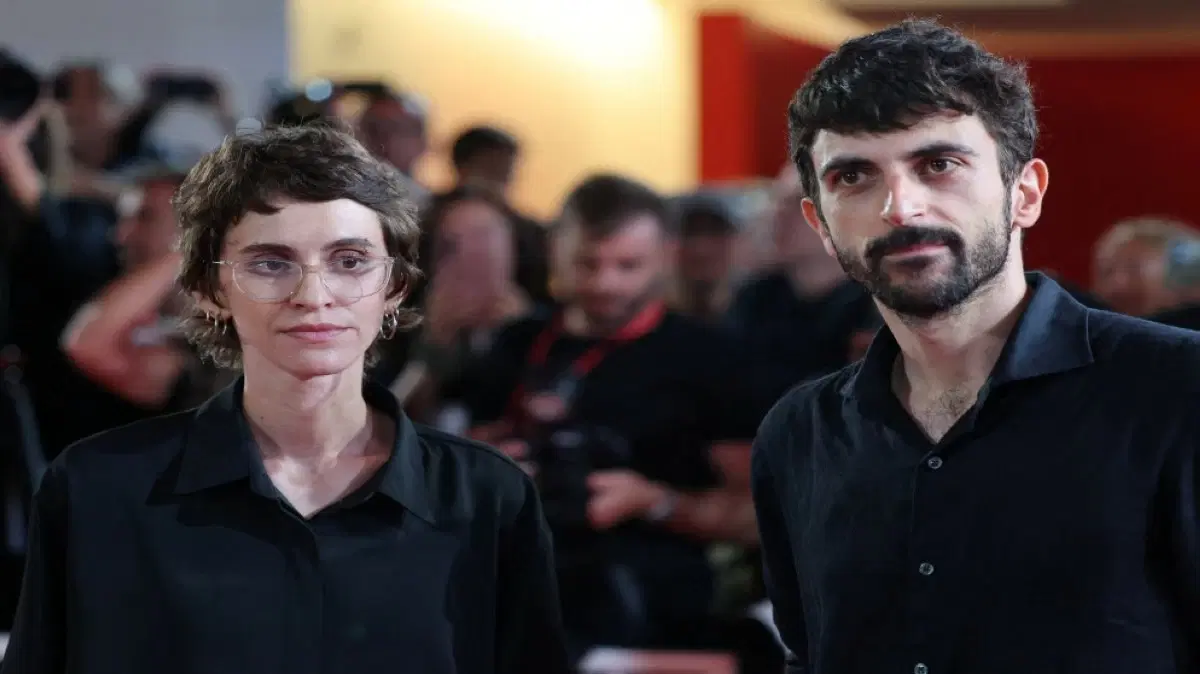
Reactions escalated after the film, directed by Israelis Yuval Abraham and Rachel Zur, won the Special Jury Prize at the 83rd Venice International Film Festival on September 12th.
Israeli Prime Minister Benjamin Netanyahu described the film as "shocking incitement" and said that incitement against Israel when it comes from within "cannot be tolerated", in the latest Israeli political stance against the documentary.
- The army is investigating legal action
In a development that expanded the scope of the controversy, the Chief of Staff of the Israeli army, Eyal Zamir, held a meeting with senior army officials to discuss the film and instructed the military prosecutor to investigate the possibility of taking legal action related to the film and those involved in it.
Zamir also ordered an examination of information security aspects and an investigation into the possibility of leaking classified materials used in the production of the film, along with the formation of a multi-agency and multi-disciplinary team, headed by the army's planning division, to develop mechanisms for dealing with what the army described as "false allegations" directed at it and its soldiers.
Zamir said that what appeared from the film so far did not, from his point of view, represent criticism of the army or an attempt to reach the truth, and accused the film of presenting "false and serious accusations" and deliberate distortion of reality.
However, Zamir later clarified that he had not seen the film and did not know the people who were interviewed or the parties behind the information contained in it, adding that the allegations and events presented in the film were not submitted to the army, which, according to him, makes it difficult to respond to them seriously and professionally.
The Israeli army had previously requested to have the entire film available for viewing and to respond in detail to the allegations contained therein, after its initial position was based on the clips and promotional materials published about it.
- What does "NAZA" show?
The film, which lasts 80 minutes, is based on the testimonies of 24 sources from within the Israeli military and intelligence establishment whose identities were concealed, and deals with the mechanisms of information gathering, target identification, and the execution of raids during the war in the Gaza Strip.
The film is called "NAZA", which is an Israeli military term referring to the expected number of civilian casualties from air strikes.
According to the film, some testimonies talk about the use of AI-supported systems in operations related to information gathering and target identification, and about estimating the number of civilians expected to be present in targeted locations before carrying out the raids.
The film also includes testimonies and allegations regarding the rules of engagement, monitoring of Palestinians, and targeting buildings and homes in the Gaza Strip. These narratives are presented by the film based on its military and intelligence sources, while the Israeli occupation army rejects a number of the allegations contained in it.
The interviews were filmed under procedures aimed at protecting the sources' identities, while parts of the film were shot at night on rooftops in Tel Aviv during a production process that lasted nearly 3 years.
The film is produced by the British newspaper "The Guardian" and "JW Films", and is directed by Abraham and Zur, two of the four directors of the documentary film "No Other Land", which won the Oscar for Best Documentary Film in 2025.
- The army denies the film's allegations
The Israeli army rejected the allegations related to the use of artificial intelligence to make decisions to carry out the raids, stressing that decisions to choose targets and approve strikes are made by people, not artificial intelligence.
The army specifically denied an allegation that appeared in the promotional materials for the film regarding the planning of a strike that was expected to result in the death of 500 civilians, saying that it did not plan, approve, or carry out a strike in Gaza that was expected to kill 500 civilians or a number close to that.
It also questioned the ability of some of the sources on which the film is based to know details related to military and national strategy, saying that some of the allegations go beyond the scope of information that could be available to military personnel of lower functional levels.
The occupation army also said that some of the cases dealt with in the film relate to operations in which members of the intelligence division, whom the film says it interviewed, are not involved by the nature of their work.
Zamir affirmed that the army will continue to accept what he described as "objective criticism" and examine its performance, but rejected what he considered to be unfounded accusations.
- Threat to revoke citizenship
The anger extended to the government level, as Israeli Minister of Culture and Sports Miki Zohar called for the revocation of the Israeli citizenship of Abraham and Zur, accusing the directors of "treason"
Zohar demanded an examination of how the filmmakers obtained the materials and information used in it, and whether the production process involved violations related to the disclosure of information during the war.
Zohar's call came amid a series of criticisms directed by Israeli politicians at the film after its screening in Venice and winning the Special Jury Prize.
The repercussions of the film were not limited to the government and the army, as Israeli reports indicated that government agencies, including the Ministry of Foreign Affairs, had consultations on how to deal with the film and the allegations it presents.
According to the reports, points were prepared to respond to the film and circulated to Israeli diplomats abroad, in light of the international interest it received after its screening and winning at the Venice Festival.
Thus, the controversy over "NAZA" moved from the cinematic arena to a political, military, and media confrontation within Israel, at a time when senior army officials had not watched the entire film when the initial positions rejecting its content were issued.
- The Guardian defends the film
In contrast, "The Guardian", the producer of the film, defended the work and its directors, saying that "NAZA" was the result of more than 3 years of investigative journalism.
The newspaper confirmed that the identity of the secret sources on which the film is based was verified, and that the journalistic work was subjected to verification and scrutiny processes, and described the Israeli reaction to the film as "authoritarian"
Abraham, in turn, defended the film in an interview with Israeli Channel 13, asserting that the identities of the people who spoke in it and the cases they discussed were verified, and that a team of editors reviewed the original materials.
He said he seeks to show the film within Israel on the widest possible scale.
The controversy comes at a time when the film has not yet been widely released, while its victory in Venice and the Israeli political and military reactions have expanded the discussion about it outside the festival, turning it into a domestic issue in Israel that involves questions related to the performance of the army, the secrecy of information, and the freedom of journalistic and cinematic work.