Dismantling the material and political conditions of Palestinian communities
Reorganizing the geographical space to expand Israeli control
Follow Al Rai

B'Tselem: The occupation is implementing a systematic 'erasure' project
Dismantling the material and political conditions of Palestinian communities
Reorganizing the geographical space to expand Israeli control
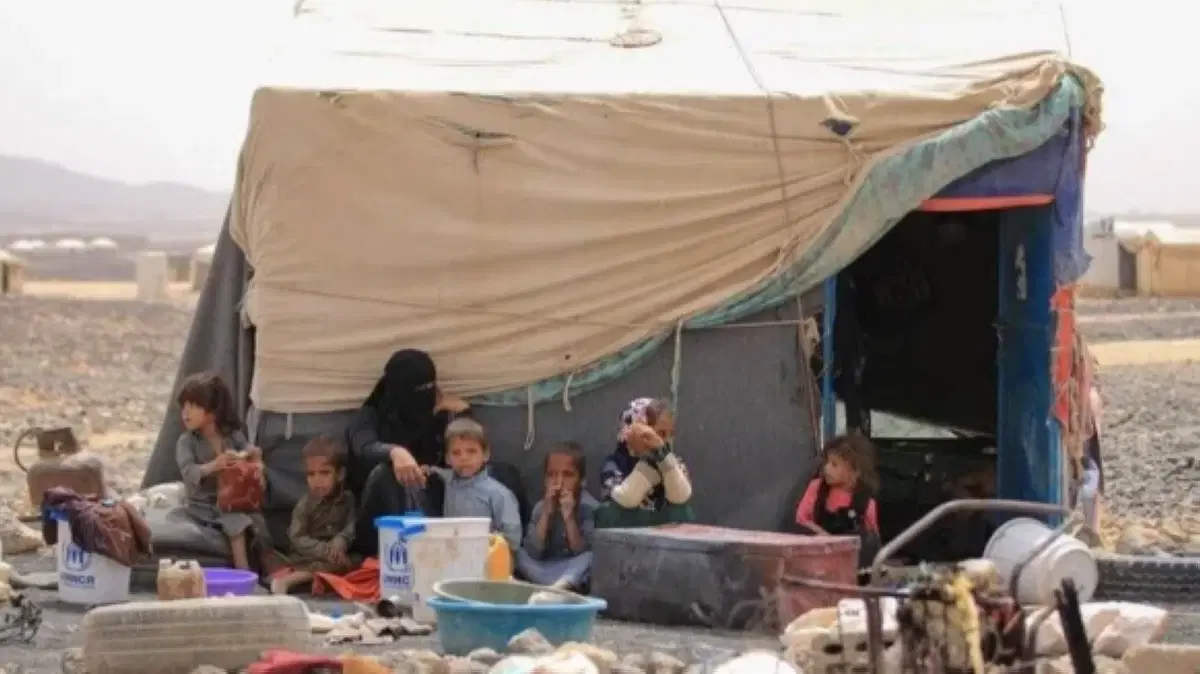
Displacement of 64 Palestinian communities and 33,000 camp residents
Spreading terror, restricting movement, economic strangulation, and ethnic cleansing
Reducing the ability of Palestinians to maintain their connection to the land
200 new military checkpoints.. and the closure of roads connecting Palestinian towns
Revocation of Palestinian entry permits into the 'Green Line'
Destroying infrastructure and preventing the development of water networks and energy production
Weakening the community's ability to maintain its institutional continuity
Seizing more than two million dunams of Palestinian land since 1967
Broad immunity for the actions of occupation soldiers, police officers, and settlers
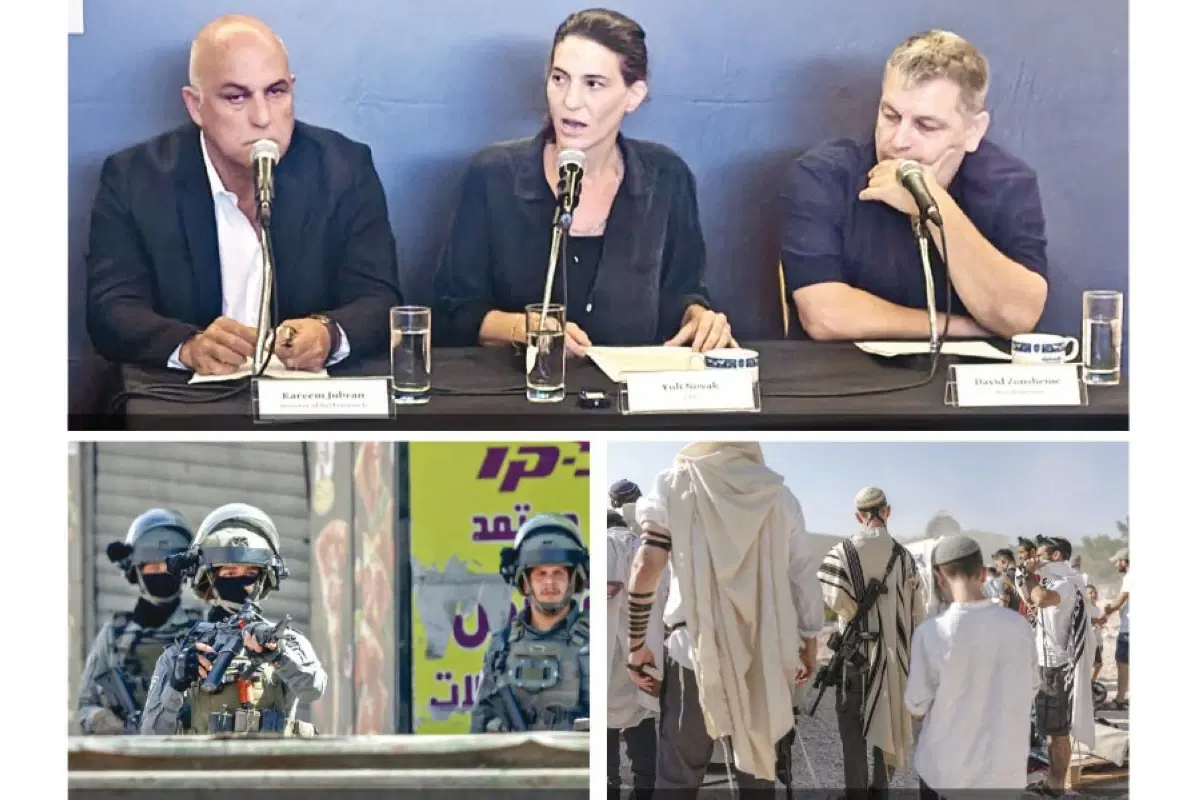
The Israeli human rights organization "B'Tselem" revealed, during a press conference held in occupied East Jerusalem, an extensive report documenting what it described as crimes by the Israeli occupation and settlers in the occupied West Bank. It presents, in an analytical manner, the mechanisms of an integrated system aimed at undermining the foundations of Palestinian life and dismantling the Palestinian presence in the West Bank.
The 230-page report, titled "The Erasure Project: Israel's Elimination of the Palestinian Presence in the West Bank," provides a reading that goes beyond the traditional documentation of individual violations to monitor the systemic structure they produce. It is based on the organization's accumulated knowledge over decades, approximately two thousand testimonies collected in recent years from Palestinians in the West Bank, as well as an examination of official documents, data, legislation, and government decisions.
The report concludes that what is happening in the West Bank does not represent a series of isolated violations, but rather a systematic "erasure project" based on two parallel tracks: first, dismantling the material, social, and political conditions that allow for a collective Palestinian existence; and second, reorganizing the geographical space in a way that expands and entrenches Israeli control on institutional foundations.
The report bases its concept of the "logic of erasure" on historian Patrick Wolfe, who used the term to describe the way the settler-colonial project works to reduce, dismantle, and remove the collective presence of indigenous people linked to the space.
It explains that erasure can be achieved through direct actions that reduce the indigenous presence, such as killing and displacement, and can also accumulate gradually through legal, planning, economic, and spatial mechanisms.
The report argues that this process operates through five interconnected axes: violence and spreading terror, restriction of movement and mobility, economic strangulation, social and political destruction, and ethnic cleansing and seizure of space.
It emphasizes that these axes do not operate separately, but rather reinforce one another; restricting movement and economic strangulation harm livelihoods, social ties, and the ability to maintain institutions and political action, while the weakening of political and social life reduces the Palestinians' ability to defend their rights and maintain their connection to the land and space.
The report points out that the "erasure project" is not a new phenomenon but has roots in earlier historical stages, as it sees that the logic of erasure was realized on a large scale during the Nakba between 1947 and 1949, when hundreds of thousands of Palestinians were displaced from their homes or fled, were prevented from returning, and hundreds of Palestinian communities were destroyed.
With the occupation of the West Bank and Gaza Strip in 1967, Israel expanded its control and imposed direct military rule over millions of Palestinians.
The report also confirms that the Oslo Accords did not stop this process; despite the establishment of the Palestinian Authority and the transfer of limited powers to it, Israel retained control over essential components of the Palestinian space and life, and settlement, land seizure, and spatial fragmentation continued.
The report describes the structure organized by this project as "apartheid," noting the existence of a single Israeli system that grants Jews and Palestinians rights, protection, resources, and political power differently. In the West Bank, Jewish settlers are subject to Israeli civil law and enjoy full political rights, while Palestinians are subject to military rule and law.
The report confirms that the erasure project has seen a sharp acceleration since the formation of the Israeli government at the end of 2022, especially since October 7, 2023, explaining that powers, budgets, and political influence were transferred to entities committed to expanding settlement, annexation, and displacing Palestinians, in parallel with strengthening the interconnection between state institutions, the army, the settlement movement, and settler groups.
The report considers the "Decisive Plan" published by Bezalel Smotrich in 2017 as a key document for understanding the current reality, as it openly formulated the logic of erasure and linked a settler-colonial ideology with a political action plan. According to the report, the plan presents Palestinians with three options: living under Jewish supremacy while abandoning their political demands, leaving, or facing repression by force in case of resistance.
The report considers violence in the West Bank a central mechanism for control, displacement, and dismantling, as its impact is not limited to the people who are killed, injured, or arrested, but extends to the general population by spreading fear and reducing the space for movement for Palestinians as individuals, families, and a society.
According to the report, violence is practiced by the army, the police, and the General Security Service "Shin Bet," in addition to security officials in the settlements and settler groups, noting that some of these entities operate as official arms of the state, while others operate under its sponsorship.
The report documents that during the period between October 7, 2023, and June 30, 2026, Israel killed 1,087 Palestinians in the West Bank, including East Jerusalem, including 242 children and 21 women.
It also points out that since October 2023, thousands of settlers have been recruited for service in the occupied West Bank within regional defense battalions, while thousands of others have joined standby squads. B'Tselem says it has documented "military-style" practices committed by settlers against Palestinians, including detention, arrest, demanding ID cards, demolishing buildings, and imposing closures on entire towns and cities.
The report also indicates that arrests and mass imprisonment constitute a key arm of the violence system, noting that Israel has expanded the use of the prison system as a means of repression and intimidation since October 2023.
According to B'Tselem's monitoring, at least 32 detainees and prisoners from the West Bank died in Israeli prison facilities between October 2023 and June 2026 as a result of violence, systematic neglect, and denial of medical treatment.
Regarding freedom of movement, the report describes the ability to move as a fundamental condition for social, economic, family, and political life, explaining that a person's inability to reach their land, hospital, workplace, or school deprives land ownership and the existence of public institutions and services of part of their practical meaning.
The report states that the Israeli control system relies on infrastructure that has accumulated over decades, including checkpoints on the edges of the West Bank and inside it, gates at the entrances to Palestinian towns, the separation wall, the permit system, roads on which Palestinian travel is prohibited or restricted, in addition to military orders and various types of closures.
According to the figures in the report, Israel has established more than 200 new military checkpoints since October 2023, closed main roads connecting dozens of Palestinian towns to main streets, and installed military gates through which it closed most of the entrances to Palestinian governorates and cities. Israel also completely canceled Palestinian entry permits into the Green Line borders.
The report concludes that the restriction of movement works in two complementary directions; on one hand, it dismantles the Palestinian space into isolated enclaves, and on the other, it allows territorial continuity for Jewish settlers through gates, permits, and alternative and auxiliary roads.
On the economic side, the report argues that economic strangulation affects the material conditions that allow Palestinians to earn a living, support their families, cultivate their land, receive treatment, and plan for the future. It manifests in rising poverty, unemployment, and a decline in the standard of living, but it also acts as a tool for control and constant pressure.
The report documents that for years, Israel has prevented independent Palestinian development of water networks and energy production, while simultaneously damaging existing infrastructure and local initiatives aimed at developing alternative energy sources.
According to the report, since October 2023, Israel has canceled almost all work permits for Palestinians from the West Bank, leading to more than 140,000 people losing their main source of income, while the unemployment rate rose from 13.1% in 2022 to more than 31.3% in 2024.
It also points to the killing of at least 26 Palestinian workers while they were attempting to cross the separation wall for work during the period between October 7, 2023, and June 30, 2026.
The report explains that economic strangulation is not merely a side effect of control, but a mechanism for dismantling the Palestinian presence. The inability of families to secure basic needs, repay debts, or provide education for their children, coupled with the health, education, and social care sectors operating under constant resource shortages, weakens the Palestinian society's ability to maintain its institutional continuity, societal resilience, and the prospects of future generations.
According to the report, the social and political destruction extends to the institutions, associations, and spaces that allow Palestinians to organize their lives, represent themselves, preserve knowledge and memory, and work toward a shared future.
It notes that since 1967, Israel has imposed a military regime that bans or restricts almost all forms of independent Palestinian political activity. Military orders and legislation have outlawed civil society organizations and political parties, led to the closure of institutions, banned demonstrations, and resulted in the arrest of political activists.
According to figures in the report, between 1967 and 2019, Israel outlawed more than 411 associations, including all major Palestinian political parties.
Since October 2023, Israel has arrested elected officials, activists, academics, students, and journalists, raided the offices of organizations, and restricted non-violent demonstrations and protests. Furthermore, between October 7, 2023, and mid-May 2024, Israeli forces killed at least 28 Palestinians, including 11 minors, during or in the context of demonstrations—a number nearly half of the total Palestinians killed by Israeli forces during the thirteen years preceding October 2023, according to the report.
This targeting, the report states, extends to spaces where communal life is created and memory and knowledge are preserved, including schools, universities, cultural and religious centers, archives, the press, and community institutions, alongside what it describes as the erasure of Palestinian symbols and the flooding of the public sphere with Israeli symbols.
Regarding land and displacement, the report argues that the increasing Israeli seizure of space and manifestations of ethnic cleansing clearly reflect the dual path of the "erasure project," based on dismantling the necessary conditions for the continued Palestinian presence in the area, in parallel with the creation of a contiguous and institutionalized Jewish space.
The report mentions that since 1967, Israel has seized more than two million dunams, or more than a third of the West Bank, declaring parts of it "state land," "closed military zones," "firing zones," nature reserves, and archaeological sites.
As of July 2026, Israel, through settler groups, had seized more than 1.07 million dunams, equivalent to 18% of the West Bank's area, while approximately 185 new settlement outposts were established between 2023 and 2025, including about 130 farm-style outposts.
According to the report, this seizure had led, by June 2026, to the displacement of 64 Palestinian herding communities from their homes, and the partial displacement of 18 others, while since January 2025, the Israeli army has uprooted about 33,000 residents of the Jenin, Tulkarm, and Nur Shams camps from their homes.
The report explains that displacement from the land simultaneously means displacement from home, community, school, and livelihood. It clarifies that after a Palestinian community is uprooted, its lands are turned into pastures for settlement farms, access roads are closed, and Israeli infrastructure is built in the area, leading to the erasure of the Palestinian presence from the landscape.
On the legal side, the report asserts that the "erasure project" is not a standalone legal classification, but a concept describing the cumulative significance of the apartheid regime and the policies and actions prohibited by international law, including annexation, the establishment of settlements, forcible transfer, persecution, systematic violence, and the deprivation of fundamental rights.
It points out that many of the actions constituting the project's five pillars could represent violations of occupation laws and international human rights law, or war crimes and crimes against humanity, including killing, torture, unlawful imprisonment, collective punishment, persecution, displacement, forcible transfer, and the establishment of settlements.
The report considers the central legal framework for analyzing the regime in the West Bank to be international law, which prohibits apartheid. It notes that the Israeli regime distinguishes between two groups, Jews and Palestinians, granting them different status, rights, protections, and resources, and is based on the systematic control and oppression of Palestinians, involving inhumane acts committed within the framework of this regime and for the purpose of maintaining it.
The report recalls the 2024 advisory opinion of the International Court of Justice, which concluded that Israel's continued presence in the Occupied Palestinian Territory is illegal and that it must end this presence as rapidly as possible.
Regarding impunity, the report states that between 2016 and 2024, 2,427 complaints were filed with the military law enforcement system regarding damages caused by soldiers to Palestinians and their property, while investigations were opened in 22.7% of them, and indictments were filed in only 0.9% of cases.
As for Israeli violence against Palestinians, the report says that 93.6% of investigation files opened between 2005 and 2025 were closed without an indictment, while only 3% ended in a full or partial conviction.
The report concludes that the broad immunity enjoyed by soldiers, police officers, and settlers does not merely reflect a failure of accountability after damage has occurred, but sends them a message in advance that the system will provide them with protection, which practically allows violence to continue.
The report emphasizes that putting an end to the systematic and violent oppression practiced by Israel against Palestinians cannot be achieved through localized measures, such as improving law enforcement against the most violent settlers, removing some checkpoints, partially freezing settlement construction, or amending a specific policy.
It acknowledges that such measures might contribute to preventing some crimes and rights violations and protecting individuals in specific cases, and thus have immediate importance, but they do not change the structure that produces violence, dispossession, and oppression, because the actions documented in the report, according to its conclusion, are not a deviation from the regime but a direct product of its operation.
The report stresses that protecting human rights requires stopping the "erasure project" and ending the apartheid regime and Israeli military control over Palestinians, considering that the rights of Palestinians cannot be guaranteed within a system that works to strip them of their political power, control their land, and dismantle their ability to exist as a group.
The report concludes by calling for not accepting or normalizing the regime based on Jewish supremacy, apartheid, and dispossession, and not being content with merely reducing some manifestations of the violence and dispossession it produces.
In its conclusion, the B'Tselem report offers a reading that goes beyond traditional documentation of violations to place them within a single systemic framework. It does not merely recount what is happening but attempts to explain its causes and mechanisms of operation, linking the five pillars it views as interconnected components of a single project based on dismantling the Palestinian presence and expanding Jewish control over space. According to the report's conclusion, what is happening in the West Bank does not represent a series of errors or individual transgressions, but a systematic "erasure project," which, according to the organization, calls for a legal and political response that goes beyond localized reforms to address the structure that produces these policies, ultimately leading to the end of the occupation and settlement in the Occupied Palestinian Territories.
Know more about this story?Send us a tip
Ask about this report — answers stay grounded in its text.