Iranian airlines cancel flights under the weight of US sanctions
Amman4 min read
Share
Iranian airlines were forced on Wednesday to cancel international flights under the pressure of tightened US sanctions aimed at choking the Islamic Republic's economy, amid the ongoing war between the two countries since February.
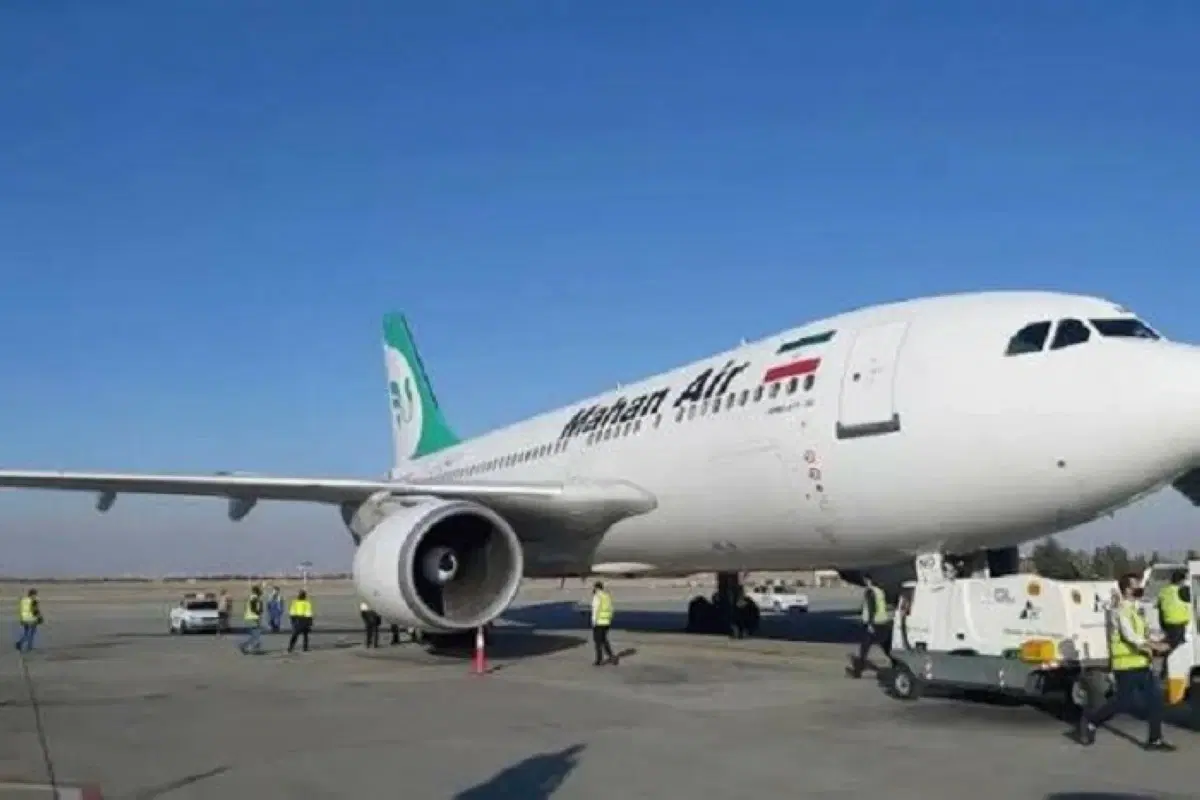
Despite the sanctions, not all planes were grounded, as the Flight Radar 24 website showed that an Airbus belonging to Iran's Mahan Airlines landed in China on Wednesday at around 8:40 GMT.
Beijing said on Tuesday that it opposes the US sanctions, describing them as illegal.
Neighboring countries, however, have implemented the sanctions, prompting an Iranian official to warn them of the consequences of such a move.
Secretary of the Supreme National Security Council, Mohsen Rezaei, warned in an interview with state television that "if any country enters into cooperation or engages in adventures with the United States, its airports will no longer be able to operate flights"
Rezaei added, "I ask all dear neighboring countries not to engage in this adventure, as it is doomed to fail"
In recent weeks, the United States has tightened the sanctions it has imposed on Tehran for years, as the conflict resulting from the war launched by Washington and Israel on Tehran on February 28 continues.
US Treasury Secretary Scott Bissent recently announced that the entire Iranian aviation sector is under US sanctions, noting that this will become fully effective on Wednesday.
The country's two main airlines, Iran Air and Mahan Air, have been under US sanctions for years.
On September 8, 27 Iranian airlines operating domestically or regionally were blacklisted by the United States.
Companies outside Iran were given until September 23 to comply by cutting ties with sanctioned companies, for example by stopping refueling their planes.
Failure to comply with the US ban puts these companies at risk of being blacklisted themselves, and thus excluded from the dollar-based financial system.
A spokesman for the US Treasury Department, which manages the sanctions, told AFP on Wednesday, "Countries and companies can no longer pretend not to know (what threatens them) when they facilitate Iran's illicit activities"
- Unstable situation -
The effects of the sanctions are gradually beginning to be felt, as Mahan Air announced on Tuesday that it had suspended all flights to Turkey at the request of the authorities in Ankara.
On Wednesday, a major travel agency in Tehran told AFP that flights to Baghdad, Muscat, Qatar, Georgia, and Azerbaijan had been suspended.
An official at a travel agency in Tehran said, "The situation is unstable, and we are no longer selling tickets at the moment, for fear of them being canceled"
Iran has a total of 27 airlines, but most of them operate only domestic flights.
The two main companies, national carrier Iran Air and private company Mahan Air, operate most of the international flights under normal circumstances, and their destinations are mostly neighboring countries, as well as Russia and China.
Before the sanctions came into effect, Iran Air confirmed in a statement that it had not received any official instructions from Turkey, Azerbaijan, or Iraq prohibiting it from operating flights to these neighboring countries.
The company was scheduled to operate a flight to Istanbul from Tehran's Imam Khomeini International Airport on Wednesday, according to the airport's website.
Bissent warned on Monday that Iranian airlines would cease to operate under the threat of punishing any entity that deals with them.
He warned other countries, "If these planes land, no one will be able to refuel them, provide landing services to them, or sell their tickets, otherwise they will be excluded from the dollar system"
These restrictions are likely to make it more difficult for Iranians to travel abroad or return to their country.
- The holy shrines -
In Iraq, although the government has not officially announced the implementation of the ban, several sources, including a senior government official, told AFP that Baghdad will comply with the US measures.
Iranian agency Tasnim reported that Baghdad airport is closed to Iranian planes, unlike Najaf airport in southern Iraq, which is used by Iranians to visit the holy Shiite shrines.
The possibility of suspending flights between the two countries has raised concerns among some Iraqi travel agents.
Haidar Al-Shama of one of the travel agencies in Najaf said, "Most of the work of travel and tourism companies operating in Najaf is booking flights for passengers traveling through Najaf airport to various Iranian airports"
Several travel agencies reported that concerned customers are calling to inquire about the developments, and they are considering switching to land transport, despite the fact that it means much longer journeys.
The Iranian aviation sector has been subject to various sanctions for years.
The Israeli-US strikes on Iran, which ignited the Middle East war, led to the complete closure of Iranian airspace.
Air traffic has partially resumed since then, but only Iranian companies can leave Iran.