Increased security tightening in France in preparation for new protests on Saturday
Amman5 min read
Share
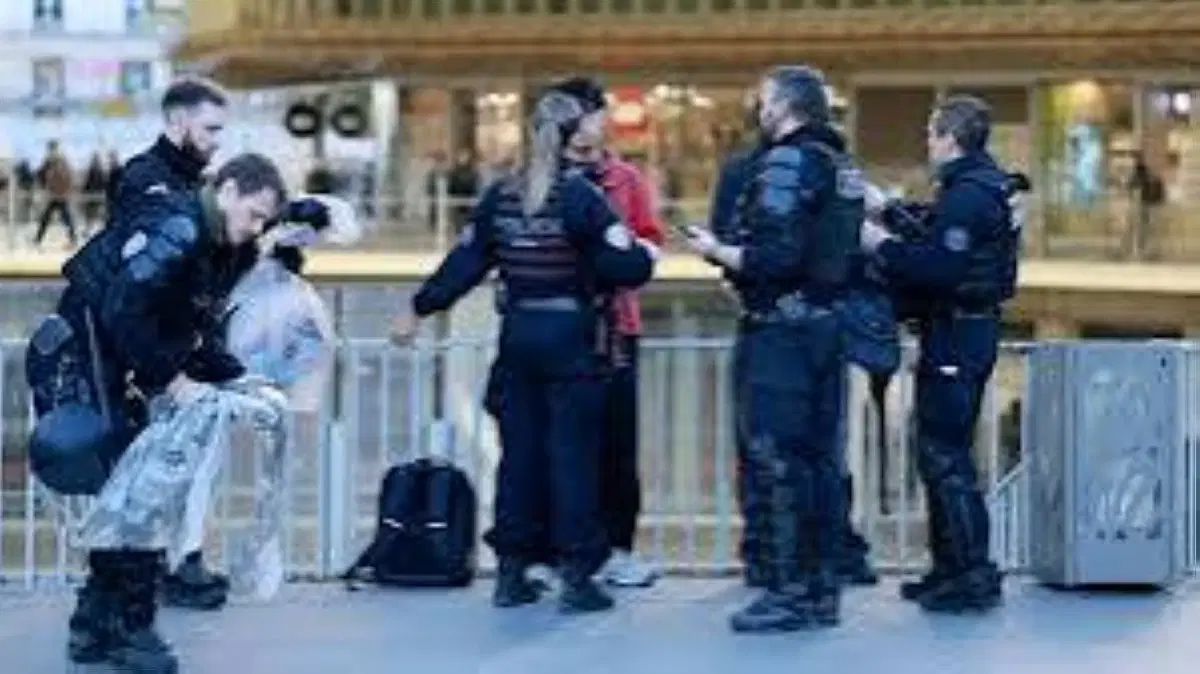
France is preparing on Saturday for a third day of demonstrations in three weeks, at a time when the government is warning of a "very high risk of public disturbances," after the first protests against the high cost of living on October 17 witnessed acts of violence and looting.
The first chapter of the protests resulted in scenes of widespread chaos, including the setting of fires in public buildings and the looting of thousands of shops in major city centers, especially in Paris, Lyon (east-central), and Marseille (southeast). According to the police, 550,000 people participated, while the General Confederation of Labour (CGT) reported the participation of 800,000 people.
During the second day of demonstrations on October 24, the security deployment was significantly reinforced, at a time when between 410,000 and 800,000 people participated in the protests, in a calmer atmosphere.
- An "exceptional" Halloween -
Interior Minister Laurent Nuñez said on Thursday that an "exceptional" security plan will be "re-implemented and expanded" for this Saturday, which coincides with Halloween, warning of a day that "carries a very high risk of public disturbances."
While about 70,000 police and gendarmerie officers will be mobilized, Nuñez reported "numerous calls to commit acts of looting" via social media.
On Friday, an aide to Nuñez expected the Saturday protests to witness acts of violence "similar" to the disturbances of October 17, describing them as "high risk."
A police source said, "It must be realized" that the Interior Minister "is raising the level (of warning) because the matter involves risks," considering that "this deters the less reckless people."
Another source pointed to a "great deal of tension" as well as "exaggeration" within the Paris Police Prefecture and regional intelligence services, adding that "on October 17, the services were surprised by what happened... and the simplest piece of information is now turned into reports and memos, and large numbers of forces are deployed randomly."
After the first wave of protests, the Interior Minister admitted to a "loss of control" in some cities, and he also submitted his resignation, which was rejected by President Emmanuel Macron.
On Monday, Macron said during his visit to Marseille, which was severely damaged, "We did not expect that at all."
While gatherings will be allowed on Saturday, Nuñez confirmed that they "will not take place in city centers... but on the outskirts."
In Lyon, the prefecture gave the green light to organize a march outside the city center, which still bears the traces of the acts of violence it witnessed on October 17, when one of the buildings belonging to the tourism office was set on fire.
The prefecture indicated that the organizers of the march, namely the student unions Solidaires, the National Confederation of Labour (CNT), and the National Union of Students of France (UNEF), "committed to strengthening their internal security apparatus."
- "Silencing the voice of the youth" -
For his part, Étienne Guillet, the prefect of the Rhône region in Lyon, said in a statement to local media that he wishes to "encourage an approach of calm and de-escalation," while at the same time maintaining the mobilization of "more than a thousand security force personnel," which represents a "significant increase" compared to the security measures taken on October 24, at a time when between 10,000 and 15,000 people are expected to participate in the demonstration.
In the greater city of Toulouse in southwestern France, the prefecture announced that it had not received any prior notification of a demonstration. Despite issuing a decision to ban any gatherings, some parties called for a demonstration at 14:00.
In Marseille, only gatherings that have been notified to the authorities will be allowed, at a time when Prefect Jacques Witkowski stated that some calls to demonstrate were "completely irresponsible."
In turn, the Paris Police Prefecture justified its decision to ban the demonstration routes submitted by the General Confederation of Labour and the Yellow Vests movement, citing reasons related to maintaining public order.
After it used to pass through the famous Place de la Bastille in the capital, the authorities allowed a march to be organized on the eastern outskirts of Paris, on a route extending between Porte de Bagnolet and Porte de Charenton.
The National Union of Students of France (UNEF) accused the authorities of attempting to "silence the voice of the youth," confirming its intention to organize a march between Place de la Bastille and Place de la Nation inside Paris, despite the ban decision.
Youth and student organizations had denounced on Thursday what they described as "police repression," expressing their regret for a "dialogue of the deaf" with the Interior Minister regarding this issue.
While waiting for how the situation will turn out, Antoine, the owner of an electronic cigarette shop in Place Jean Macé in Lyon, which is the end point of the demonstration route scheduled for Saturday, shows a degree of resignation to the status quo, saying, "I will come to open the shop in any case, otherwise I will not get paid."
He added, "But if the situation deteriorates," as happened on October 24 when a gathering was dispersed using tear gas, "I will return to my home to protect myself."