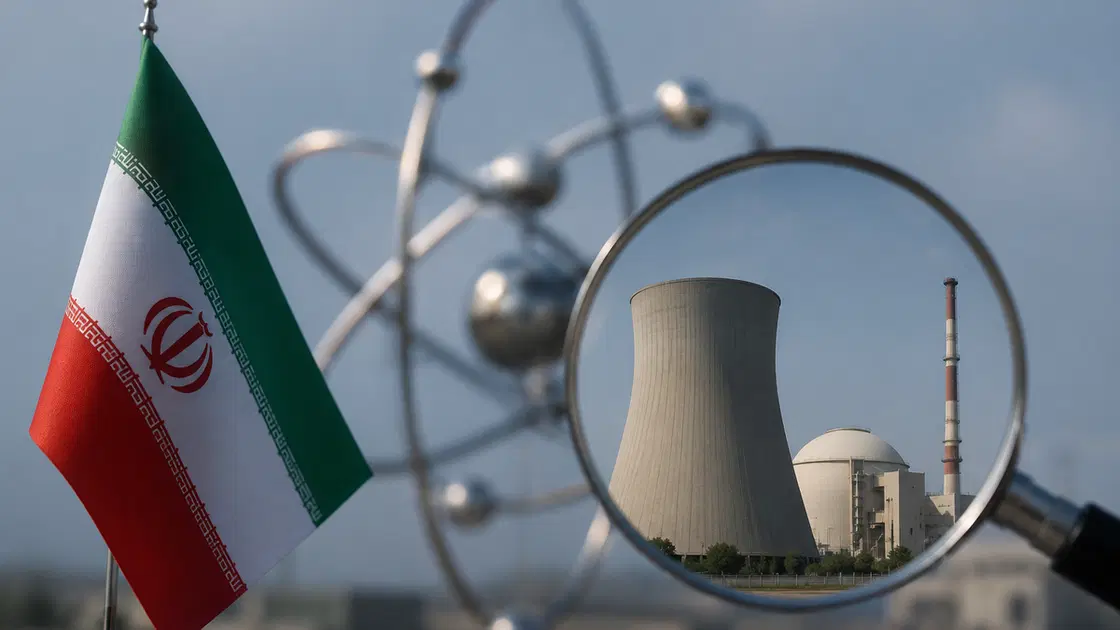
The UN nuclear watchdog has been unable to inspect key nuclear facilities in Iran since the twelve-day war initiated by Israel in June 2025, during which the Jewish state, and later the United States, carried out strikes against nuclear sites.
In the latest war that erupted on February 28, 2026, Iranian nuclear facilities were targeted. The agency has repeatedly requested access to the sites.
The resolution, submitted by Britain, France, Germany, and the United States, calls for "requesting the IAEA Director General to refer" Iran to the Security Council and the UN General Assembly.
This is the first time in 20 years that Iran has been referred to the Security Council for non-compliance with its nuclear obligations. The move is considered largely symbolic, as Iran's allies, Russia and China, hold veto power over any relevant sanctions that might be imposed on Tehran.
Iran's Permanent Representative to the UN in Vienna, Reza Najafi, described the resolution as a "political tool."
He told reporters after the vote, "Iran will only cooperate to the extent that circumstances and security considerations allow."
In a statement to AFP, he said the resolution "will be counterproductive."
The resolution expresses "grave concern... over Iran's continued non-compliance with its obligations" and reiterates its call for Tehran to "urgently address" the matter.
It also calls on Tehran to "engage seriously and without preconditions in talks aimed at building international confidence in the purely peaceful nature of Iran's nuclear program."
The IAEA has repeatedly denounced the lack of available information and the inability to inspect the facilities.
However, IAEA Director General Rafael Grossi stated on Monday that allowing agency inspectors access to key nuclear facilities in Iran would have "positive results" for the Islamic Republic.
Before the US-Israeli strikes in June 2025, the IAEA estimated that Iran possessed about 440 kilograms of uranium enriched to 60 percent, a level nearing the 90 percent required to build an atomic weapon and far exceeding the 3.67 percent threshold set by the 2015 agreement between Iran and major powers.
However, the fate of this stockpile remains uncertain since June 2025.
Israel and the United States have long accused Iran of seeking to build a nuclear weapon.
Tehran has consistently denied any military nuclear ambitions, emphasizing its right to possess this technology for civilian purposes.
Ali Vaez, a researcher at the International Crisis Group, said, "Some see the resolution as an opportunity to add legal pressure to the economic attrition and naval blockade, with the aim of tightening the noose on Iran."
But he described this as "absurd," noting that Russia and China "will likely ensure that Western pressure hits a dead end in the Security Council."