
Abu Alim: 75% of rare diseases affect children
Masad: The cost of rare diseases can be up to 17 times that of common diseases
Follow Al Rai

Diagnosing a rare disease takes 5 to 7 years
Abu Alim: 75% of rare diseases affect children
Masad: The cost of rare diseases can be up to 17 times that of common diseases
Rare diseases may not be 'rare' when you consider the number of people affected. In Jordan, despite the absence of accurate national statistics, estimates based on global prevalence rates suggest that around half a million people may be affected by a rare disease, with patient data distributed among hospitals, research centers, and various health sectors.
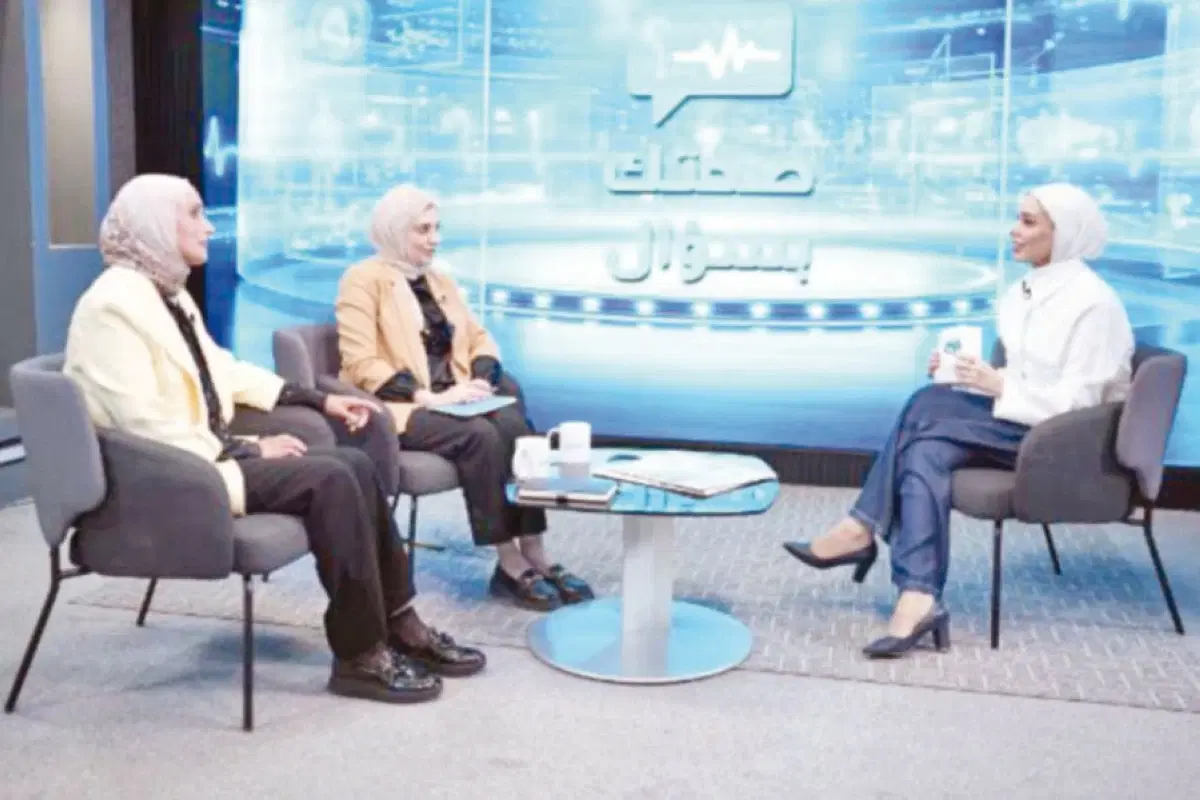
In an interview with 'Alrai', Aida Abu Alim, President of the Rare Disease Awareness Association, and Dr. Iman Masad, a faculty member at the Institute of Public Health, agreed that the main challenge in the file of rare diseases is not limited to the rarity of the disease itself, but extends to the lack of accurate national data and the difficulty of the diagnostic journey and access to treatment.
Abu Alim explained that a rare disease is defined as a condition or disorder that affects fewer than one in 2,000 people, noting that about 75% of rare diseases affect children, and most of them are genetic or hereditary, and some may lead to death before the age of five.
She emphasized that Jordan lacks a unified national registry for rare diseases, despite the existence of scattered data in university hospitals, research centers, medical services, and the private sector, pointing to efforts to cooperate with the Ministry of Health to establish a national registry that collects this data.
For her part, Masad explained that global estimates place the prevalence of rare diseases between 3.5% and 6% of the population, and when this percentage is applied to Jordan, which has a population of nearly 12 million, the estimated number could be close to 500,000 affected individuals.
She added that the problem is not limited to knowing the number, but also includes the geographical distribution and types of diseases, which are essential for planning budgets, purchasing medicines, and negotiating with companies, especially since some specialized treatment is concentrated in the capital.
According to Masad, the journey to diagnose a rare disease may take between 5 and 7 years, while about 50% of patients are still not accurately diagnosed, which means years of tests and treatments that may treat the symptoms without the disease itself.
She pointed out that delayed diagnosis may turn a manageable condition into a permanent disability, and the health sector alone does not bear the cost, as a mother may have to leave her job to care for her child, or the patient may need additional support in school, transferring the cost to the family, education, and the labor market.
Abu Alim noted that the similarity of symptoms of rare diseases with more common diseases prolongs the diagnostic journey, while the cost of genetic tests and treatments rises, and some are not available in Jordan.
According to Abu Alim, the suffering of patients is not limited to diagnosis and treatment, as some face bullying, stigma, and isolation in school, university, work, and even within the family, calling for raising awareness among families, educational institutions, and workplaces, and treating the patient as a human being with specific needs and facilities, not letting their disease become their identity.
She pointed to the importance of paying attention to consanguineous marriages in light of the genetic and hereditary nature of a large number of rare diseases, considering that knowing the geographical distribution of diseases can help in directing tests, awareness, and early intervention.
She emphasized that the association seeks to include rare disease patients under the umbrella of the Supreme Council for the Rights of Persons with Disabilities, to benefit from the facilities and rights needed by patients whose diseases lead to disabilities.
Masad warned that the cost of rare diseases can be up to about 17 times the cost of common diseases, while a review of government purchases showed that about 80% of rare disease drugs do not face real competition, which limits the negotiating power on prices.
Abu Alim gave an example of spinal muscular atrophy 'SMA', where the cost of one gene therapy may be about $2.5 million per dose, while the Ministry of Health managed to provide an alternative monthly treatment, whose price was negotiated down from about 8,000 to 4,000 dinars per month.
Masad stressed the need to adopt more flexible mechanisms for financing these treatments, including negotiating prices, pooling purchasing power, and joint purchasing with other countries, and risk-sharing agreements with companies, instead of leaving some treatment decisions subject to individual cases or societal pressure.
Abu Alim and Masad agreed that the required start is a national registry for rare diseases, which evolves into an integrated strategy that includes early diagnosis, referral pathways, treatment and medication, psychological and social support, clinical studies, and scientific research.
They called for the establishment of an independent fund to finance rare diseases, with contributions from the public and private sectors, civil society, and international organizations.
Masad believed that the file could also be an opportunity for Jordan to build national capabilities in genetic diagnosis, genomics, scientific research, and clinical studies, while Abu Alim considered that developing a specialized national center could also support medical tourism and attract patients from the region.
Masad emphasized that Jordan 'does not start from scratch', but needs to move from scattered data to a registry, policy, and strategy, making the rare disease patient a clear part of national health priorities.
Know more about this story?Send us a tip
Ask about this report — answers stay grounded in its text.




