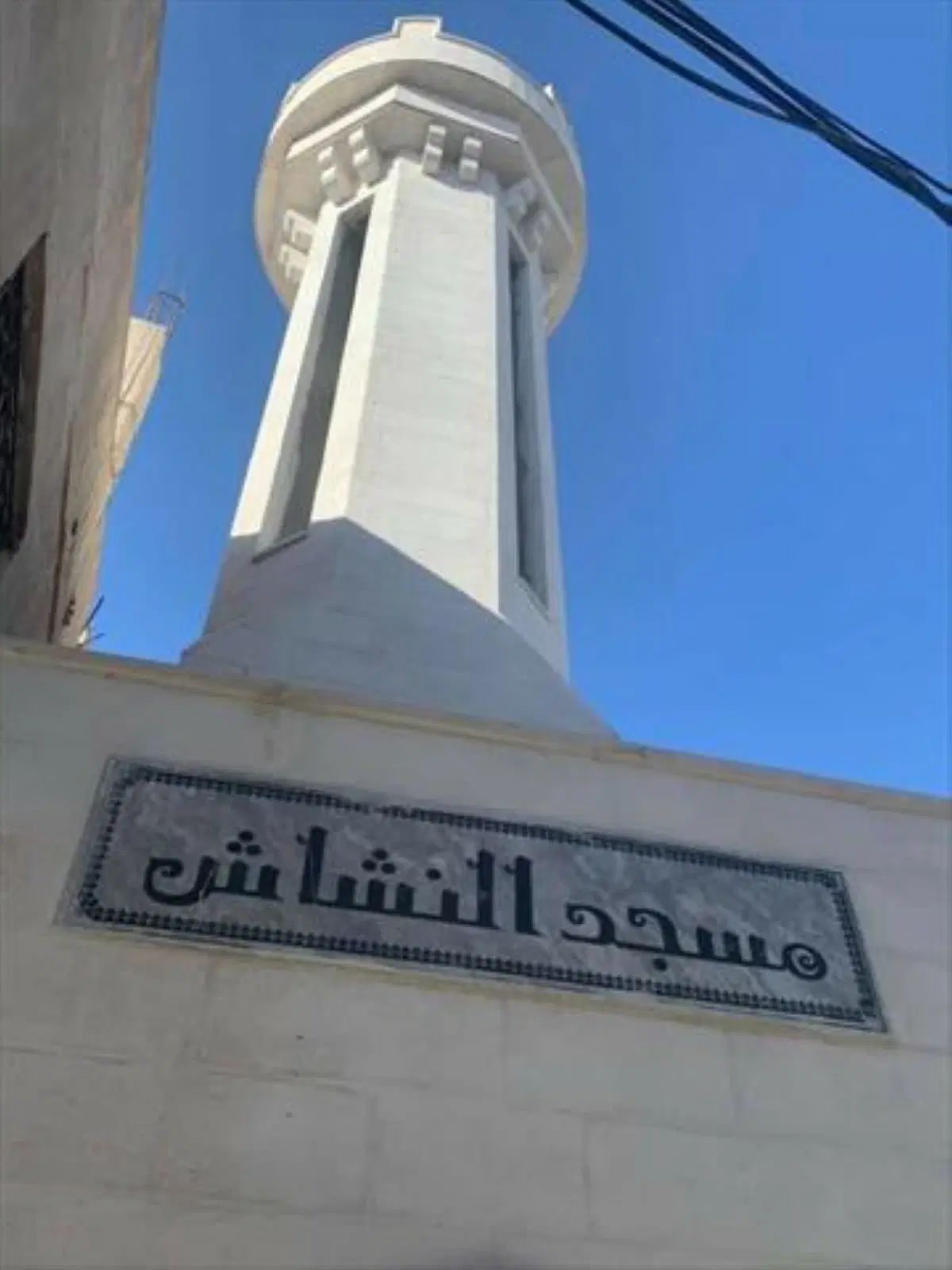
Dr. Luay Al-Dhneibat, Director of Endowments in Tafila Governorate, confirmed that (Al-Nashas Mosque) holds an exceptional religious and historical status in the heritage memory of the province, as it represents the first religious site established in Tafila Citadel to gather worshippers and disseminate religious sciences.
Al-Dhneibat explained that the Directorate of Endowments pays special attention to the historical and archaeological mosques in the province by including them in periodic maintenance and restoration programs, and preserving their architectural and heritage identity in cooperation with local committees and related institutions, to ensure their continued religious and educational role in a safe and appropriate environment.
Historian Dr. Ishaq Eyal Salman states that the name of the mosque, according to documentary data and historical studies, is attributed to a person from the Nashas family, one of the preachers and ascetics who migrated to the region at the end of the sixteenth century AD, coinciding with the beginning of the Ottoman era in Jordan.
Eyal Salman added that Nashas embarked on his journey from the Al-Ula region in Hijaz, where the family settled coming from Najd, before choosing Tafila's geographical location as a residence and a place for preaching and worship.
He explained that Nashas initially built a spacious room of stones and clay, not exceeding thirty square meters, following the architectural style prevalent at the time around Tafila Castle, and continued to worship and lead people in it until his death in the mid-seventeenth century AD, where he was buried in the land adjacent to the building.
He pointed out that the mosque underwent gradual transformations that revealed the local community's and official institutions' keenness on its continuity; the people of Tafila rebuilt it with their own efforts in later stages using stone and clay, expanding its area to about ninety square meters.
He explained that the mosque's structure includes a northern entrance facing the castle directly, with the mosque's sanctuary to the right of the entrance and the founder's grave to its left, in addition to a mihrab and two small windows in the southern wall for lighting the hall and providing ventilation.
The old building underwent several restoration operations due to the aging of the era and its exposure to weather factors and cracks due to its traditional clay construction, where it was rebuilt according to modern plans in 1973, during the reign of His Majesty King Hussein bin Talal - may God rest his soul - to appear the mosque with a developed concrete structure that accommodates a larger number of worshippers.
In 2005, the local mosque committee, in coordination with the Ministry of Endowments and Islamic Affairs and Holy Sites, continued modernization and development operations for the facility's infrastructure; a high minaret was added to the building, which pierced the sky of the old market, and the corridors were expanded, the entrances and external gates were organized, and it was equipped with modern services, leaving (Al-Nashas Mosque) to this day a beacon of faith and a living heritage landmark that connects the present with the fragrance of history in the heart of Tafila.