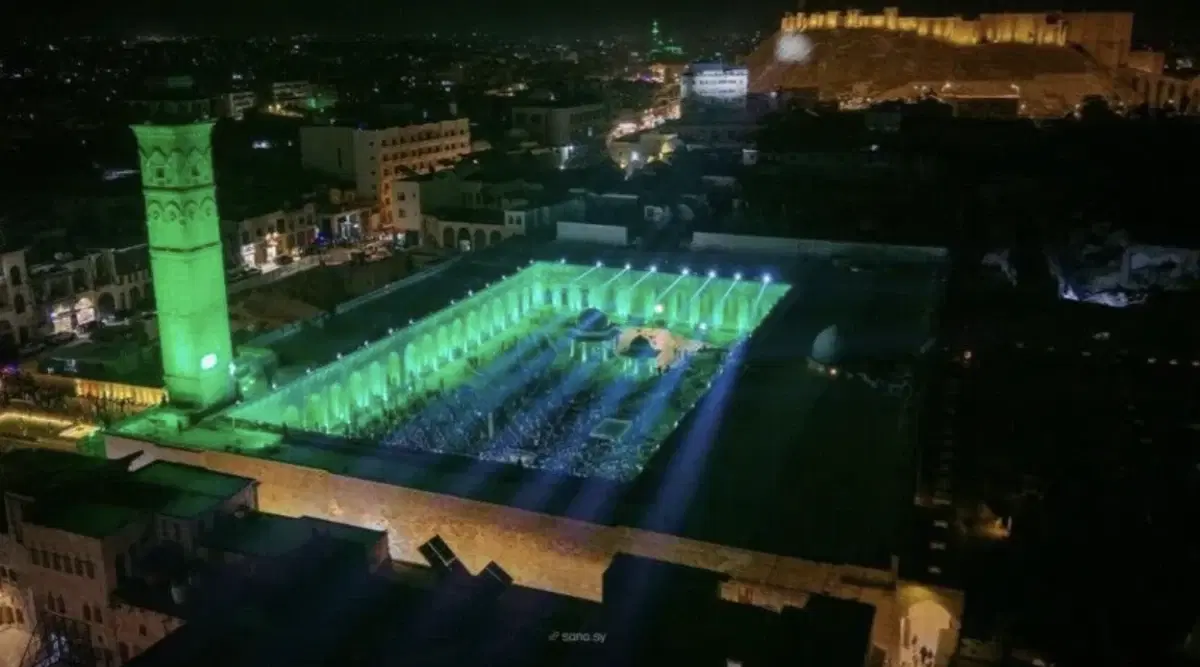
The Governor added: "Since the dawn of the Umayyad era, this great edifice has been part of the story of glory in the city of history, and it was a center of knowledge and enlightenment, and its corridors embraced scholars, preachers, and thinkers throughout the ages."
He pointed out that "the mosque was not absent from the revolution of truth and dignity, and it was a refuge for the revolutionaries, and from its doors emerged demonstrations against tyranny," in reference to the Syrian revolution that began on March 18, 2011, leading to the fall of the Assad regime on December 8, 2024.
The Governor continued: "Congratulations to the people of Aleppo on the return of this great edifice to illuminate with its light the path of the wayfarers, and to regain its place in the city's history and present."
He commemorated "the righteous martyrs of the Syrian revolution who ascended in this mosque and its surroundings, and we ask God for mercy upon them."
According to Syrian media, the mosque was subjected to one of the bloodiest and most destructive periods in its history during the years between 2012 and 2016, when the area surrounding it turned into a direct contact line between the forces of the ousted regime and the opposition factions at the time.
Both sides alternated control of the mosque, but the aerial and ground shelling launched repeatedly by the ousted regime was the most destructive, taking it out of service in 2013 after the collapse of large parts of its dome, corridors, and its famous minaret, which formed an architectural symbol of Old Aleppo.
After the fall of the Bashar al-Assad regime, the Aleppo Endowments Directorate began restoring the mosque "according to standards that preserve its architectural and heritage specificity."
The mosque is considered one of the oldest and most important mosques in Syria, as its construction dates back to the Umayyad era in 716 AD, and most sources indicate that Caliph Sulayman ibn Abd al-Malik was the one who ordered its construction.
The mosque retained its ancient character and its spiritual and scientific status, and remained a destination for worshipers, students, and visitors from inside and outside the city throughout the ages, until the last war of the ousted regime came to add to its history a new page of destruction, titled by ground and aerial shelling.