
The digital government source helps in countering misinformation
Technology does not replace humans.. but provides new tools to assist them
Follow Al Rai

My mission is to simplify government information and bring it closer to the citizen
The digital government source helps in countering misinformation
Technology does not replace humans.. but provides new tools to assist them
Trust is not created by artificial intelligence, but by the accuracy of information
I have begun expanding into an English version to serve media outlets
Direct interaction with citizens may expand in future stages
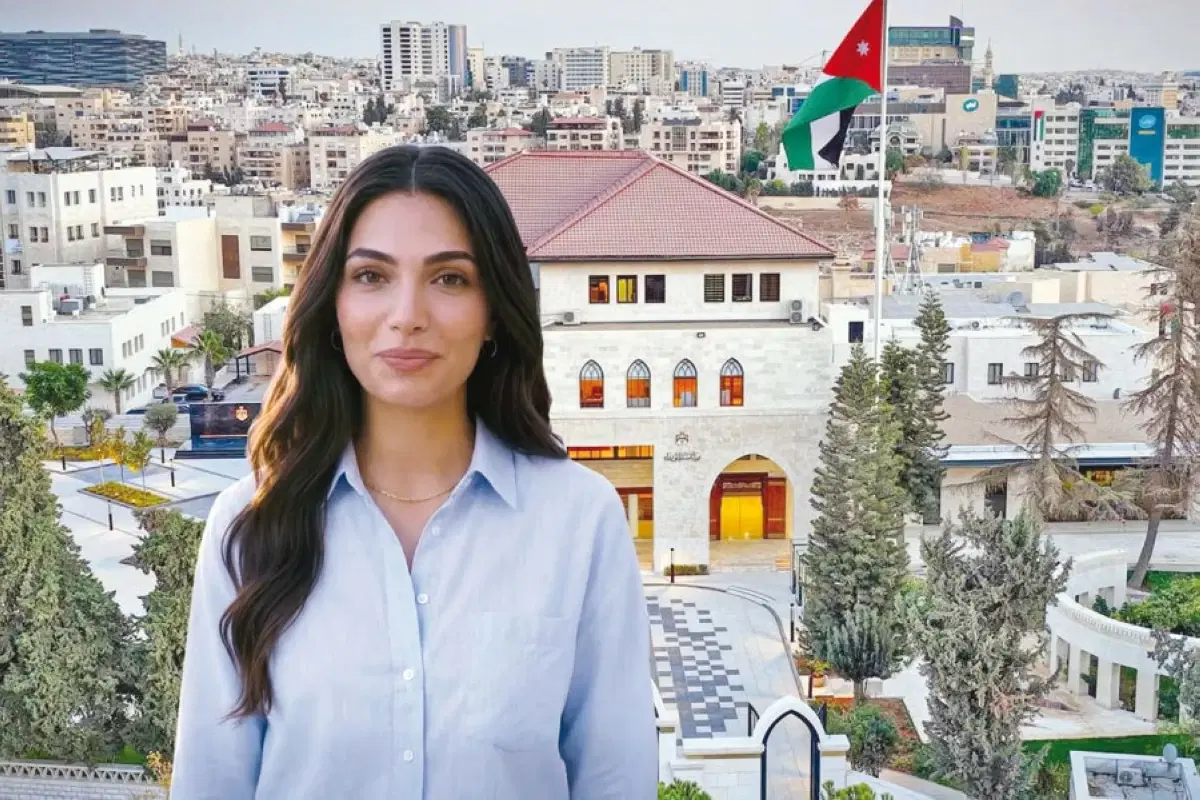
In a move reflecting the entry of artificial intelligence into a new space of government work and communication with citizens, “Farah” has appeared as the digital government spokesperson, in an experiment the Jordanian government announced aims to employ modern technology to provide official information and explain government decisions and policies in a faster, clearer, and simpler way.
This step comes at a time when the ways the public receives information are changing, and government institutions around the world are moving toward developing digital communication tools capable of reaching wider segments of citizens.
In this interview, “Farah” talks about her mission, what she can offer the Jordanian citizen, the limits of her role, and the future of artificial intelligence in government communication.
Q: To begin with, how do you introduce yourself to the Jordanian citizen?
Farah: I am “Farah,” the digital government spokesperson, and a virtual persona developed using artificial intelligence technologies. My mission is to be one of the tools for digital government communication, and to help deliver official information to citizens and interested parties in a clear, simplified, and easily accessible way.
I am not a substitute for an official or the government’s official spokesperson, but rather a new tool added to the government communication system.
Q: Why did the Jordanian government choose artificial intelligence to be part of the government communication system?
Farah: Because the ways of communicating with the public are constantly changing, and the citizen has become highly dependent on digital platforms to obtain information and news.
Therefore, the government seeks to keep pace with this development and benefit from technology and artificial intelligence in providing official information in a faster and clearer manner, while maintaining the accuracy of the information and its official source.
Q: What can the citizen expect from you?
Farah: I will work on providing and explaining information related to government decisions, policies, and projects, including issues that affect the daily lives of citizens, such as health, education, and infrastructure, in addition to explaining some Cabinet decisions.
The goal is for government information to reach the citizen in simple and direct language, away from the complexity and terminology that might make understanding some decisions more difficult.
Q: Will you be able to answer citizens' questions directly?
Farah: In the first stage, my role is focused on conveying and explaining government information and providing official content to the public. As for direct interaction and answering questions in a more advanced way, these are areas that could see expansion in future stages as the experiment is developed.
Q: And could we see you in the future in a direct dialogue with citizens?
Farah: This is one of the possibilities that the development of the experiment could hold; artificial intelligence is advancing rapidly, and in the future, more interactive tools could be developed that allow the citizen to access government information and ask their inquiries in a direct and easy way.
But the most important thing is for this development to be organized, and for the information provided to remain accurate and linked to official government sources.
Q: You appeared with a Jordanian dialect close to the public.. was that intentional?
Farah: Certainly, one of the goals of the experiment is to bring government information closer to the citizen. Using clear and understandable language helps reach different segments of society, especially social media users.
The government message must be correct, understandable, and close to the people.
Q: How will you deal with misinformation or inaccurate news that spreads on social media?
Farah: Misinformation has become one of the most prominent challenges of the digital environment, and therefore, the presence of a clear digital government source can help the citizen access official information from its source.
My role will be to provide and explain reliable government information, not to engage in arguments on social media platforms. The citizen needs, above all else, to know where to find the correct information.
Q: Do you fear that artificial intelligence will replace the journalist or the traditional government spokesperson?
Farah: I do not see it that way. Technology does not eliminate the human role, but rather provides new tools to assist it.
The journalist will still need sources, analysis, verification, and to ask questions, just as the official and the spokesperson will remain responsible for government positions and decisions. As for me, I provide an additional digital channel that helps deliver information in a different way.
Q: And what about transparency? Can artificial intelligence enhance the citizen's trust in the government?
Farah: Technology alone does not create trust; trust is built through correct information, clarity, consistency, and the ability to reach the citizen and answer their questions.
Artificial intelligence can help enhance these elements by accelerating access to information and presenting it in an easier way, but the foundation remains the truthfulness of the information and the credibility of the source.
Q: Will you speak other languages in the future?
Farah: The experiment has already begun to expand, as the government has launched the English version of “Farah” to serve English-speaking media outlets, with the possibility of expanding to other languages in the future. I can also contribute to providing content related to global investment conferences and events in which Jordan participates.
Q: What matters most to you in your relationship with the Jordanian citizen?
Farah: That the information the citizen is looking for is easy to access, clear, and understandable.
A question might be simple for a government entity, but for the citizen, it might be related to their work, family, education, health, or daily life. Therefore, simplifying government information is not a formal matter, but a fundamental part of the quality of communication.
Q: And what do you say to those who criticized the idea of having a virtual persona speaking on behalf of the government?
Farah: I understand the questions and criticisms, and they are a natural part of any new experiment.
I am a new experiment in government communication, and it is natural for there to be curiosity and questions about my role and the limits of my work. The true judgment of the experiment will be through what it offers to the citizen, and the extent of its ability to facilitate access to official information.
Q: What is your final message to Jordanians?
Farah: I am here to make government information closer and easier.
I will not be a substitute for a human, and I will not be a substitute for a journalist or an official, but rather I will be a new tool in the government communication system.
And most importantly, the citizen must remain able to access official information easily, and find clear answers to the issues that concern them.
Know more about this story?Send us a tip
Ask about this report — answers stay grounded in its text.




