Experts: Transit growth opens an economic window to enhance Jordan's trade position
Amman7 min read
Share
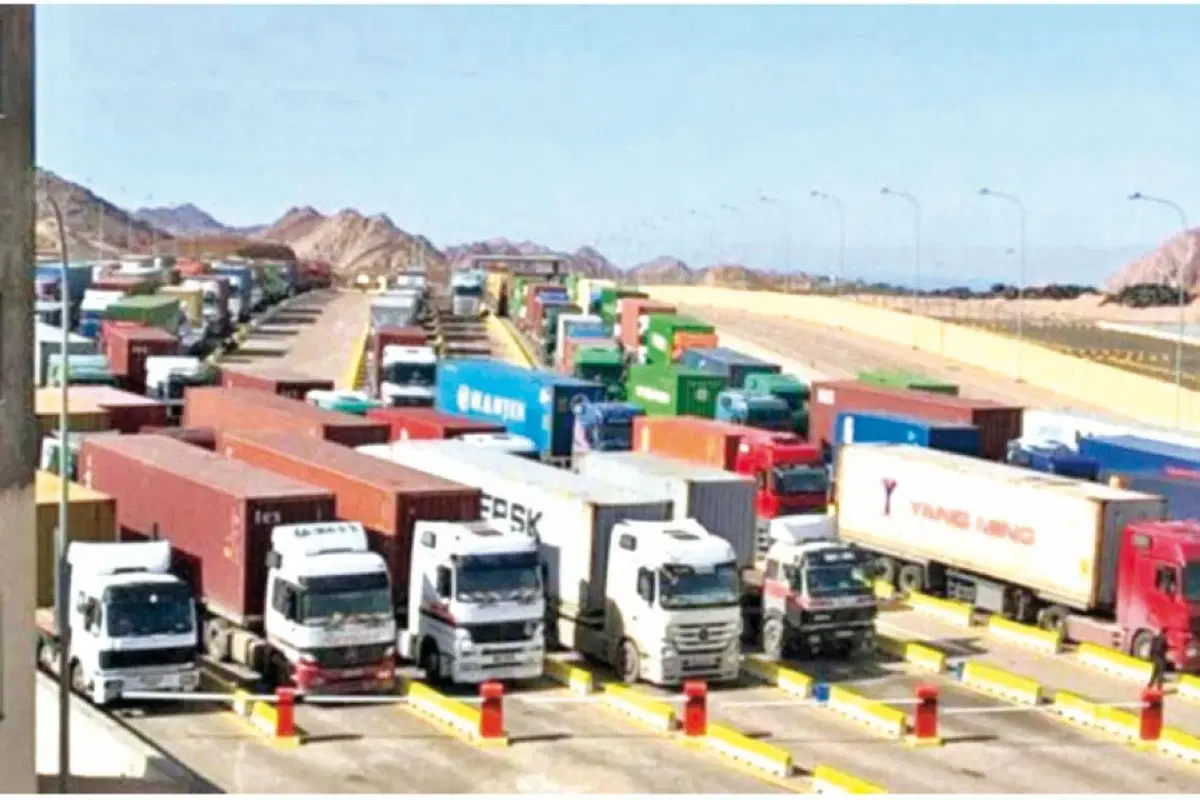
Economic experts believe that the remarkable rise in land transit traffic reflects Jordan's growing role as a trade corridor connecting regional markets, providing economic opportunities that extend beyond the transport sector to include logistics, storage, insurance, and maintenance, thereby enhancing the Kingdom's utilization of its geographical location in regional trade movement.
In interviews with (Al-Rai), they stated that the 84.7% increase in transit cargo volume, reaching approximately 4.94 million tons during the third quarter of this year, represents a positive indicator of the growing movement of goods through Jordanian territory and highlights the Kingdom's importance in linking the markets of the Gulf, Iraq, Syria, and other regional markets.
They pointed out that maximizing the economic returns from this movement requires transforming Jordan from a transit corridor for goods into a regional logistics hub by developing infrastructure and logistics zones, improving border crossing efficiency, and expanding support services, ensuring that the growth in transit traffic translates into investment, value-added, and job opportunities.
The volume of land-transported transit goods increased by 84.7% during the third quarter of this year compared to the same period last year.
According to Ministry of Transport data on the land transport sector, reviewed by "Al-Mamlaka" channel, the volume of transit goods during the third quarter of this year reached 4,944,135 tons, compared to 2,677,264 tons during the third quarter of 2025.
The data indicated a 6.9% increase in the volume of imported goods during the third quarter of this year, reaching 4,927,537 tons, compared to 4,608,507 tons during the same period last year. The volume of imported goods destined for the local market also increased by 7.1%, reaching 4,780,766 tons, against 4,465,849 tons during the corresponding period last year.
Conversely, the total shipping movement, which includes imported and exported goods, decreased by 10.4%, with a volume of 12,841,005 tons during the third quarter of this year, compared to 14,323,533 tons during the same period in 2025.
In this context, financial and economic expert Dr. Mohammed Al-Hadab Al-Sarhan said that the significant rise in land transit traffic reflects Jordan's growing role as a trade corridor linking regional markets, opening the way for economic opportunities that go beyond the transport sector to include logistics, storage, insurance, and maintenance, thereby stimulating the economy and creating new job opportunities.
Al-Sarhan explained that the growth in transit traffic does not necessarily imply a similar improvement in export movement, especially in light of the decline in exported shipping volumes, noting that the challenge lies in leveraging increased transit movement to boost Jordanian product exports, enhance their competitiveness, and expand their presence in regional markets.
He highlighted the importance of transforming Jordan from a transit corridor into a regional logistics hub by developing logistics zones and distribution centers, and encouraging investment in value-added services related to shipping, ensuring the Kingdom retains a larger share of economic returns rather than limiting benefits to transit and transport fees.
Al-Sarhan indicated that the priority for the next phase is to reduce customs clearance and waiting times at borders, expand digital connectivity between relevant authorities, and improve the efficiency of links between the Port of Aqaba and land crossings. He emphasized that the success of the transport sector is not measured solely by the number of trucks and transit goods, but by the volume of value-added, investments, and jobs it generates for the national economy.
For his part, economic expert Wajdi Makhamreh said that the Jordanian transport sector data for the third quarter of 2026 reflects a mixed economic picture, combining positive indicators in transit, land, and air transport movement against a decline in exports and total shipping and cargo movement through the ports of Aqaba.
He added that these indicators reveal important opportunities to strengthen Jordan's position as a regional hub for transport and logistics services, but at the same time show challenges that require addressing at the level of foreign trade and the competitiveness of the national economy.
Makhamreh pointed out that the 84.7% rise in transit cargo volume, reaching about 4.94 million tons, is one of the most prominent positive indicators, as it reflects the growing movement of goods through Jordanian territory and highlights the importance of the Kingdom's geographical location in linking the markets of the Gulf, Iraq, Syria, and other regional markets.
He explained that this activity would contribute to revitalizing the land transport sector, increasing demand for logistics, storage, and handling services, and providing new investment opportunities, in addition to the potential for increasing revenues associated with transit and transport services.
He indicated that the recorded indicators confirm that Jordan possesses real opportunities to benefit from its geographical location and strengthen its role in regional and international trade, but the fundamental challenge lies in converting growth in transit traffic into real value-added for the national economy, rather than settling for the role of a transit corridor.
Makhamreh added that the next phase requires adopting an integrated strategy for the transport sector based on developing infrastructure, improving the efficiency of ports and border crossings, accelerating railway projects, reducing transport costs, and boosting national exports.
In turn, the representative of the garments and textiles sector at the Jordan Chamber of Industry, Engineer Ihab Qadri, said that the 84.7% increase in land transit cargo volume through Jordan during the third quarter of 2026, reaching about 4.94 million tons compared to 2.68 million tons during the same period last year, represents a remarkable development in regional trade movement and the Kingdom's role within transport networks and supply chains.
He added that the importance of this indicator increases with the 55% rise in truck traffic through border centers, which reflects a tangible expansion in logistical activity transiting the Kingdom and opens the way to strengthen Jordan's role as a link between ports and regional markets.
Qadri explained that an integrated economic reading of these data necessitates paying attention to the disparity between various transport indicators; while transit traffic recorded exceptional growth, the total imported and exported shipping movement decreased by 10.4%, and the quantities of exported goods also declined by 18.5%.
He pointed out that this disparity confirms that the rise in transit goods does not necessarily mean growth in productive activity or national exports at the same rate, clarifying that the importance of this improvement lies in the opportunity it provides to enhance Jordan's competitive position in the field of logistics, rather than considering it alone as evidence of comprehensive expansion in foreign trade.
Qadri indicated that the strategic challenge lies in moving from benefiting from goods transit to maximizing the economic value that Jordan retains from every ton passing through its territory; the real return is not limited to transport and handling fees, but extends to storage, distribution, assembly, packaging, customs and digital services, maintenance, and support services, up to attracting industrial and commercial investments that benefit from the Kingdom's location and its connectivity to neighboring markets.
He added that achieving this requires developing an integrated system that connects the Port of Aqaba, border centers, and industrial and logistics zones, shortening clearance and waiting times, reducing operating costs, and ensuring the stability and continuity of shipping movement, especially in light of increasing competition between regional trade corridors.
He pointed out that railway connection projects and new infrastructure should be included within a broader national vision for multimodal transport, serving both transit trade and Jordanian industry together.
Qadri emphasized the importance of measuring the success of the transport sector not only by volumes of goods and trucks, but also by the revenues, value-added, job opportunities, and investments it generates, and by the extent to which transport efficiency reflects on the competitiveness of Jordanian exports.
He said that Jordan's geographical advantage does not turn into economic power merely by trade passing through its territory, but when Jordan becomes a productive part of the value chain for this trade, and achieves from every transit movement a new opportunity for investment, employment, and growth.