Experts: The King's speech links Jordan's security and stability to the strength of its economy
Amman5 min read
Share
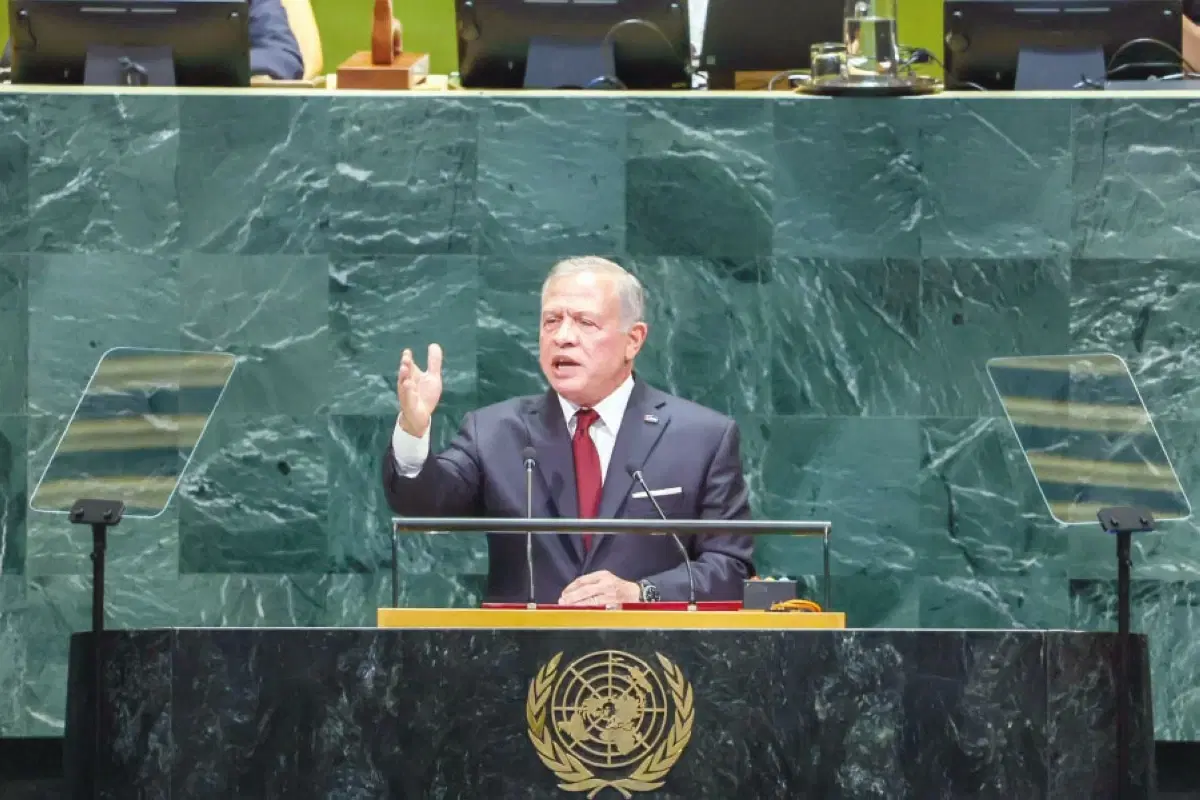
Economic experts agreed that the speech of His Majesty King Abdullah II before the United Nations General Assembly carried an interconnected political, economic, and security message, the essence of which is that the region's crises are no longer separate files; a war that begins politically turns into security instability, then its effects extend to energy and food prices, trade and investment movement, and the lives of citizens.
In statements to "Alrai," they pointed out that the private sector stands behind the national positions led by His Majesty the King and will continue its role in supporting the national economy and enhancing its ability to face regional challenges, thereby contributing to protecting national achievements and supporting the development process.
In turn, Engineer Fathi Al-Jaghbir affirmed that His Majesty the King's speech embodies the firm Jordanian position towards the Palestinian cause, emphasizes the necessity of ending the siege on Gaza, rejects displacement and resettlement, and preserves the legitimate rights of the Palestinian people, in addition to the necessity for the international community to assume its responsibilities in protecting civilians and applying international law.
He said that His Majesty the King's emphasis on the two-state solution and the establishment of an independent Palestinian state on the June 4, 1967 lines with East Jerusalem as its capital constitutes a basis for achieving a just, comprehensive, and lasting peace, noting that the Jordanian industrial sector stands behind the national positions and will continue to support the economy and face regional challenges.
Al-Jaghbir added that the General Assembly meetings represent an opportunity to strengthen economic and investment relations, noting that the Kingdom's political strength under the leadership of His Majesty the King is reflected in the national economy through seeking practical solutions to the region's crises and strengthening relations with countries of the world.
He pointed out that the momentum witnessed in bilateral meetings on the sidelines of the meetings can contribute to strengthening economic relations and enhancing investment, confirming that His Majesty the King's speeches in international forums stem from a vision that places national and Arab interests at the forefront of priorities.
For his part, economic expert Wajdi Makhamreh said that His Majesty the King's speech at the General Assembly provided an integrated vision that links regional security, political stability, water security, the economy, and development.
He explained that the speech emphasized the necessity of implementing the two-state solution and the international community assuming its responsibilities towards international law, while the security dimension carried a clear message that border security and water security are part of Jordanian national security, especially in light of regional developments.
Makhamreh pointed out that the speech also reflects the necessity of protecting the Jordanian economy from the repercussions of conflicts, especially since the Kingdom is an open economy affected by trade, energy, tourism, investment, and supply chain movements, noting that Jordan's stability can be transformed into an economic advantage by enhancing its role as a hub for trade, industry, technology, and a link between the Gulf and the Mediterranean.
He pointed to the importance of continuing investment in the Port of Aqaba, logistics corridors, renewable energy, water, digital infrastructure, and value-added industries, which enhances Jordan's ability to attract investments and increase exports.
Makhamreh confirmed that the basic message of the speech is that political, security, economic, and water security have become one system, and that protecting Jordan requires a strong economy, water and energy security, new investments, and effective trade corridors, which reflects on growth, job opportunities, and the citizens' standard of living.
Financial and economic expert Dr. Mohammed Al-Hadab Al-Sarhan confirmed that His Majesty the King's speech carried an interconnected political, economic, and security message, explaining that regional crises move quickly from the political sphere to security, energy, food, trade, and investment.
He explained that the economic dimension in the speech is linked to building the future in parallel with facing crises, by enhancing Jordan's role as a hub for trade, industry, and technology and connecting the Gulf to the Mediterranean, which transforms location, stability, and international relations into investments, projects, and job opportunities.
Al-Sarhan pointed out that security and investment have become two sides of the same coin; the investor looks for returns and a market, but also needs stability, continuity of supply chains, and protection of infrastructure and trade corridors, noting that maintaining Jordan's stability, developing its capabilities, and linking it commercially and logistically to regional markets enhances its attractiveness for long-term investments.
He concluded by saying that the equation proposed by the speech is based on protecting national security while continuing openness, dialogue, and building the economy of the future, so that stability and political and economic relations become a lever for growth and investment, and the economy becomes one of the elements of the state's strength and its ability to protect its interests and citizens.
The former representative of the clothing and textile sector at the Jordan Chamber of Industry, Engineer Ihab Qadri, said that His Majesty the King's speech carries a vision that transcends immediate crises to a broader concept of sovereignty, noting that water, energy, food, supply chains, trade, and technology have become direct elements in the national security system.
He added that protecting sovereignty is not limited to borders and geography, but includes building economic capacity that reduces points of vulnerability by increasing production and exports, enhancing water, food, and energy security, localizing technology, diversifying markets and partners, and attracting value-added investments.
Qadri pointed out that protecting sovereignty does not mean isolation, but rather building strength through calculated openness, diversifying partnerships, and enhancing national capabilities, confirming that a strong economy expands the state's options and enhances its ability to face shocks and protect its decisions and national interests.