66 projects in 6 sectors over 6 months
Gap between the volume of needs and financial pledges
Follow Al Rai

"Peace Council" excludes "UNRWA"
66 projects in 6 sectors over 6 months
Gap between the volume of needs and financial pledges
Debris removal, "munitions" clearance, and road repairs
Providing temporary housing for about 400,000 Palestinians
$50 million for the rehabilitation of key hospitals
Allocating sufficient fuel for 6 months for vital facilities
Establishing a fortified facility in Rafah for the international stabilization force
Electronic government services and digital payment systems
The "Peace Council", chaired by US President Donald Trump, announced an early recovery plan for the Gaza Strip worth $2.45 billion over 6 months, distributed across 66 projects in 6 sectors, at a time when the Council's announcement not to deal with the United Nations Relief and Works Agency for Palestine Refugees ("UNRWA") has sparked widespread Palestinian anger.
The announcement came on the sidelines of the UN General Assembly meetings, amid a wide gap between the scale of destruction in the Strip and the funding proposed for the first phase, while the Council acknowledges that the implementation of its plan remains tied to political and security conditions that have not yet been met, most notably reaching an agreement on Hamas's weapons, Israeli cooperation, the deployment of the international stabilization force, allowing the National Committee for the Administration of Gaza to operate inside the Strip, ensuring the flow of reconstruction materials, securing funding, and Israeli military withdrawal arrangements.
A "Peace Council" official confirmed that the Council does not intend to deal with "UNRWA" or assign it any role in Gaza, in a stance that aligns, according to the Palestinian Authority and "Hamas", with Israeli efforts to end the agency's work and marginalize its role.
Hamas spokesman Hazem Qassem said that the Council's stance "targets the liquidation of UNRWA's work and prevents it from providing relief services to the Palestinian people, alongside undermining the right of Palestinian refugees to return," considering it surprising to take this position at a time when the Council is unable to provide relief to the residents of Gaza or compel Israel to respect the ceasefire agreement and halt daily killings.
In contrast, contacts between the two sides reveal a more complex picture; as Council members and UN officials, according to the Palestinian National Authority, held several meetings with "UNRWA" during the current year, the most recent of which was this September, despite public statements suggesting the end of the agency's role.
A Council official said the meetings aimed to understand UNRWA's working mechanism to allow the development of "more efficient and accountable" programs, adding that the agency's staff could continue working if they pass vetting procedures and meet the required conditions. Former UNRWA Commissioner-General Philippe Lazzarini viewed this proposal as reflecting a contradiction between the Council's declared position and international expectations regarding the agency continuing to perform its duties, while "Hamas" believes its exclusion goes beyond the humanitarian aspect to touch upon the refugee issue and the right of return.
At the same time, the plan reveals a wide gap between the volume of needs and financial pledges; direct physical damages in Gaza are estimated at about $35.2 billion, while the cost of full recovery and reconstruction over ten years reaches about $71.4 billion. As for the first-phase amount of $2.45 billion, it has not yet been fully funded.
Jonathan Warsaw, the Council's Chief Financial Officer, said that international pledges amount to about $18 billion, while actual transferred funds have not exceeded $280 million, explaining that the Council intends to "call for capital" when needed, rather than holding funds in advance.
The plan is distributed across six main sectors including infrastructure, human development, economic recovery, digital transformation, legal affairs, and peace and security.
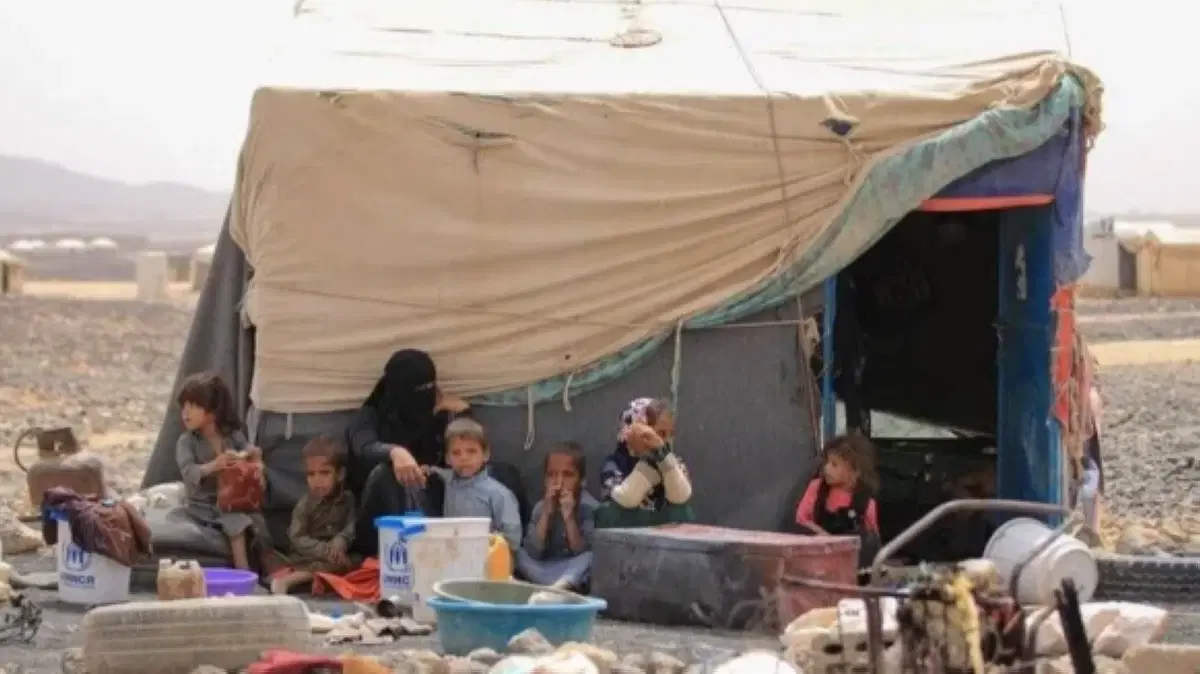
The infrastructure and basic services sector accounts for about $400 million to provide temporary housing for about 400,000 Palestinians still living in tents, through insulated modular housing caravans.
Turkey has pledged to provide 70,000 mobile homes, while 5,000 units donated by Egypt and Qatar remain stuck on the Egyptian side of the border. The plan also allocated $275 million for debris removal and unexploded ordnance clearance, and $30 million for road repairs.
In the health sector, the plan allocates $50 million for the rehabilitation of key hospitals, including the European Hospital in Khan Yunis, the Indonesian Hospital, Al-Shifa, Rantisi Children's Hospital, Al-Amal, and the Turkish-Palestinian Friendship Hospital, alongside providing 260 diesel generators and quantities of fuel sufficient for six months for vital facilities.
In education, the "Back to School" program includes the rehabilitation of 300 school buildings and the establishment of 117 temporary classrooms with a capacity of up to 315,900 students, alongside a program targeting 10,000 students whose study plans outside the Strip were disrupted due to the war. The peace and security sector allocates $885 million, making it the second largest item in the plan, including $275 million to establish a fortified facility in Rafah accommodating 5,000 personnel of the international stabilization force, $140 million to recruit and train the multinational force, $120 million for the new Palestinian police, and $20 million for the weapons procurement and handover mechanism.
The plan also includes a broad digital transformation track, featuring the establishment of digital ID, e-government services, digital payment systems, the provision of 4G network connectivity, the development of e-health and e-education services, and the creation of cloud data infrastructure.
While Council officials acknowledge that the implementation of the plan is conditional on fulfilling a set of political and security requirements, reports revealed a US tendency to activate an alternative plan starting with governance and reconstruction in areas not controlled by "Hamas" and under Israeli control, which make up more than 60% of the Gaza Strip, following the stalling of efforts to persuade Israeli Prime Minister Benjamin Netanyahu of the proposed agreement on giving up heavy weapons in phases.
According to the alternative plan, the Palestinian technocratic government operating from Cairo will be transferred to those areas, and reconstruction work will begin there, in parallel with the deployment of the international stabilization force and the new Palestinian police, which has begun training in Egypt.
The National Committee for the Administration of Gaza (NCAG), which officially began its work in Cairo in January 2026 under the chairmanship of Dr. Ali Shaath, will manage civil affairs and internal security during the transitional phase, pursuant to UN Security Council Resolution 2803 and Trump's 20-point plan.
Shaath said that the establishment of the committee represents a "pivotal moment" in the efforts aimed at turning the page on the war and starting a new phase, stressing that it is "a Palestinian body, created by Palestinians for Palestinians." However, the committee's entry into the Gaza Strip still faces Israeli rejection, according to observers.
Nikolay Mladenov, the Council's High Representative for Gaza Affairs, said that talks with Israel "are not easy at the present time due to the elections there," pointing out that everything has become "more emotional and politically sensitive."
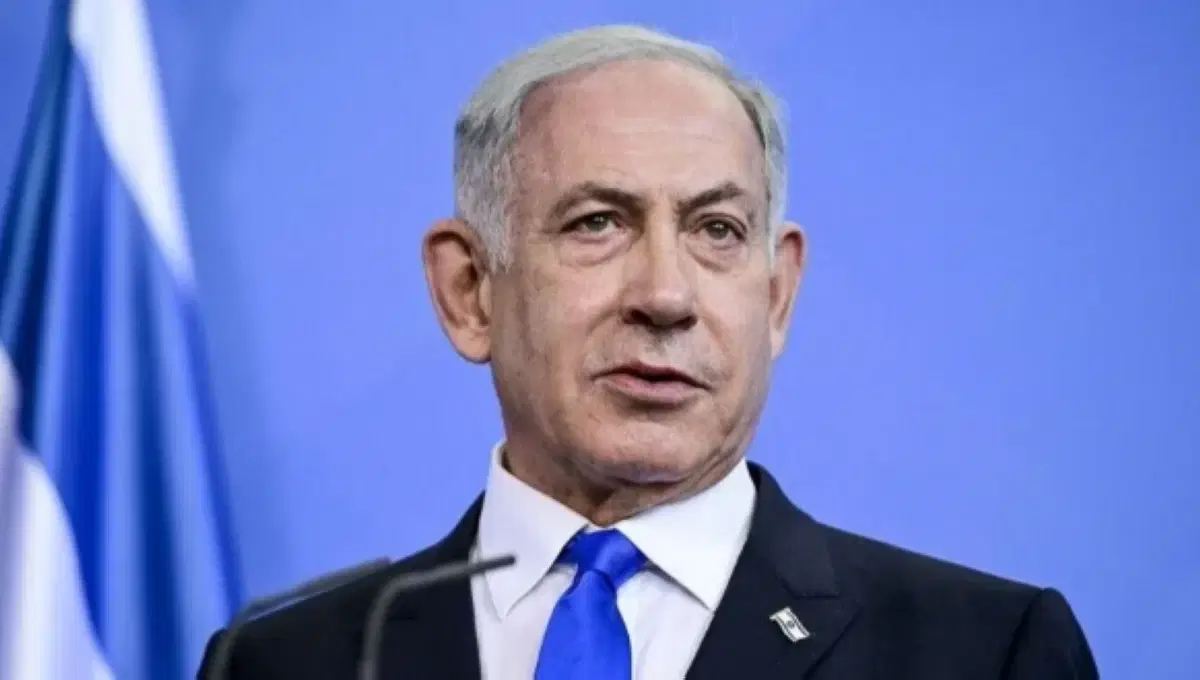
Netanyahu had rejected the disarmament plan approved by the Council, insisting that Israel will not withdraw from the Strip until "Hamas" is completely disarmed, in a dispute with the gradual and reciprocal framework proposed by the Council.
In his closing remarks, Jared Kushner, Trump's envoy and Council member, said the focus was on solutions away from "slogans and political rhetoric," yet the dispute over the Israeli withdrawal and Hamas's weapons remains one of the most prominent obstacles to implementing the plan.
While the "Peace Council" seeks to launch early recovery projects including shelter, health, education, infrastructure, digital transformation, and security, their implementation remains tied to resolving political and security disputes, at a time when millions of Palestinians await the translation of international pledges into actual steps on the ground, amid the ongoing difficult humanitarian conditions in the Strip.
Know more about this story?Send us a tip
Ask about this report — answers stay grounded in its text.