Documentary Film Screening and Photo Exhibition Launch on "Mahras Olives"
As part of the Bani Obeid District of Culture celebrations
Amman3 min read
Share
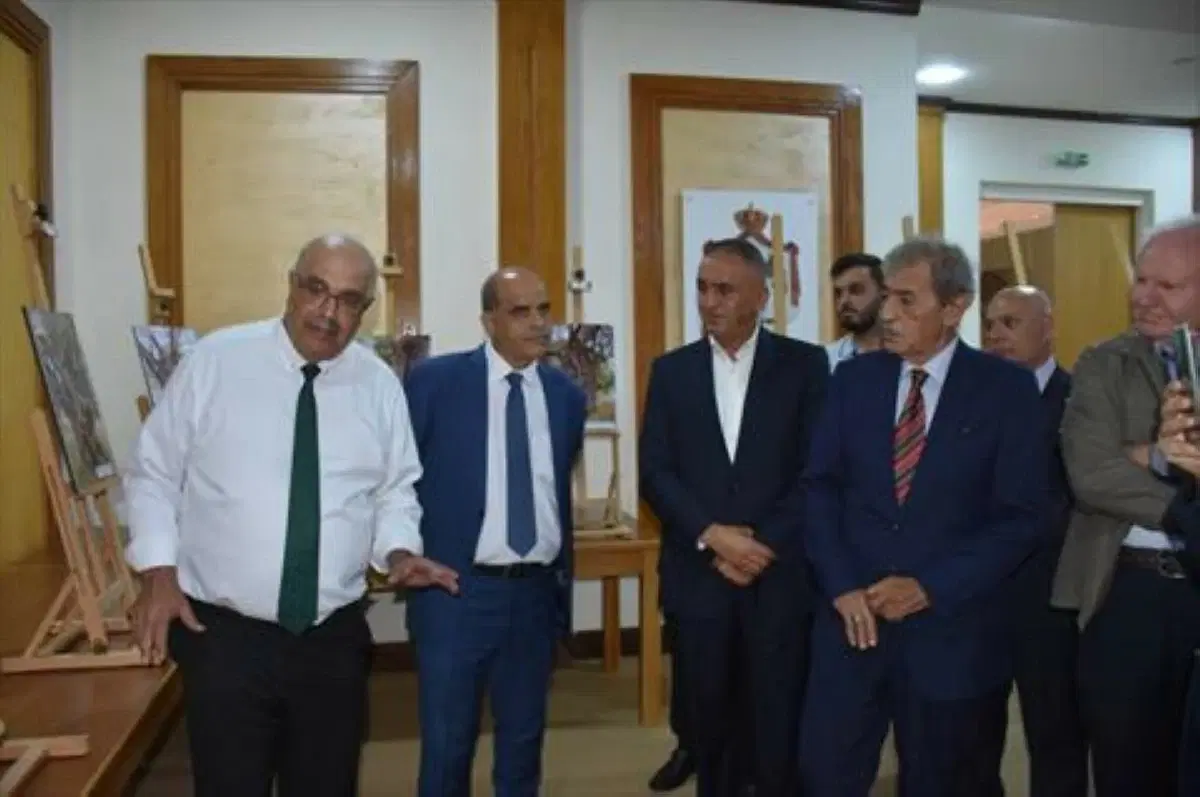
As part of the Bani Obeid District's celebrations for being selected as the Jordanian District of Culture for 2026, and under the patronage of the Irbid Governorate Council President, Engineer Munther Al-Batayneh, the Irbid Directorate of Culture held a screening of a documentary film titled "Documenting Historical Olive Trees - Mahras in Irbid Governorate" at the Irbid Cultural Center, accompanied by a specialized photo exhibition. The event was attended by the Director of the Irbid Directorate of Culture, Dr. Sultan Al-Zaghoul, along with a group of interested individuals, intellectuals, and media personnel.
At the beginning of the event, the photo exhibition organized by researcher and environmental and heritage protection expert Dr. Ahmed Mahmoud Jabr Al-Shuraideh was inaugurated. The exhibition used documentary photographs to depict the most important historical ancient trees, their types, and their locations in Irbid Governorate. During the exhibition, Dr. Al-Shuraideh provided a detailed explanation to the attendees about the ancient olive trees in Wadi Al-Rayyan (Al-Koura), recalling historical trees dating back to ancient times, such as the "Arar Tree" and the "Awda Tree," among other ancient trees, some of which are up to 3,000 years old, serving as living witnesses to the depth of the region's civilizational roots.
During his speech, Dr. Al-Shuraideh emphasized that Irbid Governorate hosts a unique and rare collection of ancient Mahras olive trees, estimated to be between 1,700 and 2,700 years old. He pointed to the significant attention these trees have received from the National Agricultural Research Center, especially after the Jordanian Mahras variety was included on the UNESCO Intangible Cultural Heritage list. He added that the area covered by historical Roman olive trees in Jordan is estimated at about 15-20% of the total area planted with olives, noting that visitors to the villages of Ajloun, Irbid, Balqa, Jerash, and Tafilah can observe these trees alongside ancient stone presses, which serve as clear historical evidence of the origin and importance of this agriculture.
For his part, the Director of the Irbid Directorate of Culture, Dr. Sultan Al-Zaghoul, emphasized the importance of highlighting the blessed olive tree and the sublime value it represents in the life of the Jordanian citizen, reviewing its heritage and historical dimensions that form an integral part of the national identity. Al-Zaghoul explained that the exhibition and the documentary film are part of the diverse cultural activities celebrating the Jordanian narrative of the olive seasons, noting that the harvesting season represents a unique social and cultural phenomenon that brings together family and relatives, embodying the values of solidarity and a close bond with the land.
It is noteworthy that the documentary film is considered a work of historical, cultural, and environmental value, documenting the memory of the land and the fragrance of history, and shedding light on the oldest living evidence of the Jordanian human's connection to their land. The film was researched and prepared by Dr. Ahmed Mahmoud Jabr Al-Shuraideh, produced and directed by Mohammed Nour Ahmed Al-Shuraideh, and supported by the Jordanian Ministry of Culture.