Decline of Traditional Professions in the Face of 'E-commerce' and Ready-Made Alternatives
Amman4 min read
Share
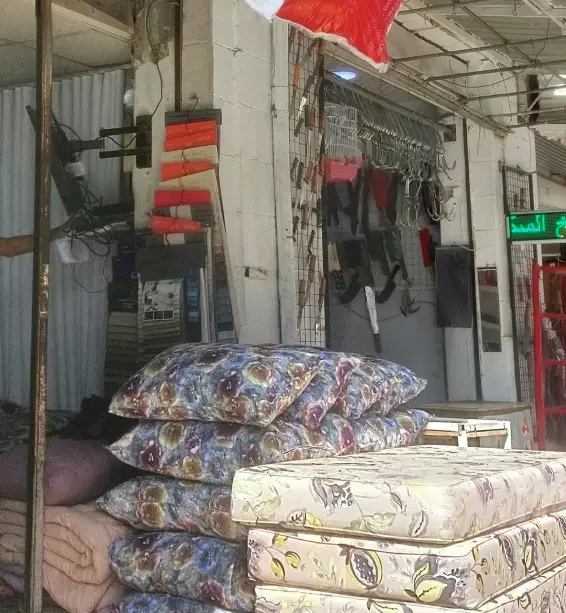
Traditional and ancient professions in Irbid Governorate are facing unprecedented challenges, as the famous "upholstery" profession, which has been associated with the city's memory and its old streets surrounding the Bukhariya market for over 60 years, is on the verge of extinction, after ready-made mattresses, quilts, and pillows and the invention of sponges invaded all homes, making the profession almost extinct and today it is hardly possible to find a single "Arab upholsterer" if any.
Owners of shops and merchants met by "Al-Rai" confirmed that the consumption pattern of the new generation has changed radically; they are no longer very interested in the quality of traditional materials such as cotton and wool or what they put under their heads, as much as they are interested in comfort and avoiding the hassle and care of old belongings that require periodic and costly cleaning, washing, and drying in terms of effort and time.
And the craftsmen pointed out that the spread of "e-commerce" and sales through parcels and continuous offers on digital platforms have directly harmed craftsmen and traditional shops, and pushed many senior merchants and long-experienced owners to close their shops and stop working due to the sharp decline in sales, abandoning the search for the quality and durability that the traditional upholsterer used to guarantee, despite the fact that hand-made upholstery provides freedom of choice of colors, models, and quality security.
Alaa, the owner of one of the shops, narrates that most of these shops date back to more than 60 years, built with old black stone that embodies the authenticity of the place, confirming that most of the current shop owners have inherited this profession from their ancestors as an authentic family profession.
He pointed out that this profession has become witnessing little demand and noticeable decline due to several factors, foremost of which is electronic sales and the entry of modern industries and ready-made alternatives.
Alaa explained that the profession is based primarily on the "production of woolen and cotton mattresses as well as quilts and pillows", and this is done by bringing cotton or wool to the upholsterer after washing it well and drying it, the upholsterer cleans the cotton and wool from dirt on an electric machine that separates dirt from cotton and wool (which is a modern machine, as before the cleaning process was done by hand of the upholsterer).
And he clarified that the process of "brushing" (softening cotton and wool by beating with a stick usually) is done on a modern machine, but not with all upholsterers, as some of them use a bamboo stick specifically to brush the cotton and wool until it becomes soft. After that, the upholsterer places the cotton or wool according to the request in the pre-designed and knitted fabric, and when he finishes filling it, he starts stitching it with a needle and thread in the known way for upholstery, and then it becomes a ready-made upholstered mattress or quilt,
pointing out that the final stages of upholstery require the ability to geometric shaping in sewing and the need for light hand movement for everyone who practices it.
On the other hand, "Al-Rai" met with Mrs. Fatima, who was present in one of the shops to upholster her old device (the wedding bed) and her quilts; she confirmed that she was keen to renew her old device and her bedding and maintain it continuously since her marriage, stressing that she cannot do without it and considers it the best by far compared to modern alternatives, in addition to the fact that it carries a high sentimental value and a close connection to her memory and history since her wedding day.