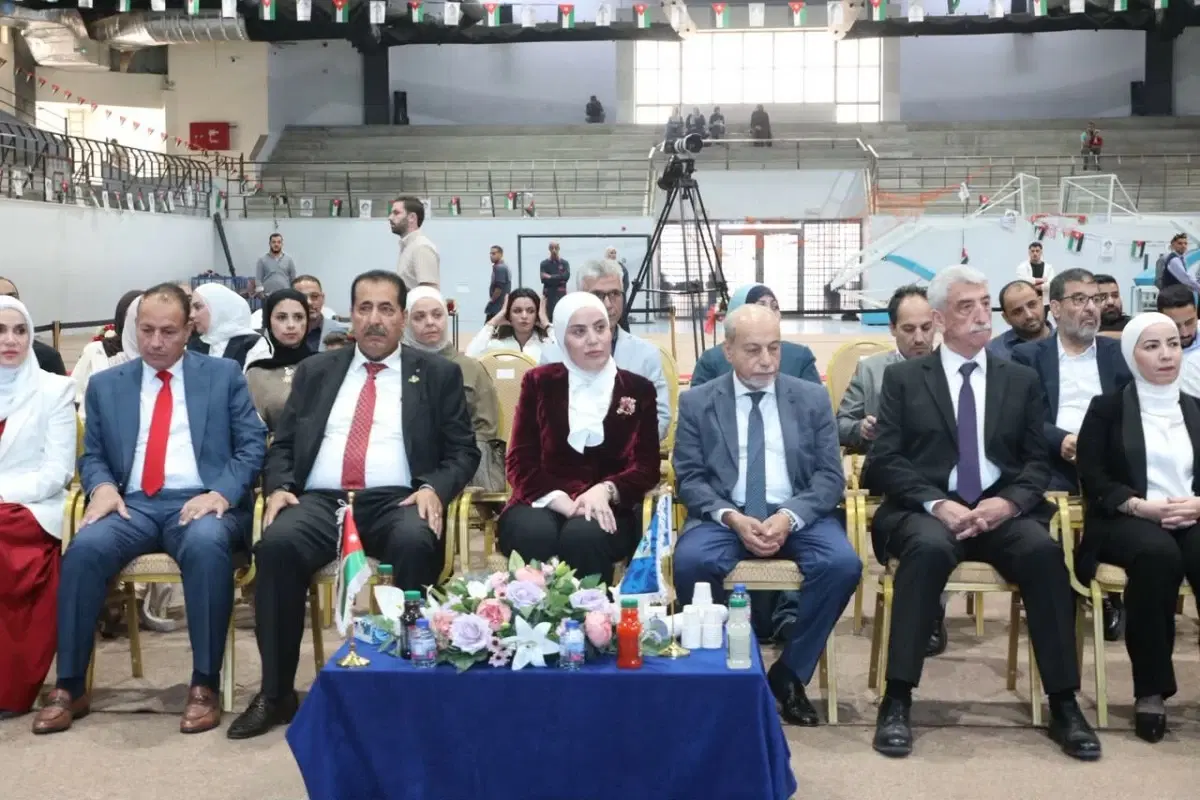
Bani Mustafa sponsors the graduation of 73 vocational diploma graduates from the National Aid Fund beneficiaries at Jadara University
Bani Mustafa: Economic empowerment is a fundamental pillar for enhancing self-reliance and transitioning from aid to production
Amman5 min read
Share
Minister of Social Development and Chairperson of the National Aid Fund Board of Directors, Wafaa Bani Mustafa, affirmed that the economic and social empowerment of families benefiting from the Fund's programs constitutes a primary priority in the social protection system, through transitioning from providing cash assistance to offering training, rehabilitation, and employment opportunities, thereby enhancing self-reliance and improving the living standards of families.
This came during her sponsorship of the graduation ceremony for 73 graduates of the vocational training diploma for the children of National Aid Fund beneficiaries, under the Haj Anwar Al-Qalouti Scholarship for Vocational and Technical Education, which was implemented by the Al-Afaq Charitable Society for Education in cooperation with the National Aid Fund and Jadara University. The program included fields such as digital marketing, interior design, architecture, skincare and cosmetology, culinary arts, electric and hybrid vehicle maintenance, and renewable energy.
Bani Mustafa stated that investment in vocational and technical education and training constitutes a fundamental pillar for empowering youth economically and socially, and qualifying them with skills that align with the needs of the labor market. It also serves as an important milestone toward building their professional future and enhancing their opportunities for joining the labor market.
She pointed out that the "Haj Anwar Al-Qalouti Scholarship" embodies an effective model for partnership between government institutions, charitable societies, universities, and the private sector, by providing the opportunity for beneficiaries of the National Aid Fund programs and their family members to enroll in vocational and technical diplomas, which enhances their chances of obtaining sustainable job opportunities or establishing their own productive projects, and contributes to enhancing their self-reliance.
Regarding economic empowerment efforts, Bani Mustafa indicated that 7,065 male and female beneficiaries of the National Aid Fund were employed through the National Employment Program during the period from July 2022 to July 2026. Of these, 5,123 continued to work for more than a year and benefited from the grace period granted to them under the economic and social empowerment instructions for National Aid Fund beneficiaries, while 2,778 beneficiaries exited the cash assistance program cycle.
She added that the target percentage for Fund beneficiaries out of the total beneficiaries of the National Employment Program was raised from 7% to 15% during 2025, and the number of male and female beneficiaries of specialized vocational training programs reached 2,796 during 2025 to date.
She added that the indicators related to the beneficiaries of the National Employment Program reflect the importance of integration between social protection and economic empowerment programs, and the development of training, rehabilitation, and employment pathways, which contributes to providing sustainable job opportunities and improving the economic and social conditions of beneficiary families.
She stressed the importance of partnership with charitable societies, civil society institutions, universities, and the private sector, as they are essential partners in the social protection system, due to their role in expanding economic and educational opportunities for target groups and directing resources toward developmental initiatives that achieve a sustainable impact on the lives of individuals and families.
Bani Mustafa expressed her appreciation to Haj Anwar Al-Qalouti for his initiative in supporting vocational and technical education, confirming that it embodies an advanced concept of social responsibility, and commending the efforts of the Al-Afaq Charitable Society for Education in implementing the initiative, as well as the role of Jadara University, represented by the Chairman of the Board of Directors and the University Presidency, in supporting the initiative and hosting the graduation ceremony.
For his part, the President of Jadara University, Dr. Habes Al-Zaboun, said that the university places community service and youth empowerment among its priorities by providing specialized training programs that contribute to developing their skills and raising their readiness to enter the labor market, noting that the program comes within the framework of the partnership with the National Aid Fund and the Al-Afaq Charitable Society, and in line with national efforts aimed at enhancing vocational training and expanding employment opportunities.
He emphasized the importance of complementary roles between academic institutions, government agencies, and civil society institutions in implementing sustainable development initiatives, pointing to the university's keenness to utilize its capabilities and expertise in supporting these initiatives, which contributes to qualifying young talents and enhancing their participation in economic and social development.
In turn, Haj Anwar Al-Qalouti, the supporter of the initiative, explained that the first phase of the scholarship included training 300 male and female students over a full year at three universities, indicating that these initiatives aim to support students and their families and enhance their opportunities for achieving economic stability through education and vocational rehabilitation.
Al-Qalouti indicated the launch of the second phase of the program, which aims to train an additional 400 male and female students, stressing the importance of linking training outcomes to job opportunities, which enables graduates to employ their skills in the labor market and contribute to improving the living conditions of their families.
For his part, the Chairman of the Board of Directors of the Al-Afaq Charitable Society for Education, Dr. Ihsan Hamadeh, pointed out that the society has contributed over twenty years to supporting 42,000 male and female students, based on its belief in the importance of education in bringing about positive change in the lives of individuals and their families, noting the society's orientation toward technical and vocational training, which allows youth to acquire the necessary skills to enter the labor market and opens wider horizons for them to work and achieve a decent life.
The ceremony, which was attended by the Chairman of the Board of Directors at Jadara University, Dr. Shukri Al-Marashdeh, the Director General of the National Aid Fund, Khitam Shenikat, a number of officials from the Ministry of Social Development and the National Aid Fund, members of the university's faculty, representatives of the volunteer sector, and the families of the graduates, concluded with the distribution of certificates to the vocational training diploma graduates.