Hijazi sponsors the graduation of participants in the Environmental Impact Assessment course at the Environment Society
Hijazi: JEDCO is moving towards strengthening support for green and entrepreneurial projects
Amman7 min read
Share
The Director General of the Jordan Enterprise Development Corporation (JEDCO), Ghalib Hijazi, emphasized the importance of strengthening cooperation and partnership with civil society organizations, experts, and the private sector to support entrepreneurial and environmentally friendly projects, and to translate national visions and policies related to sustainable development and the green economy into practical projects on the ground.
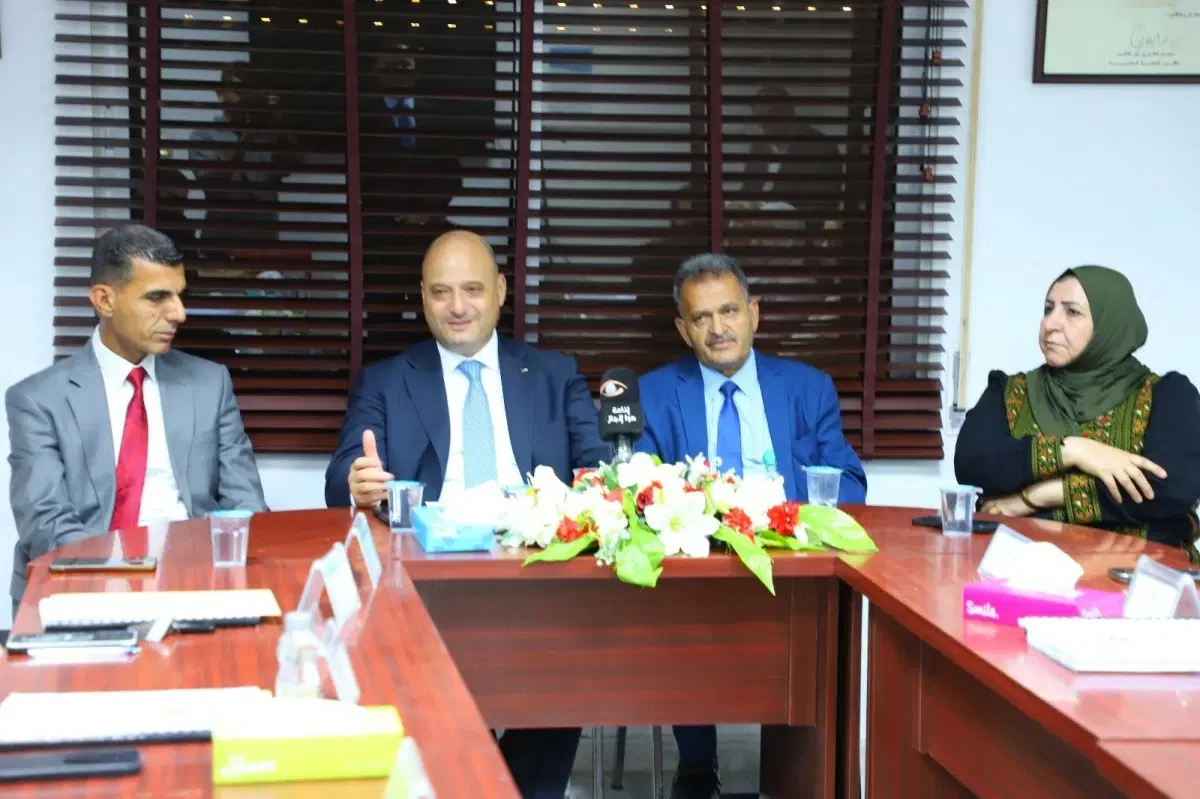
During his sponsorship today of the graduation ceremony for participants who received the Environmental Impact Assessment diploma, organized by the Jordan Environment Society at the society's Training, Capacity Building, and Consulting Center, and attended by representatives from various institutions, ministries, and those interested in environmental affairs, he added that environmental transformation, the blue economy, and the green economy have become important topics that receive attention within the Economic Modernization Vision launched by His Majesty King Abdullah II, stressing the need for concerted efforts between government institutions, the private sector, and civil society organizations to achieve the goals of this vision.
He explained that the Jordan Enterprise Development Corporation was established in 1972 under the name Export Development and Commercial Centers Corporation, before its name was changed under legal amendments in 2003 to the Jordan Enterprise Development Corporation, noting that the corporation works to empower those with entrepreneurial ideas, provide them with technical and financial support, and assist those wishing to establish their own projects and develop existing projects in various governorates of the Kingdom.
He added that the corporation is working to re-engineer and develop its programs to suit national priorities and the needs of the governorates, in a way that contributes to distributing the gains of development more comprehensively and fairly among different regions, noting that the corporation will focus its programs on four main overlapping axes, including green transformation, circular economy, clean technology, digital transformation, and economic empowerment of women, in addition to empowering people with disabilities, enhancing their employment opportunities, and supporting their private projects.
He indicated that the corporation seeks to stimulate environmentally friendly projects and projects that provide services that contribute to reducing environmental impact, pointing out that digital transformation, reducing reliance on paper, and using electronic solutions will also contribute to reducing environmental impact and enhancing work efficiency.
He emphasized the importance of benefiting from the expertise of the society and the specialized cadres in the environmental field, noting that the visit and learning about the society's expertise, projects, library, knowledge station, and the certificates it has obtained showed that there are experiences and capabilities that deserve attention and utilization in developing environmental projects.
He revealed trends to strengthen cooperation with the society in the fields of training, environmental awareness, and project evaluation, by involving experts and specialists in studying the projects submitted to the corporation, which helps in evaluating their technical and environmental feasibility, in addition to their economic feasibility and their ability to generate income and sustainability.
He added that the corporation is studying ideas to allocate support for projects that preserve the environment or contribute to reducing environmental impact, in accordance with the necessary financial allocations and approvals, stressing the importance of building effective partnerships with experts to provide technical guidance to project owners, especially in governorates and areas far from the capital.
He pointed out the corporation's interest in expanding the scope of benefiting from its programs to include the Jordanian Badia regions, in light of the need to enhance access to funding and entrepreneurial support in various regions, explaining that the "Start Your Project" program will continue with work on developing its implementation mechanisms to ensure the empowerment and qualification of beneficiaries before they start their projects, and that the "Tatweer" program targets factories and agricultural and service projects, including projects related to hydroponics, aquaculture, fabric recycling, and other activities, stressing that the success of the project, the sustainability of its business model, and its ability to provide income are essential elements in the support process, in addition to the importance of utilizing specialized technical expertise to evaluate environmental and technical aspects.
He called on experts and trainees to transfer the knowledge and skills they acquired during the workshops and training courses to practical reality, and to turn them into initiatives and projects with a tangible impact, stressing that building professional relationships and exchanging experiences are two important elements in enhancing the chances of project success, confirming the corporation's cooperation with owners of entrepreneurial ideas, green projects, recycling projects, and the green and blue economy, and supporting them according to the approved standards, conditions, and instructions in a way that enhances sustainable development, provides job opportunities, and contributes to serving the national economy.
At the conclusion of his speech, he congratulated the participants on completing the training course, expressing his appreciation for the efforts of the society and the experts, and emphasizing the importance of applying the acquired knowledge and benefiting from it in developing projects and achieving a sustainable economic and environmental impact.
The Chairman of the Society's Board of Directors, journalist Ali Azbi Freihat, said that the society is constantly striving to be a house of expertise for institutional environmental work at the national, regional, and international levels, and the society adopts the slogan "Preserving the environment is a national duty and a civilized requirement." In recent years, it has become a reference for many environmental and media institutions, donors, and master's theses in universities regarding environmental issues, and this is evident through the trust and credibility that the society enjoys.
He pointed out the importance of supporting projects and strengthening partnership between institutions, explaining that he had previously received a project from the "JEDCO" corporation, and that there are institutions and individuals who may wish to submit new projects in the coming years, especially since this corporation is considered a leading institution in the economic field, due to its role in stimulating work, enhancing productivity, and providing job opportunities.
He added that specialists in the environmental field can contribute to evaluating environmental projects, pointing out the importance of involving experts and specialists in this process, including engineers who own engineering offices and practical experience, to ensure that projects are evaluated in a professional and specialized manner.
He explained that some institutions may not include specialized environmental cadres, which requires strengthening the partnership between various institutions and experts at the national level, and benefiting from their scientific and practical experiences and values, which contributes to the success of projects and the achievement of their goals.
He indicated that the society has organized a number of conferences, including a conference in which 27 Arab countries participated, in cooperation with the League of Arab States, in addition to organizing conferences and activities aimed at stimulating scientific research and enhancing cooperation with universities through various agreements and partnerships, appreciating JEDCO's efforts in supporting work and encouraging productivity, and the importance of continued communication and cooperation between institutions.
The Director of the Training Center and Executive Director of the Society, trainer Maan Nasayreh, provided an explanation of the course, which includes a number of axes in the field of environmental impact assessment, its impact on project evaluation, methods of environmental impact assessment, how to prepare the report, presenting a case study on the environmental impact of projects, the environmental management plan, how to manage solid waste, medical and hazardous waste management, the importance of biodiversity, and the impact of climate change and the mechanism for adapting to it.
The Administrative and Financial Director and Project Coordinator at the Society, Nancy Al-Khairy, provided an explanation of the projects that the society has implemented and will implement, which are concerned with community participation projects funded by the Environment Protection Fund and the National Program for Civil Society Capacity Building funded by the Small Grants Program, in addition to preparing to hold a conference on the phenomenon of random dumping: environmental challenges and sustainable solutions, in partnership with the Ministries of Environment and Education.
At the end of the graduation ceremony, which was attended by members of the administrative board, fellow journalist Mahmoud Al-Aboud and Feryal Al-Nizami, Hijazi handed out certificates and medals to the participants who received the Environmental Impact Assessment diploma, and the society also honored Hijazi with an appreciation gift.