“Art Therapy”.. A scientific thesis by Dr. Samaher Al-Gharaibeh
Amman4 min read
Share
The communicative and emotional challenges faced by students with disabilities — particularly those with autism spectrum disorder, cognitive difficulties, and sensory and motor challenges — necessitate shifting the educational and psychological process from traditional verbal channels to more expansive and flexible expressive media. In light of the field's need for scientific frameworks that go beyond randomness in school activities, the educational employment of arts and art therapy emerges as a supportive system that enhances mental health, opens windows for non-verbal communication, and supports inclusive education opportunities.
In this context, Dr. Samaher — who holds a PhD in Special Education with honors, is a lecturer at major Saudi universities, a certified trainer for the Jordanian Ministry of Education, and possesses over twenty years of experience — presents an integrated vision titled "Art Therapy from Silent Expression to Supportive Educational Intervention," emphasizing that art possesses unique characteristics that make it a distinct developmental and communicative tool; she states:
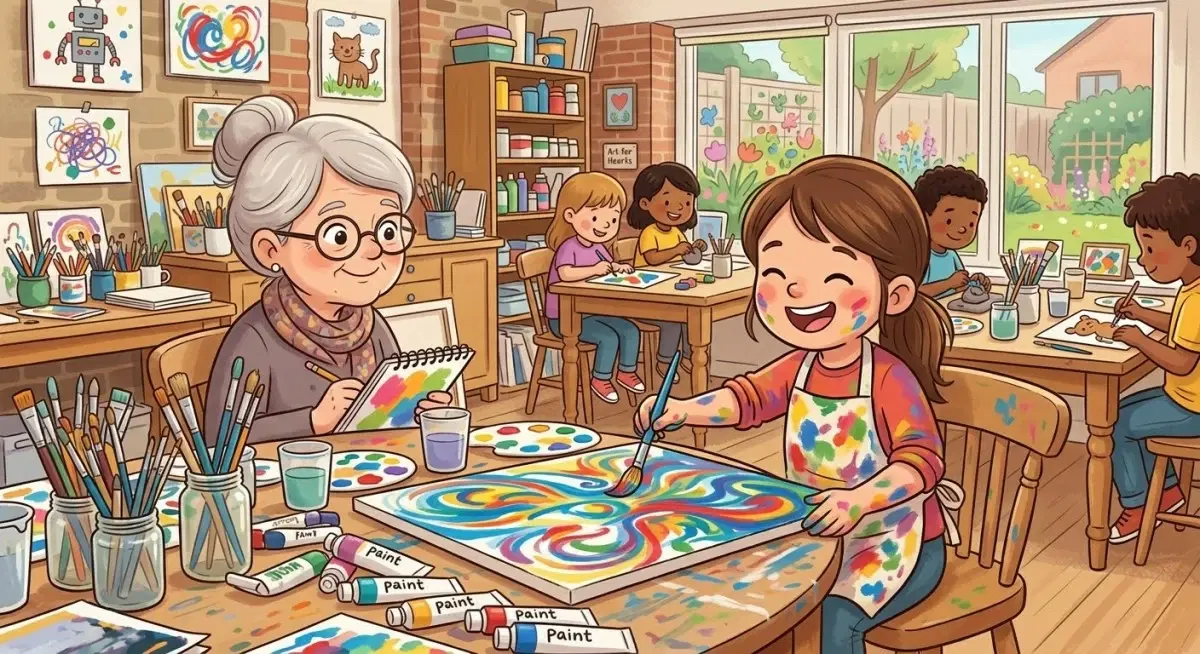
"When speech fails to reach what is inside, the hand may speak; and when a child cannot say: 'I am afraid,' or 'I am angry,' or 'I feel different,' they may say so through a color, a line, a shape, or a space left empty on a paper. Thus, art does not become merely an aesthetic production, nor is drawing just a recreational activity, but it becomes an alternative language for expression, a safe space for communication, and an entry point for self-understanding and supporting social and emotional growth."
Dr. Samaher explained that the central question in the educational environment should not be about the student's ability to draw, but about the opportunities art provides them for learning, participation, and expressing what is difficult to achieve through speech alone. She pointed out that this approach is based on a growing global research base, including the World Health Organization's (WHO, 2019) review of over 3,000 studies that confirmed the positive role of the arts in promoting psychological well-being and prevention.
She also stressed the importance of professional and ethical differentiation between three basic levels:
Artistic Activity: Directed towards enjoyment, skill development, and general learning.
Educational Employment of Art: Practiced by the teacher and educator to achieve specific educational, developmental, and social goals (such as using colors to simplify concepts, drawing feelings, or completing group paintings to foster a sense of belonging).
Art Therapy: A specialized professional intervention that integrates psychological theory and creative practice within a therapeutic relationship led by a therapist qualified according to approved standards.
Dr. Samaher warned against interpreting colors and symbols definitively or randomly (such as automatically linking the color black to depression), or using school drawing as a tool for diagnosing psychological disorders, calling for the adoption of an organized path that begins with observation, dialogue, and response within its comprehensive educational context.
Regarding adapting artistic activities to suit all special education categories, Dr. Samaher indicated that art is multi-sensory and grants the student freedom of choice and agency; with autism spectrum, structured drawing and visual stories are employed to enhance flexibility and interaction; with intellectual disabilities, instructions are simplified and easy-to-grip tools are used; with motor disabilities, tools are modified or digital drawing is made available; with hearing impairments, stories and visual sequencing are adopted, while with visual impairments, art turns into a tactile and three-dimensional experience based on clay and textured materials because "art is not synonymous with vision alone."
She also called for integrating artistic goals within Individualized Education Programs (IEP), investing in technology, digital drawing, and artificial intelligence as assistive tools for expression while observing privacy and practice ethics, and working to build an inclusive school system that adopts a quadruple model: (Goal, Design, Adaptation, Measurement).
Dr. Samaher concluded her statement by saying:
"Art without a goal is just an activity, and art with a goal is an educational intervention, while art based on a goal, adaptation, and measurement is an evidence-based educational practice. The greatest value of art for students with disabilities is not to make them draw better, but to make them express more, communicate more, and feel that they have a place, a voice, and an impact; we are not looking for a child who draws as we want, but for a child who finds their own way to say: I am here."