Al-Rimouni emphasized that participating in Arab theater festivals goes beyond protocol attendance or presenting performances; it serves as an opportunity to build real bridges between artists, directors, researchers, and cultural institutions, contributing to the development of theatrical practice and strengthening the presence of Arab theater in the human cultural landscape.
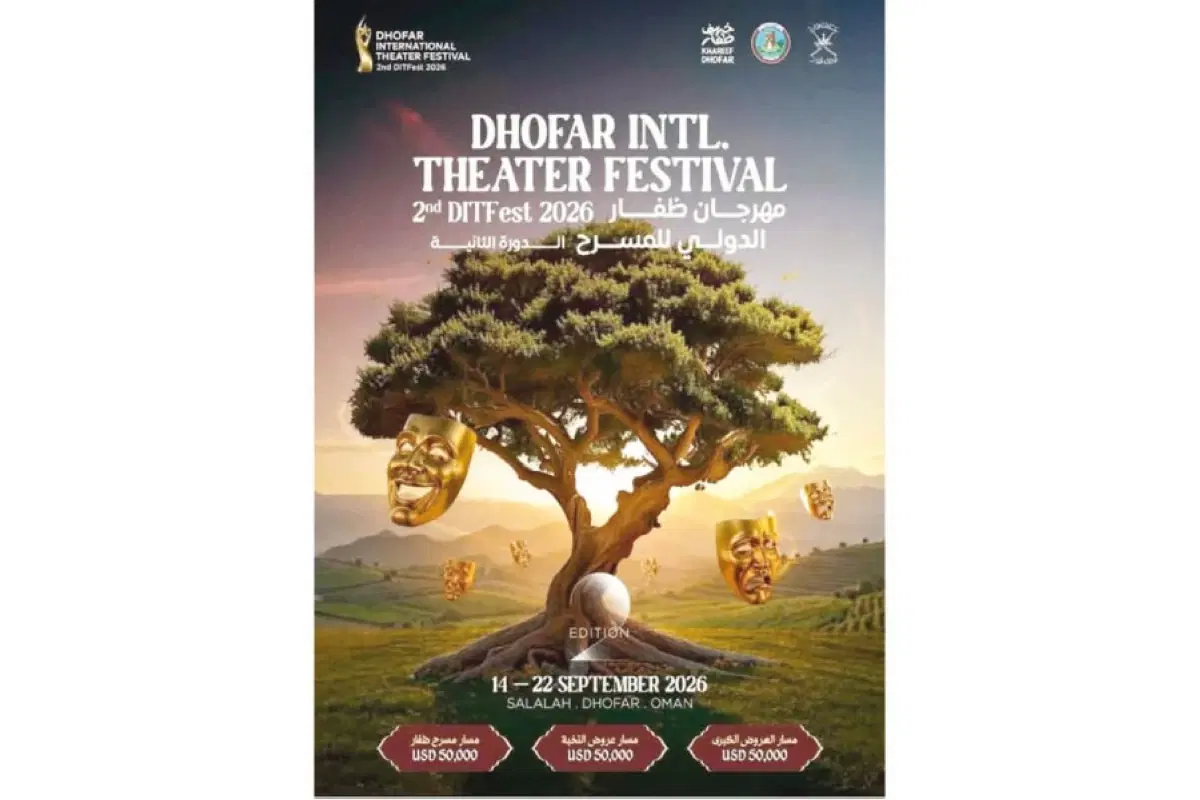
He pointed out that the Dhofar Festival represents an important opportunity to learn about the Omani theatrical experience, explore its aesthetic and artistic specificity, and understand how it draws from the Omani environment, cultural memory, and social and civilizational diversity. This is in addition to opening a dialogue on directing, acting, and scenography methods, as well as the mechanisms of theatrical production and the challenges facing Arab theater. Al-Rimouni said that Omani theater has been able, through its journey and the experiences of its creators, to build an artistic discourse that interacts with human and societal issues and seeks its own language within the Arab theatrical scene, considering that connecting with this experience represents an important cognitive and creative addition and opens new horizons for cooperation between Jordanian, Omani, and Arab theater artists.
He added that his participation is an extension of the vision of the International Ashiyat Rituals Theater Festival to promote cultural exchange, expand the circle of theatrical dialogue, and open up to various Arab experiences, noting that the festival's approach is based on experimentation and research into the relationship between theater, space, ritual, and memory, and the belief that theatrical experience develops through contact and interaction with other experiences.
He noted that meeting Arab theater artists in Dhofar allows for the exchange of ideas about the future of theater festivals and their role in supporting creativity, discovering young talents, encouraging new experiments, and finding common spaces for cooperation and theatrical production.
Al-Rimouni stressed that Arab theater festivals are a cultural and artistic necessity due to their role in transcending geographical borders and fostering dialogue between peoples, noting that theater is a human language capable of bringing different cultures together, and that every theatrical meeting represents an opportunity to learn, and every new experience is a window into different creative possibilities.
He expressed his appreciation to the management of the Dhofar Festival and those in charge of it for the space it provides for meeting, interaction, and cultural exchange, looking forward to this participation being the beginning of further cooperation between the Dhofar International Theater Festival and the International Ashiyat Rituals Theater Festival, in a way that serves the Arab theatrical movement, enhances its presence, and opens up new horizons of creativity, experimentation, and communication for it.