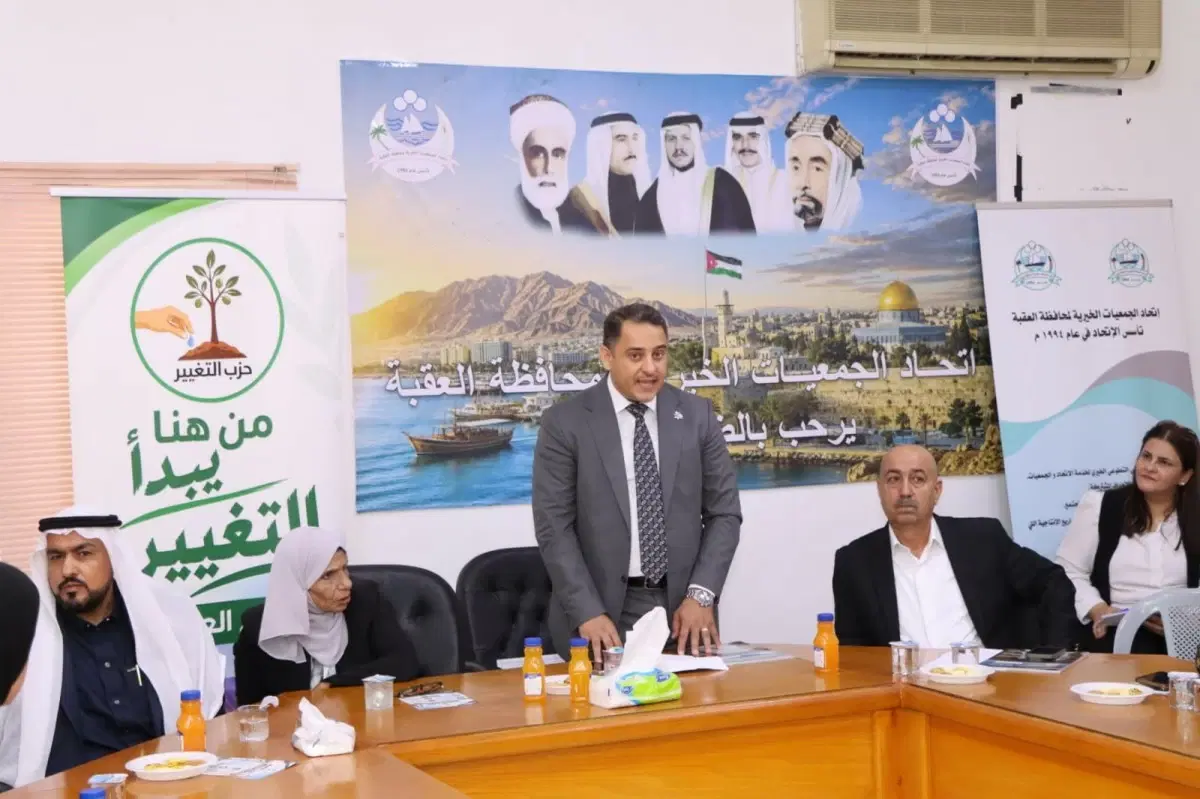
He explained that the Change Party came as a result of merging three political parties into one partisan framework, with the aim of unifying efforts, expertise, and visions within a participatory political project, and benefiting from the experiences and energies of the merged parties, which enhances the ability to work in an organized manner and interact with national and local issues.
The meeting began with a recitation of verses from the Holy Quran by the young Aql Al-Samadi, the "Conqueror of Autism." Al-Samadi is considered a model of will and challenge, as he was able to turn his personal experience into a source of inspiration for others, and to prove that persistence is capable of overcoming difficulties and achieving an effective presence in society.
The head of the Union of Charitable Societies in Aqaba Governorate, Sheikh Muawad Al-Muznah, also delivered a speech in which he welcomed the participants, stressing the importance of meetings that allow direct communication with citizens and listening to their opinions and needs.
Al-Muznah said that the Union stands at an equal distance from all national parties that work to serve the nation and achieve development and achievement, stressing that the Union's doors are open to various forces and activities seeking to enhance national and community work and serve the people of the governorate.
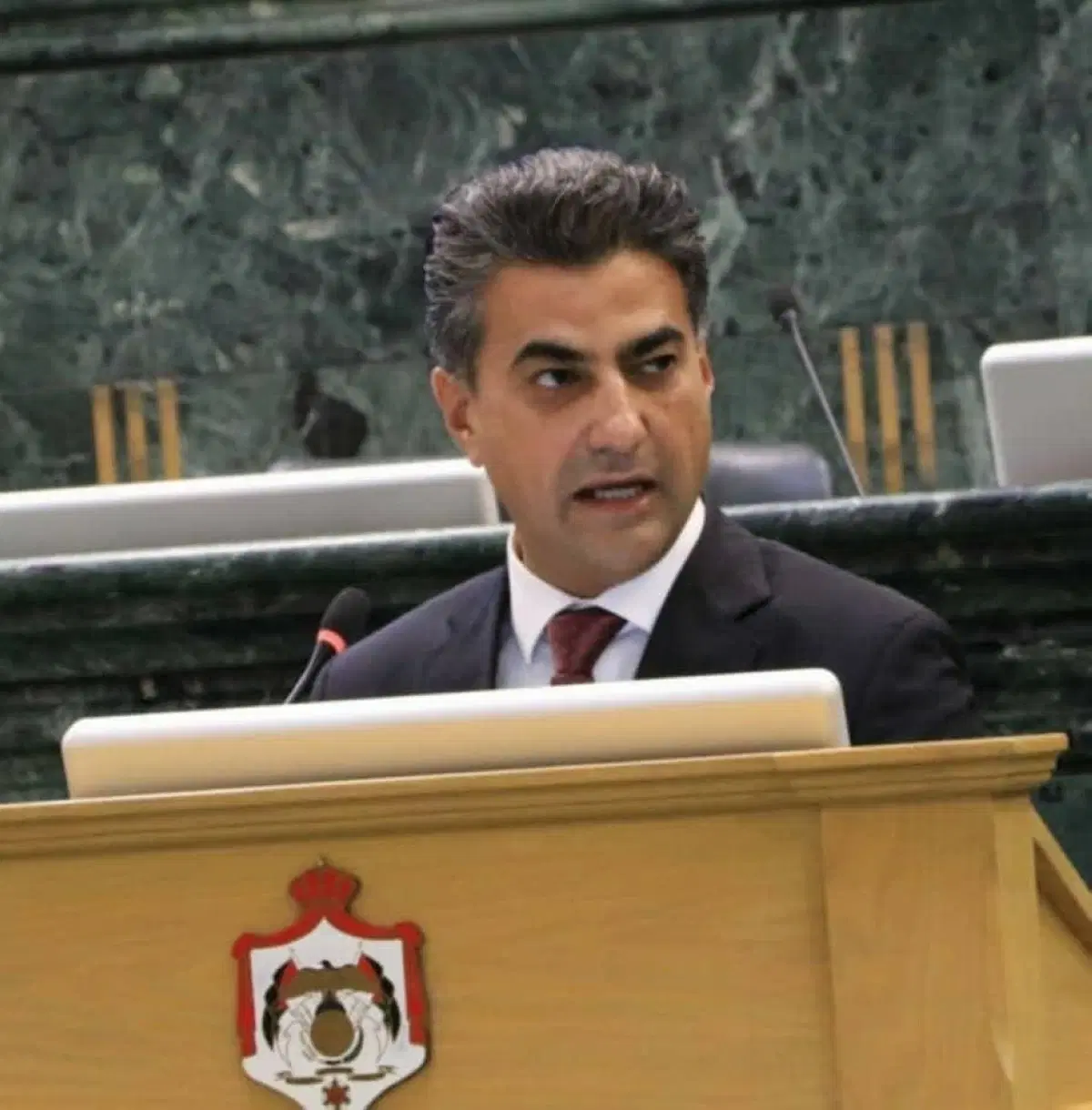
During the dialogue meeting, Al-Abbadi emphasized that the merger process represents a trend towards expanding the base of political work and unifying capabilities within a common vision based on cooperation, exchanging ideas, and developing programs, stressing that the strength of parties is not measured by the number of their members, but by their ability to provide realistic programs, build trust with citizens, and turn ideas into practical initiatives and positions.
Al-Abbadi pointed out that the essence of partisan work lies in adopting a vision and program capable of contributing to building society and bringing about positive change, and participating in the development of legislation and public policies, noting that partisan affiliation should be linked to awareness, responsibility, and readiness to participate in decision-making, not limited to formal membership.
He stressed the importance of field meetings that bring parties together with citizens in various governorates, as they are a space to listen to the issues and challenges they face, and to identify their priorities directly, which contributes to building party programs that are more relevant to the local reality and strengthening mutual trust between citizens and parties.
The meeting witnessed an open discussion that addressed a number of issues and questions related to partisan work and affiliation with political parties, in addition to the challenges facing citizens and affecting their participation in public life. The attendees exchanged opinions and presented their views on ways to enhance partisan awareness and activate the role of parties and their responsibilities towards society.
The meeting was attended by a number of sons and daughters of the Aqaba and Ma'an governorates, while the proceedings were moderated by the artist Anas Al-Qarala, and the participants emphasized the importance of continuing dialogue meetings and enhancing direct communication between parties and the local community.