Ajloun stakeholders emphasize national unity and the rejection of extremism
Amman6 min read
Share
Official, academic, religious, partisan, and community stakeholders in Ajloun Governorate emphasized the importance of strengthening national unity and maintaining Jordan's security and stability in the wake of the painful events witnessed in Karak Governorate, stressing the need for concerted efforts to confront violence and extremism and safeguard societal peace.
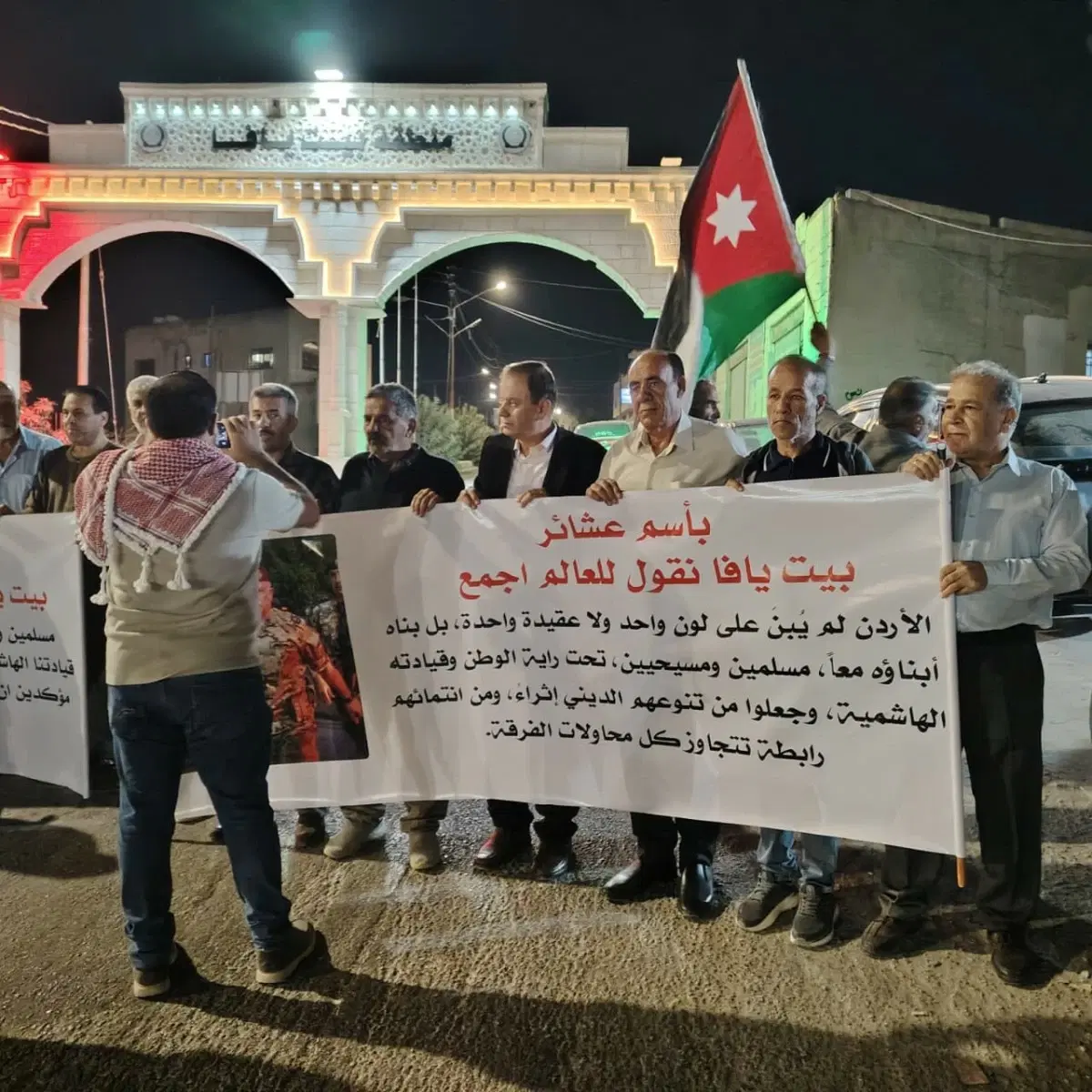
They pointed out that Jordan's strength lies in the cohesion of its people and the interconnectedness of its social fabric, affirming the importance of consolidating the values of citizenship, tolerance, and Islamic-Christian brotherhood, strengthening confidence in national institutions, and dealing with events responsibly, away from rumors and hate speech.
MP Ayatollah Freihat said that the events witnessed in Karak Governorate call for a responsible national stance based on respect for the rule of law and the protection of the right to life and security, noting that protecting citizens and maintaining their safety is a fundamental responsibility that requires the integration of the roles of official institutions and society.
He added that maintaining national unity is a priority in facing challenges, and that Jordanians of all components are united by deep-rooted historical and social ties that cannot be undermined by attempts to incite division, stressing the importance of supporting the efforts of security and judicial agencies in performing their duties in accordance with the provisions of the law.
Former Minister Malek Haddad affirmed that Jordan has throughout its history provided a model of moderation, coexistence, and respect for religious and cultural diversity, noting that preserving this legacy requires continuing to consolidate the values of tolerance and the rejection of intolerance, and strengthening the role of educational, cultural, and media institutions in building societal awareness.
He explained that confronting extremist ideology is not limited to security measures, but requires long-term preventive efforts that promote a culture of dialogue and acceptance of the other, and protect generations from rhetoric that exploits differences to incite division.
President of Ajloun National University, Dr. Firas Al-Hananda, said that academic institutions play a fundamental role in consolidating the values of citizenship, tolerance, and respect for societal diversity, noting the importance of enhancing youth awareness of the dangers of violence and extremism and immunizing them against ideas that target the unity and stability of society.
Head of the Ajloun Governorate Council Committee, Engineer Muawiya Annab, said that local councils and institutions bear an important responsibility in strengthening cohesion among members of society through continuous communication with citizens and supporting initiatives that consolidate the values of cooperation and solidarity, affirming that solidarity with the people of Karak reflects the unity of Jordanians and their interconnectedness across various governorates.
Head of the Kufranjah Municipal Committee, Ismail Al-Aroud, explained that local communities constitute an important pillar in maintaining civil peace by enhancing communication between citizens and official institutions and countering rumors and misinformation, stressing the need to prioritize the national interest and maintain social relations based on respect and solidarity.
Head of the Al-Shifa Municipal Committee, Basima Al-Amoush, affirmed that maintaining societal peace requires strengthening the role of local institutions in spreading awareness and consolidating the values of mutual respect, pointing to the importance of concerted community efforts in confronting manifestations of violence and intolerance, and not allowing painful events to affect the relationships that unite the people of one nation.
Dean of Ajloun University College, Dr. Ayman Freihat, pointed out that educational institutions are required to promote a culture of dialogue, acceptance of the other, and the rejection of violence among students, indicating that building societal awareness begins with consolidating the human and national values that protect generations from hate speech and intolerance.
Dean of the Faculty of Engineering at the Hashemite University, Dr. Adnan Maqtash, stated that universities bear a responsibility that goes beyond academic education to building the student's personality and enhancing their ability for critical thinking and conscious engagement with societal issues, affirming the importance of utilizing university activities and youth initiatives in spreading a culture of tolerance, strengthening national belonging, and rejecting extremist ideas.
Priest of the Saint Paul the Apostle Parish, Father Johnny Bahbah, said that the bonds of brotherhood and citizenship that unite Jordanians transcend attempts at division, and that Islamic-Christian coexistence represents a fundamental pillar of the Jordanian national fabric, calling for adherence to the values of love, tolerance, and solidarity with the families of the victims, and rejecting the exploitation of the incident to incite religious or societal strife.
Director of the Ajloun Vocational Training Institute, Engineer Laith Al-Qudah, pointed out that the criminal act witnessed in Karak Governorate does not target a specific group, but affects the entire nation, and attempts to undermine its national fabric and the historical brotherhood between Jordanians, both Muslims and Christians, affirming that the unity and cohesion of society form a foundation in confronting such events.
Vice President of the Jordan Environment Society, Mouza Freihat, affirmed that civil society institutions bear an important responsibility in enhancing societal awareness and consolidating a culture of tolerance and acceptance of the other, noting that confronting violence and extremism requires concerted efforts to spread the values of citizenship and solidarity, and strengthening initiatives that bring together members of society from all walks of life, in a way that contributes to protecting civil peace and preserving the national fabric.
Member of the Family Cultural Forum, Mohammed Hamad Al-Baoul, said that cultural institutions play a fundamental role in confronting extremist ideas and promoting a culture of dialogue, affirming the importance of directing cultural activities and programs toward consolidating the values of citizenship, tolerance, and respect for difference, especially among the youth.
He added that responsible speech contributes to protecting society from division, and that conscious cultural discourse should focus on the common values that unite Jordanians, away from intolerance and prejudice.
Member of the Change Party, Mahmoud Al-Aboud, affirmed the importance of the role played by political parties in enhancing national awareness and consolidating responsible participation, noting that confronting hate speech and extremism requires clear positions that maintain civil peace and affirm respect for the law, national institutions, and citizens' rights.
Member of the Green Planet Society, Yousef Al-Samadi, pointed out that civil society institutions constitute an important partner in spreading a culture of tolerance and solidarity through volunteer initiatives and activities that enhance communication between different segments of society, affirming the necessity of transforming feelings of solidarity into positive societal practices that enhance cohesion and reject discrimination.
Member of the Nesmat Shouq Tourism Association, Ru'a Zaitoun, affirmed that religious and cultural diversity represents one of the authentic components of Jordanian identity, noting that preserving the values of coexistence and mutual respect contributes to enhancing Jordan's image as a homeland that unites its people on the basis of citizenship and belonging.
She expressed her solidarity with the people of Karak and the families of the victims and the injured, affirming that the unity of feelings and positions in difficult times reflects the depth of human bonds between Jordanians, wishing mercy for the victims and a speedy recovery for the injured, and that God may protect Jordan and its people.