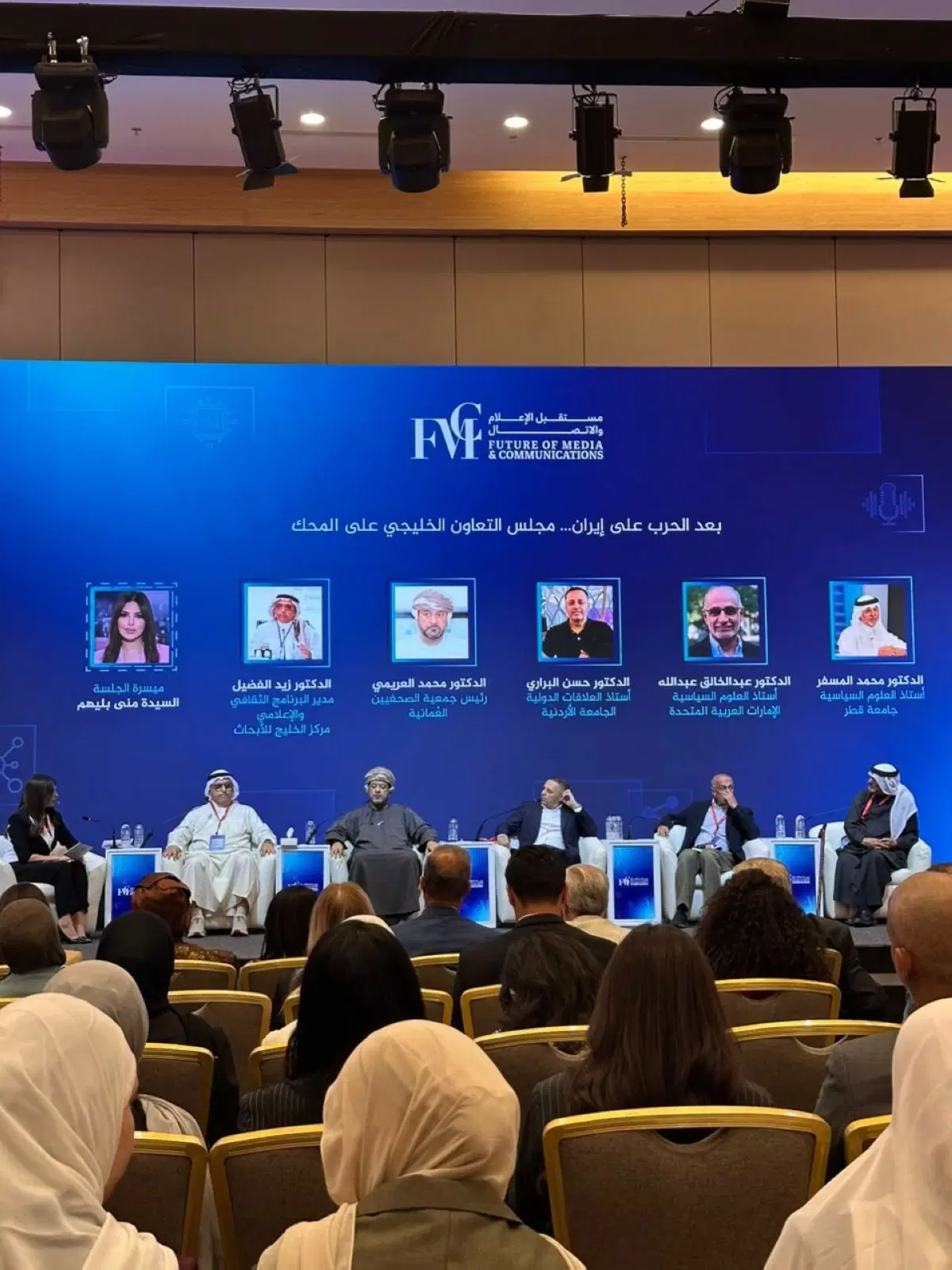
A session titled "After the War on Iran… The GCC Put to the Test," held as part of the Future of Media and Communication Forum, discussed the repercussions of the war on Iran and its impact on the security of the Arabian Gulf, as well as the future of the Gulf Cooperation Council (GCC) system amid regional shifts and the security and political challenges facing the region.
Professor of Political Science at Qatar University, Dr. Mohammad Al-Mesfer, emphasized the importance of Jordan's role in supporting Arabian Gulf security, describing Jordan as "the Arab gateway to defending the Arabian Gulf." Al-Mesfer pointed to the contribution of Jordanian expertise in training and qualifying personnel of military institutions in Gulf states, including the UAE and Qatar, through Jordanians working in military training and education.
In the context of discussing the repercussions of the confrontation, Professor of Political Science in the United Arab Emirates, Dr. Abdulkhaleq Abdulla, stated that the UAE was targeted by approximately 3,000 missiles and drones launched from Iran, according to his remarks during the session, noting that this number, by his comparison, had not even been directed at Israel.
Abdulla added that the Gulf states emerged from this aggression "standing taller and stronger than ever," expressing his view of the Gulf states' position and their ability to overcome the fallout of the confrontation.
The session also featured the participation of Professor of International Relations at the University of Jordan Dr. Hassan Al-Barari, Chairman of the Omani Journalists Association Dr. Mohammed Al-Araimi, and Director of the Cultural and Media Program at the Gulf Research Center Dr. Zaid Al-Fadeil.
The session addressed the future of the Gulf Cooperation Council in the post-war era on Iran and the challenges posed by regional developments to Gulf security, at a time when the importance of coordination among countries in the region and enhancing cooperation to face political and security changes is paramount.