A seminar at the Amman International Book Fair discusses the reality of Arab media and the challenges of "cognitive diaspora"
Amman3 min read
Share
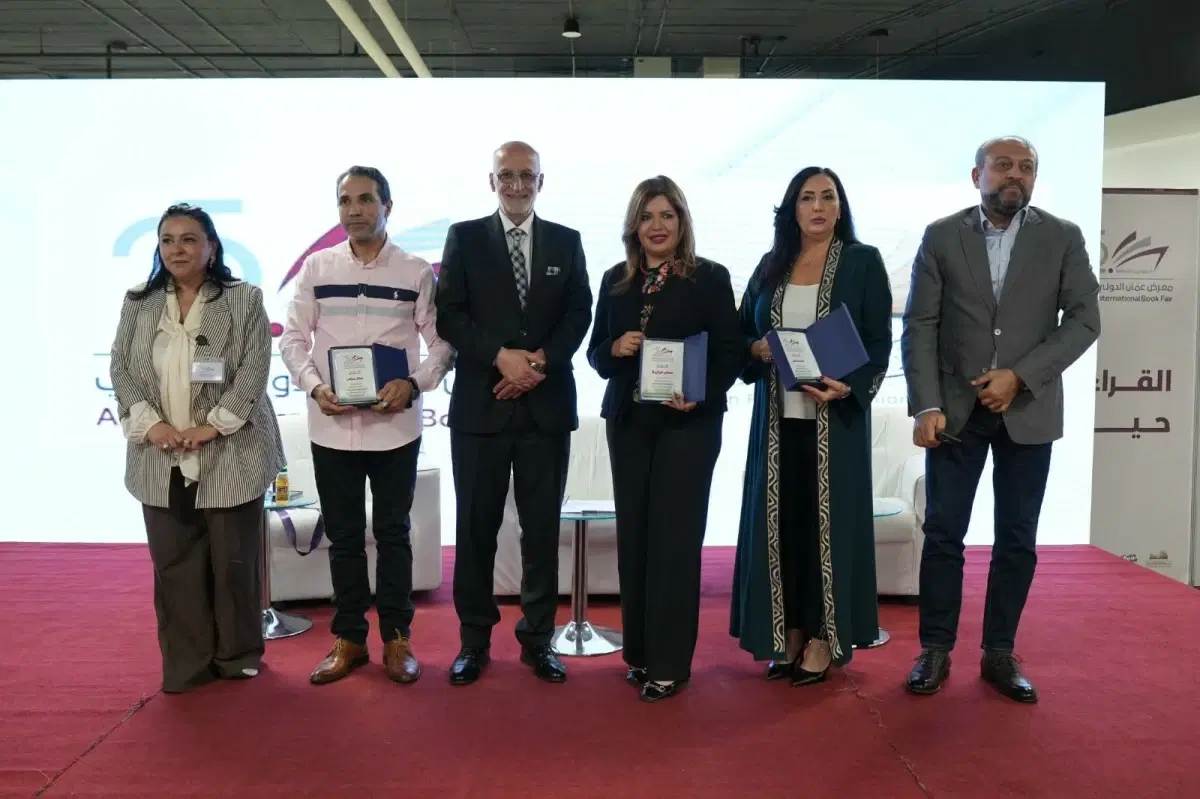
A seminar entitled "Where did culture disappear from Arab media?", held as part of the cultural program of the Amman International Book Fair 2026 organized by the Jordanian Publishers Union, discussed the reality of Arab media and the challenges of "cognitive diaspora", and the decline of cultural content in traditional and modern media.
The seminar was attended by Lebanese poet and academic Magda Dagher, the Director of the Cultural Department at Al-Dustour newspaper, Nidal Barqan, and moderated by Jordanian media personality Samar Ghraibeh.
Lebanese poet and academic Magda Dagher
Poet and academic Magda Dagher presented a research paper entitled "Arab Media and Culture in the Age of Cognitive Diaspora", noting at the outset that cultural seminars and meetings no longer attract the public at present, and that culture has become marginal in life and media.
She pointed out that the world today is dominated by new phenomena and hybrid values resulting from unprecedented technological development, which have created human features that do not harmonize with cultural and historical heritage and contradict human memory.
Dagher asserted that the Arab world is the most affected by these phenomena because its societies are based on consumption and imitation rather than production and innovation, leading them to be drawn into the idea of "herd mentality", intellectual stereotyping, the absence of ideas, and the marginalization of major issues, resulting in the Arab scene being afflicted with a state of "cognitive diaspora" in the shadow of globalization and the dominance of the fourth power (media), which is considered the most controlling of discourse.
She explained that Arab media later fell into a deep hole due to the sudden civilizational shock, globalization, competition in the production of triviality and vulgarity, low-quality content, and the "rating" game, citing the saying of Canadian philosopher Alain de Botton in his book "The Age of Triviality" that "the trivial" are those who dominate the scene today.
For his part, the Director of the Cultural Department at Al-Dustour newspaper, Jordanian journalist Nidal Barqan, reserved his opinion on the title of the seminar, affirming that culture has not disappeared from Arab media, as traditional platforms such as radio, television, newspapers, and news agencies allocate spaces for culture, and there are even specialized radio stations and channels.
Barqan identified the real problem in the extent of the impact, effectiveness, and reach of the cultural message to the audience, pointing to the emergence of new players who attracted the audience through personal accounts, "podcasts", "reels" clips, and videos, in addition to a pivotal new player, which is the "algorithm".
Barqan explained the fundamental difference between culture and algorithm, where culture used to need context and dimensions and looked for a "reader and time", while the algorithm today seeks speed and follows the trail of interaction, pressing the "like" button, and looking for a "user".
Barqan called for not creating hostility between traditional media and modern platforms, but rather benefiting from new technologies while raising the efficiency of cultural media tools to play their role in raising questions, helping the audience to discover, and placing culture at the heart of the scene.
Media personality Samar Ghraibeh, who moderated the seminar, called on intellectuals and elites to have an active presence on digital platforms, considering them the media of the future, so that this space is not left to producers of low-quality content.
She explained that culture must be present in all programs, whether visual, auditory, or written, as presenting these programs with a high mentality and culture gives them real value, while the absence of culture makes them poor and unworthy of being shown.