Conclusion of the Cultural Program Activities of the Amman International Book Fair
Intellectuals Call for Transitioning Culture from Recommendations to Institutional and Practical Commitment
Amman6 min read
Share
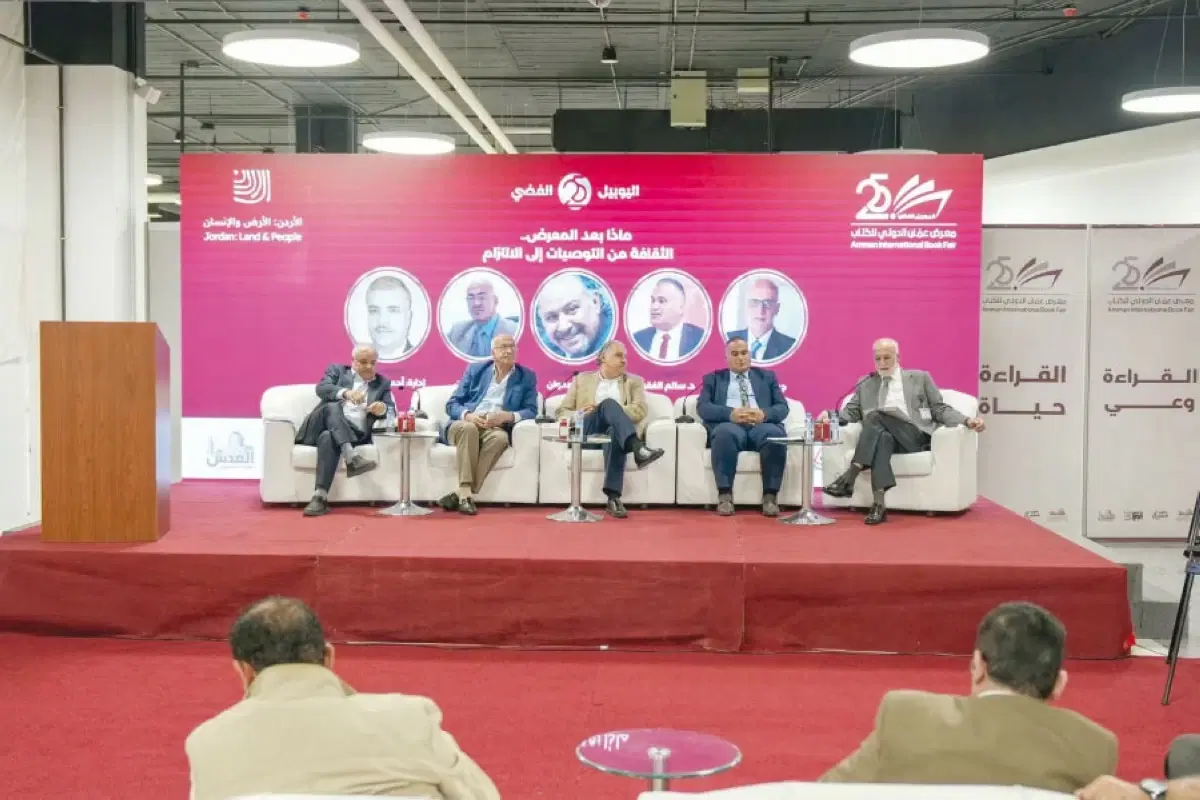
The activities of the cultural program of the 25th "Silver Jubilee" edition of the Amman International Book Fair 2026 concluded with a symposium titled "What After the Exhibition.. Culture from Recommendations to Commitment," which discussed ways to transform cultural outputs and recommendations into sustainable practical projects and programs.
The symposium featured the participation of the President of the Jordan Publishers Union and Fair Director Jaber Abu Fares, Director of Capital Culture at the Ministry of Culture Dr. Salem Al-Faqir, novelist Mufleh Al-Adwan, and writer Hussein Nashwan, and was moderated by novelist Ahmed Al-Tarawneh.
Abu Fares: Culture is a Participatory National Responsibility
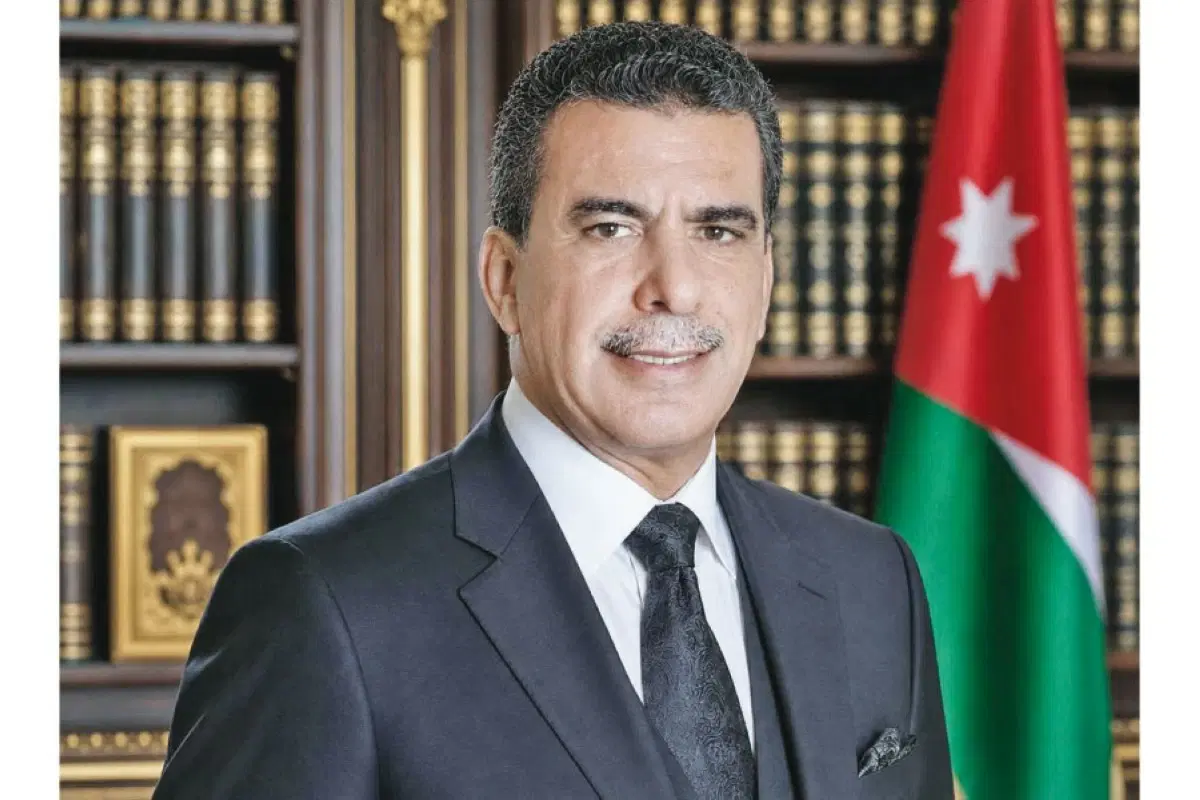
Jaber Abu Fares emphasized that the fundamental problem in the cultural scene does not lie in a shortage of recommendations and ideas, but rather in the gap between discourse and practice, calling for the building of a new institutional culture that measures its success by tangible outputs, results, and executive programs.
He stressed that culture is a fundamental pillar in nation-building and shaping awareness, as well as a participatory national responsibility. He pointed out the economic and professional challenges facing the publishing sector—foremost among which are high printing, production, shipping, and distribution costs, weak purchasing power, and piracy—demanding practical policies that contribute to protecting copyright and expanding the dissemination of the Jordanian book.
Abu Fares criticized the marginalization of school libraries and the cancellation of reading periods, emphasizing that building a reading generation begins with the family and the school.
He revealed that the number of visitors in the current edition exceeded half a million, while the volume of sales came as a surprise to publishers, despite a slight increase in book prices resulting from high printing costs and regional conditions.
Abu Fares expressed his gratitude to the Ministry of Culture, the Greater Amman Municipality, the Abdul Hameed Shoman Foundation, and the cultural, media, artistic, and organizational committees for their contributions to the success of the fair's activities.
Al-Faqir: From "Culture of Events" to "Culture of Projects"
For his part, Dr. Salem Al-Faqir addressed the axis of strategic impact and the continuity of cultural action, alongside the national cultural project of documenting the Jordanian narrative "Jordan: Land and People," which was launched by His Royal Highness the Crown Prince and embodied in a number of the fair's cultural program activities.
He called for a shift from a "culture of events" to a "culture of projects" that span throughout the year and invest in the infrastructure of cultural centers distributed across various governorates, emphasizing the importance of coordination with the Ministries of Education and Higher Education to reach school and university students.
He reviewed a number of national initiatives sponsored by the Ministry of Culture, including the Family Library program, the National Reading Program, mobile libraries, and book distribution campaigns in the governorates, citing the "Educate Yourself" campaign in Tafilah, which has distributed more than 50,000 books since its launch in 2014 and continues to operate.
Al-Adwan: The Need for Permanent Exhibition Grounds
Novelist Mufleh Al-Adwan criticized the absence of permanent exhibition grounds in Jordan 25 years after the launch of the fair, pointing out that Jordan deserves to establish permanent exhibition grounds in partnership between state institutions, the Greater Amman Municipality, the Jordan Publishers Union, and the private sector, in a way that serves the cultural, industrial, and agricultural sectors.
Al-Adwan paused at what he described as "poor publishing," noting the entry of certain individuals into the publishing field in a manner lacking professionalism, along with the utilization of modern technologies—including artificial intelligence applications and social media—to produce books he described as lacking quality.
He called on the Jordan Publishers Union to launch a binding "charter of honor" that regulates the relationship between the publisher and the author according to professional standards and ethics that contribute to elevating the quality of content.
He also called for the sustainability of exhibitions and holding them in the governorates in cooperation with relevant authorities, and activating youth initiatives concerned with reading.
Nashwan: Protecting Memory in the Era of Digital Transformations
Writer Hussein Nashwan presented an intellectual and philosophical vision regarding the fate of knowledge and memory in light of contemporary technological transformations, explaining that the most prominent challenge lies in the change of the "architecture of reception" among new generations and its transition from conscious reading, thinking, and analysis to patterns of rapid reception via screens and social media.
He pointed to the declining role of educational institutions in shaping students' awareness, contrasted with the growing influence of cross-border companies and digital platforms in shaping public mood and culture. He also warned of certain ramifications of artificial intelligence applications on cultural memory, given their capacity to store and condense vast amounts of knowledge and books, emphasizing the importance of the "Documenting the Jordanian Narrative" project in preserving national memory and civilizational identity for generations.
He urged against treating the fair as a commercial market that ends with the conclusion of its days, but rather as a major cultural strategy that contributes to protecting national memory, concluding by defining culture as "what remains in your mind when you forget everything else."
Al-Tarawneh: What After the Silver Jubilee?
Novelist Ahmed Al-Tarawneh had begun the symposium by outlining its axes, which read the fair as a cultural act and envisioned its horizons from four integrated angles: organization and the publishing industry, continuity and the reach of cultural impact to the governorates, the cultural function of the fair, and the question of culture and what remains after the events conclude.
He noted that the fair celebrates its Silver Jubilee edition, marking 25 years since its inception—a fact that dictates that the question should not be limited to what has been achieved, but must extend to what the fair should look like in the future and whether it will remain a book-selling exhibition or transform into a platform for manufacturing knowledge, promoting reading, and fostering cultural action.
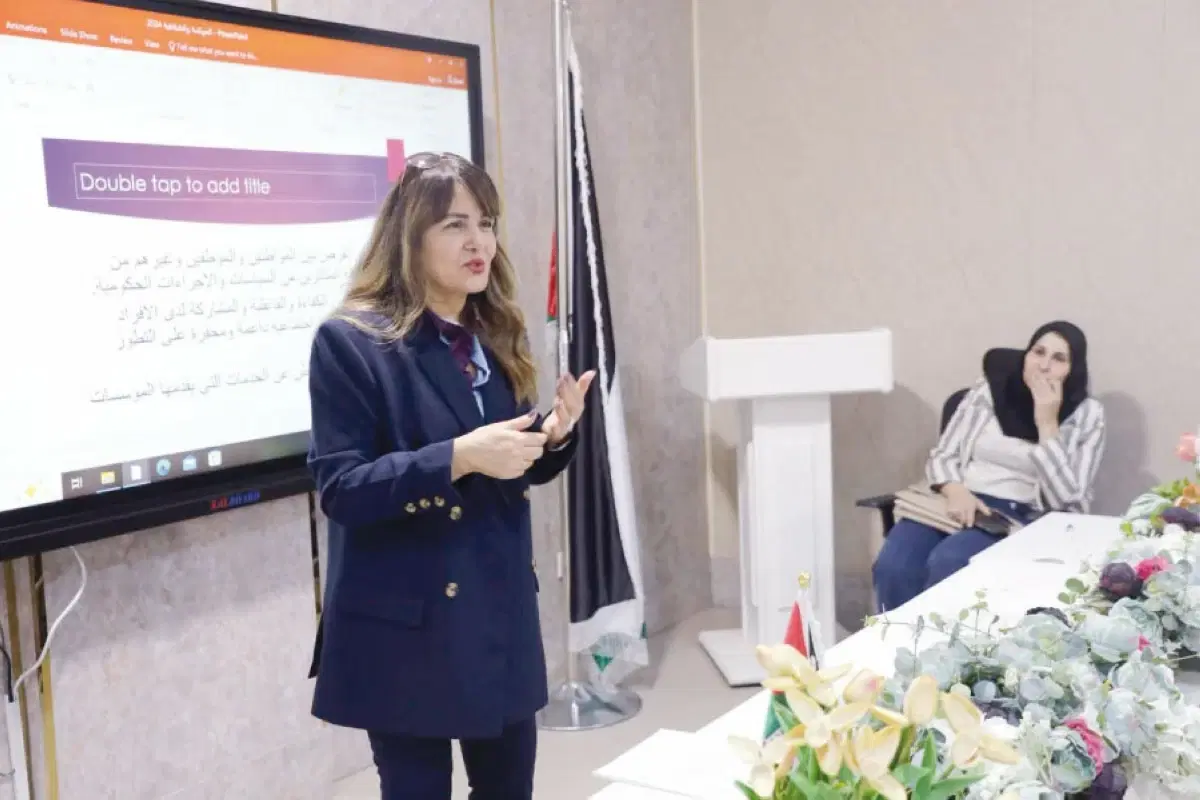
At the conclusion of the symposium, the Head of the Cultural Committee, Jaafar Al-Aqili, and Cultural Committee member Dr. Shahla Al-Uqaili honored the participants in the symposium.