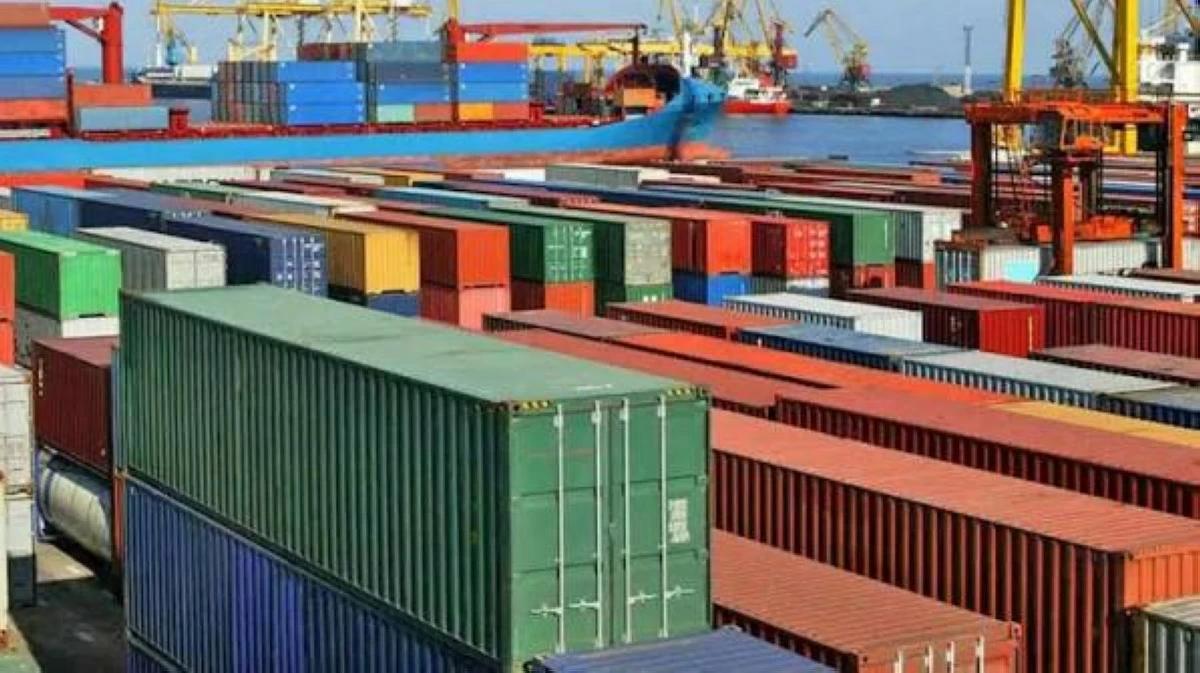
5.17 billion dinars in industry exports during 7 months
Amman6 min read
Share
Jordanian industry exports have overcome regional tensions and increased by 7.3 percent over the past seven months of the current year, indicating its competitiveness and ability to diversify products and markets.
According to statistical data from the Chamber obtained by the Jordanian News Agency (Petra), exports of the Jordanian industrial sector during the same period reached 5.17 billion dinars, compared to 4.82 billion dinars for the same period last year.
According to the Chamber, the increase in exports by 350 million dinars for the same period indicates the continuation of the positive momentum of industrial exports and its ability to grow despite the challenges and changes witnessed by regional and global trade.
According to statistical data, the importance of the recorded results is not limited to the overall growth rate of exports, but extends to the expansion of the base of sectors and products contributing to it, as 9 industrial sectors out of 10 achieved growth in their exports, reflecting the diversity of the national industry's production and export base and enhancing its ability to deal with fluctuations in foreign markets.
The data indicated that chemical industries and cosmetics were, during the past seven months of the current year, at the forefront of industrial sectors in terms of export value, reaching 1.207 billion dinars, compared to 1.065 billion dinars for the same period last year.
Exports of leather and knitwear industries during the same period amounted to 1.064 billion dinars, compared to 1.032 billion dinars for the same period in 2025.
According to statistical data prepared by the Chamber's Studies and Policies Department, exports of the engineering, electrical, and information technology industries sector during the same period reached 881 million dinars, compared to 871 million dinars for the same period last year.
Exports of therapeutic and medical supplies industries amounted to 355 million dinars during the same period, compared to 353 million dinars for the same period last year, maintaining their export levels, as exports of pharmaceutical preparations stabilized at 352 million dinars, with a noticeable growth in exports of optical, measuring, medical, and surgical instruments and devices.
Exports of food, agricultural, and livestock industries increased from about 543 million to 619 million, while exports of construction industries jumped from 107 million to about 173 million dinars.
Exports of plastic and rubber industries increased from 106 million to 126 million dinars during the same period, alongside the growth of exports of the packaging, paper, cardboard, wood, and furniture industries sector.
In contrast, mining industries were the only sector to record a decline in exports, albeit limited, as they decreased during the same period to 635 million dinars, compared to 640 million dinars for the same period last year.
The Chamber confirmed that reading the commodity details of exports shows that the recorded increase did not come from one industrial product or activity, but was based on the improvement of exports of a wide range of products, giving the recorded growth greater importance in terms of the diversity of its sources.
Statistical data showed that exports of nitrogen and chemical fertilizers increased by 11.9 percent during the same period, reaching about 646 million dinars compared to 646 million for the same period last year, while exports of organic chemical products increased from 26 million to 77 million, a growth of 194 percent, while exports of soap, detergents, lubricants, and polishes increased by 11.9 percent to reach about 184 million.
Regarding construction industries, growth in the past seven months of the current year was mainly driven by an increase in exports of iron and steel by 103 percent to reach about 83 million dinars, cement 70 million dinars, and stone, plaster, cement, and mica products by 89 percent.
According to statistical data, engineering industries showed a noticeable growth in a number of products, foremost of which is copper and its products, whose exports increased during the same period by 81.4 percent to reach 78 million dinars, aluminum and its products to 115 million dinars, and iron and steel products to about 63 million dinars.
The increase in exports of the food industries sector was distributed over a wide base of products, where exports of meat and fish preparations increased by 27 percent, miscellaneous food preparations by 20 percent, food industry residues and prepared feed by 57 percent, in addition to the growth of exports of a number of other food products.
Leather and knitwear industries maintained their position as one of the largest industrial exporting sectors, mainly driven by exports of clothing and accessories from factories, which increased from 971 million dinars to 1.011 billion dinars, a growth of 4 percent, while the limited decline in exports of mining industries was due to a decrease in exports of raw phosphates by 13 percent, where they decreased to about 277 million dinars.
The Chamber pointed out that the expansion of growth to include most industrial sectors, along with the multiplicity of commodities that contributed to the increase in exports, represents an important indicator of the strength and diversity of the Jordanian industrial base, and limits the risks of relying on a single sector or product to achieve export growth.
It explained that achieving an increase in export value of 350 million dinars during the same period reflects the pivotal role of industry in enhancing national exports, generating foreign currency, and supporting economic growth, in addition to its direct and indirect effects on investment, employment, and the stimulation of local production chains.
It clarified that this performance also reflects the ability of Jordanian industrial products to enhance their presence in foreign markets, emphasizing the importance of continuing to diversify export markets geographically, and maintaining presence in traditional markets in parallel with opening new ones, in order to reduce the risks of concentration in specific markets and enhance the ability of industrial exports to deal with changes in global demand, geopolitical conditions, and trade and supply chain disruptions.
It emphasized that the diversity of the Jordanian industrial base, along with the quality of products, export experience, and the network of free trade agreements to which the Kingdom is linked, provides an important platform for deepening the presence of Jordanian products globally and reaching new markets and products in the coming phase.
It pointed out that maintaining this momentum requires continued work to enhance the competitiveness of the national product, reduce production, transportation, and shipping costs, increase productivity, develop skills and technology, strengthen export support and promotion programs, and benefit more from trade agreements, alongside attracting high value-added industrial investments.
The Chamber emphasized the importance of accelerating the implementation of industrial initiatives and projects within the vision of economic modernization and sectoral strategies, in order to deepen local value chains, increase local content, diversify products and export markets.
Industry in Jordan stressed the need to build on the current growth to move industrial exports to higher levels, expand the base of markets and products, increase local value addition, and convert export growth into more investments, job opportunities, and sustainable economic growth.