20 permanent parliamentary committees to be formed by consensus or secret ballot in the third session
Amman4 min read
Share
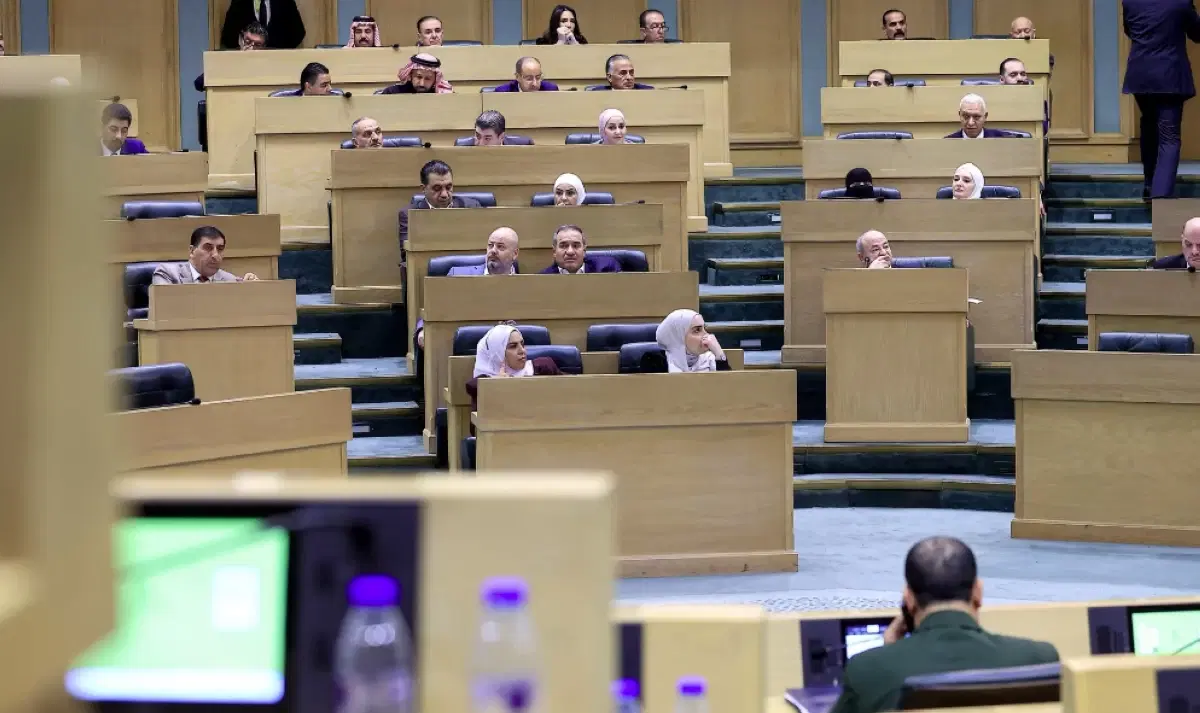
The 20th House of Representatives is preparing to form its 20 permanent parliamentary committees as its third ordinary session commences, in accordance with the provisions of the Rules of Procedure, which allow for consensus on committee membership based on the proportional representation of parliamentary blocs, or resorting to a secret ballot if consensus cannot be reached.
The procedures for forming the committees follow His Majesty King Abdullah II's inauguration of the third ordinary session with the Speech from the Throne, and the election of the House’s Permanent Bureau, which includes the Speaker, the two Deputies, and the Assistants to the Speaker.
The permanent committees are responsible for studying draft laws and topics referred to them, and preparing reports and recommendations thereon, before presenting them to the House for discussion and decision-making.
14 days to reach consensus on formation
Article 54 of the House of Representatives' Rules of Procedure states that a permanent committee shall consist of a minimum of five members and a maximum of eleven, and its formation shall be agreed upon according to the decision of the Executive Bureau, based on the proportional representation of parliamentary blocs.
In the event that consensus on forming the committees is not reached within a period not exceeding 14 days from the beginning of each ordinary session, their members shall be elected by secret ballot if the number of candidates exceeds the number set for the committee's membership.
A deputy may not be a member of more than two permanent committees, nor may one simultaneously hold membership in the Permanent Bureau and the permanent committees.
If any committee loses the minimum number of its members, it is considered automatically dissolved and shall be reconstituted in accordance with the provisions of the Rules of Procedure.
Competencies of the twenty committees
The permanent committees include the Legal, Financial, Economy and Investment, Foreign Affairs, Administrative, Education and Culture, Youth, Sports and Culture, National Guidance and Media, Health and Food, and Agriculture and Water committees.
It also includes the Environment and Climate Committee, the Labor, Social Development and Population Committee, the Energy and Mineral Resources Committee, the Public Services and Transport Committee, the Tourism and Antiquities Committee, the Digital Economy and Entrepreneurship Committee, the Public Freedoms and Human Rights Committee, the Women and Family Affairs Committee, the Rural and Badia Committee, and the Palestine Committee.
The Legal Committee is responsible for studying legislation and topics of a legal nature referred to it, while the Financial Committee undertakes the study of the general budget draft law, financial issues, and reports from the Audit Bureau within its jurisdiction.
The Economy and Investment Committee is responsible for studying economic and investment legislation and topics, while the Labor, Social Development and Population Committee handles legislation and issues related to labor and social protection.
Sectoral committees also undertake the study of topics related to education, health, energy, water, transport, tourism, the environment, and the digital economy, according to each committee's jurisdiction.
The chairs and rapporteurs of the committees are selected after the formation of their membership, in accordance with the procedures regulated by the House of Representatives' Rules of Procedure.
Formation of committees in the previous session
On November 12, 2025, the House of Representatives agreed to select the members of its twenty committees during the second ordinary session, which saw the formation of the Permanent Bureau chaired by MP Mazen Al-Qadi.
The procedures for forming the committees in the third session come after a political understanding between four parliamentary blocs regarding the distribution of Permanent Bureau positions, while the formation of permanent committees is subject to independent provisions governing the proportional representation of blocs and the procedures for consensus and election.
It is expected that the committees will begin their work after completing their formation and electing their leadership, to consider the draft laws and files referred to them by the House during the new session.