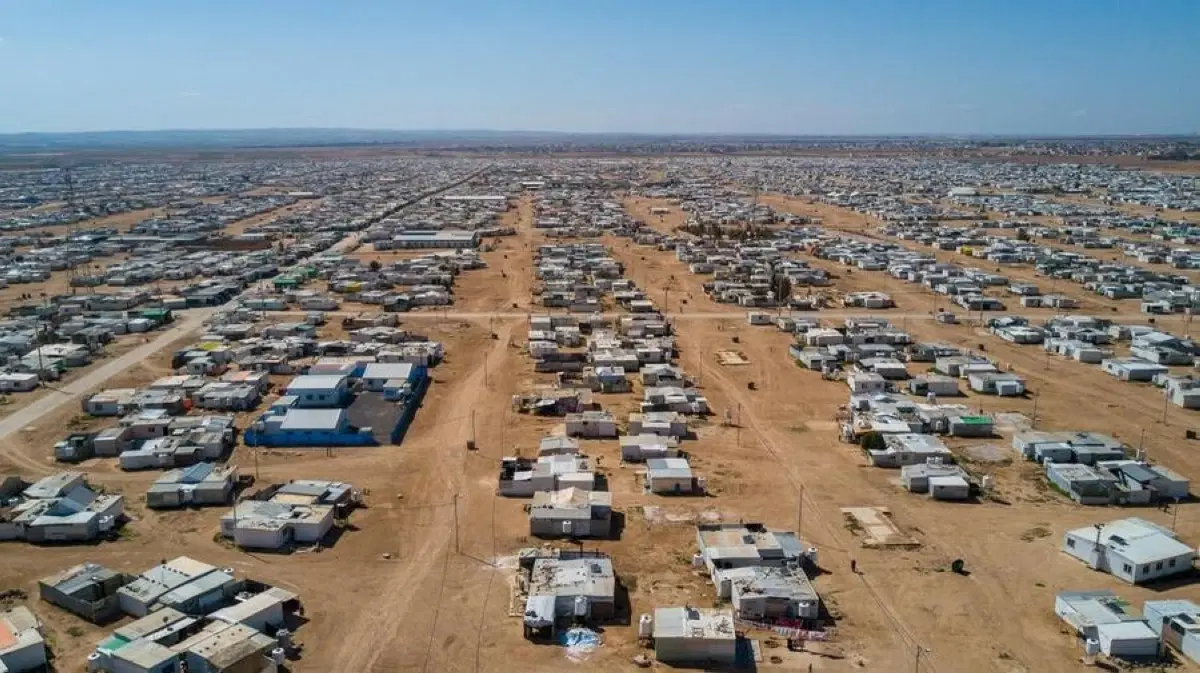
Zaatari.. Over 47,000 refugees and humanitarian services face funding challenges
Amman3 min read
Share
Zaatari refugee camp for Syrian refugees houses over 47,000 refugees, and since its establishment in 2012, it has continued to provide a wide range of humanitarian services, including protection, education, health, food security, livelihoods, water, and shelter, amidst changing population needs and ongoing funding challenges.
According to a fact sheet issued by the United Nations High Commissioner for Refugees for July 2026, the camp is managed in cooperation between the Directorate of Syrian Refugees Affairs and the UNHCR, which coordinates the activities and services provided to refugees, while the camp has transformed over the years from a gathering of tents into a semi-urban community.
Data shows that one in three households in the camp is headed by a woman, while people with disabilities make up about 4 percent of the population, and children constitute more than half of the total population.
In the field of protection, the UNHCR works to ensure the documentation of camp residents and their obtaining of certificates proving their registration, in addition to supporting the issuance of service cards by the Ministry of Interior, and providing legal assistance, counseling, and case management, with a focus on protecting children and gender-based violence.
UNICEF also provides specialized services to protect children exposed to violence, abuse, neglect, or exploitation, while the "Oasis" centers managed by UN Women contribute to empowering women and enhancing their resilience through psychosocial support, protection services, education, and community participation.
In the education sector, about 17,000 refugee children from kindergarten to 12th grade are enrolled in formal education, while UNICEF supports the operation of 32 schools and 22 kindergartens for children, along with reading catch-up programs and educational support for children and students facing learning difficulties.
The health sector provides its services through two medical centers and two primary health care centers managed by humanitarian organizations, in addition to emergency services, sexual and reproductive health, obstetric care, and referrals to hospitals outside the camp, although reduced funding has affected some primary health care services, including mental health and specialized services.
In food security, the World Food Programme provides refugees in the camp with 15 dinars per person per month to meet food needs, a 35 percent decrease due to funding challenges. The school meals program resumed in September 2025, providing about 2.8 million healthy meals during the 2025/2026 academic year.
The Zaatari market is an important source of income, with about 1,000 shops run by refugees offering various services and products. About 2,500 refugees participate in incentive-based volunteer programs, while vocational training programs are implemented in fields such as sewing, beauty, barbering, carpentry, and welding.
In the field of child and youth support, UNICEF manages eight "Makani" centers that have benefited more than 12,000 people until the end of 2025, while the "Horizon" youth center provided services to more than 10,000 young people during June 2026.
In the water sector, UNICEF provides between 55 and 60 liters of clean water per person per day during the summer, while the camp houses more than 10,500 caravans, most of which need rehabilitation or replacement.
These figures reflect the transformation of the Zaatari camp from an emergency humanitarian response to a community providing multiple and integrated services, with the continued need for funding to ensure the sustainability of essential services, as the needs of the population change in conjunction with the voluntary return movement to Syria.