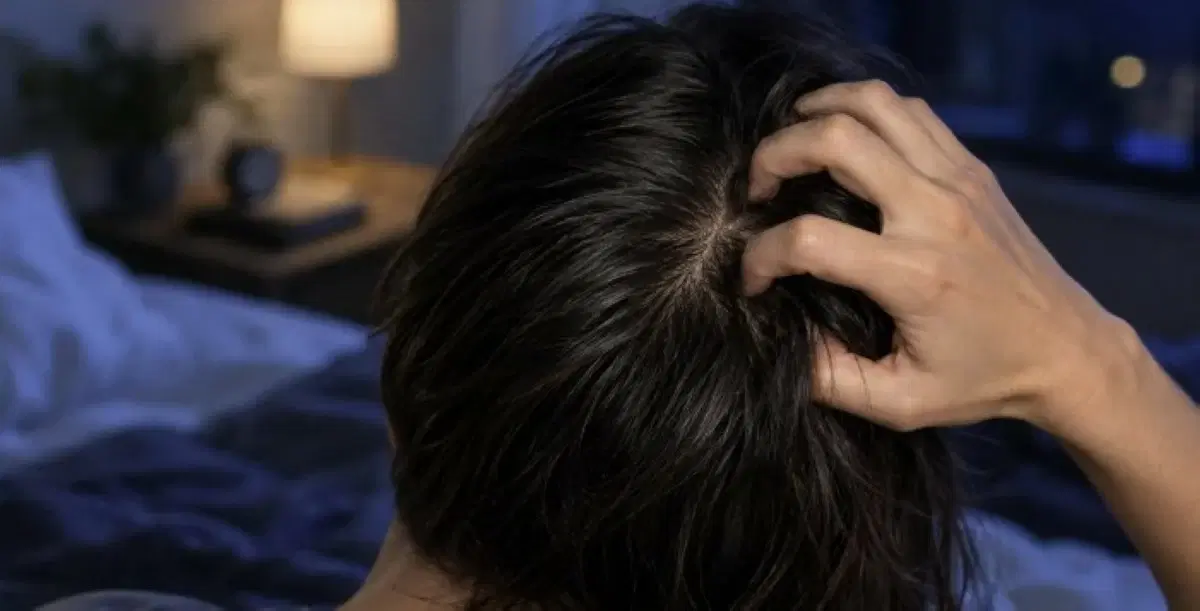
Scalp itching may become more bothersome during nighttime hours, even if it is present to a limited degree throughout the day. However, the intensification of the sensation when lying down to sleep does not necessarily indicate a new health issue, as it can be related to natural changes in the body, along with multiple dermatological causes.
Scientific reviews suggest that itching may be influenced by the body's circadian rhythm, with changes in skin temperature, skin barrier function, and certain hormones occurring during the night.
Moreover, the quietness, lack of movement, and absence of daily distractions make a person more aware of the itching compared to daytime hours, according to the U.S. National Library of Medicine.
Why does itching increase at night?
As one prepares for sleep, body temperature changes and the surface temperature of the skin increases, and dryness may become more noticeable in some individuals. These changes coincide with nocturnal hormonal fluctuations that can increase the sensation of inflammation and itching.
This does not mean that the night is the cause of the problem, but it may make the existing symptoms more noticeable. During the day, a person is busy with work, movement, and various activities, while the number of distractions decreases when sleeping, focusing attention on the sensation of itching.
Dandruff at the forefront of causes
Dandruff and seborrheic dermatitis are among the most common causes of scalp itching. The condition may be accompanied by white or yellow flakes, along with redness or irritation of the skin.
Also, dryness of the scalp can lead to itching, especially with dry weather or excessive hair washing and using hot water, and some types of shampoos may contribute to increased dryness or skin irritation in certain individuals.
The problem is not always related to dryness or dandruff, as hair dyes, conditioners, and styling products may cause allergic skin inflammation.
In these cases, itching may start or increase after using a new product, and may be accompanied by redness or a rash.
Causes that require different treatment
Other possibilities include eczema, psoriasis, fungal infections, and lice, and they cannot all be treated in the same way, as each condition has different symptoms, causes, and treatments.
Red patches covered with silvery scales may indicate psoriasis, while fungal infections may be associated with the appearance of a rash and hair loss, and sometimes discharge from the scalp.
The severity of itching alone is not enough to determine the cause, as accompanying symptoms, timing of appearance, and products used help guide the diagnosis.
When should you consult a doctor?
It is advisable to seek medical evaluation if itching persists or becomes severe enough to disrupt sleep, especially if accompanied by noticeable redness, skin rash, hair loss, or discharge.
Night itching may simply be a reflection of dryness or dandruff, but it may also be a sign of a skin condition that requires proper diagnosis and treatment, rather than trying different treatments without knowing the cause.