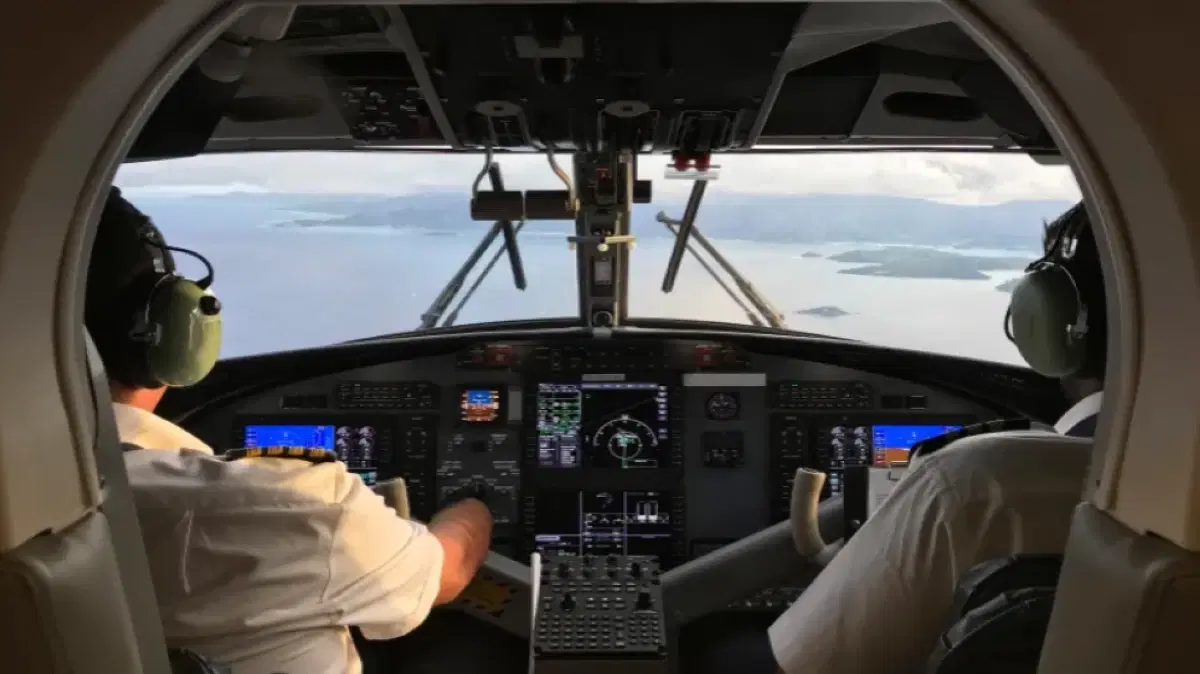
The repercussions of the incident go beyond the details of the flight, raising questions about the effectiveness of pilot screening procedures, the monitoring of their eligibility, and the ability of the aviation security system to deal with a threat from a person who originally had legitimate access to the cockpit and the aircraft's control instruments.
Why has the cockpit turned into a fortress?
Before the September 11, 2001 attacks, cockpit doors were primarily designed to provide privacy and a suitable environment for pilots to work, and were not intended to be a secure barrier, according to the Federal Aviation Administration (FAA).
Following the attacks, door and lock standards were tightened to prevent or delay any unauthorized entry into the cockpit.
However, the Germanwings incident in 2015 revealed a risk from the opposite direction, when co-pilot Andreas Lubitz was left alone in the cockpit and prevented the captain from returning, before the plane crashed in the French Alps, killing 150 people.
Investigations revealed that Lubitz suffered from severe depression and concealed his condition from his employer, while doctors he consulted, including a doctor who granted him a sick leave two days before the flight, did not disclose his condition due to medical confidentiality.
Following the incident, the European Aviation Safety Agency (EASA) recommended the presence of two people in the cockpit at all times, before revising its recommendation in July 2016 to a risk-based approach, including psychological and security screening of crew, and support programs, considering the presence of two people in the cockpit as one of the possible means to reduce the risk.
In 2018, the European Union adopted rules that include a psychological evaluation of pilots before starting work, support programs, and alcohol tests.
The Flydubai incident, however, poses a different type of risk, as the UAE Public Prosecutor described it as an attempt to carry out a "terrorist act", with ongoing investigations into the motives and connections related to the incident. This brings the discussion back to the so-called "internal threat" in aviation security.
What is the "internal threat"?
The internal threat refers to the danger that comes from someone working within the system who has legitimate access to sensitive areas, information, or systems.
Aviation security measures have focused more on passengers and their luggage, while the possibility of a threat coming from a pilot or crew member was less present in the perception of security risks.
Matthew Buri, a representative of Osprey Flight Solutions, said that aviation sector workers know the security vulnerabilities and can gain the trust of security personnel, which may give a malicious insider knowledge of vulnerabilities and ways to exploit them.
The seriousness of this type of threat differs from an attempt to break into the cockpit from the outside, as the person inside it does not need to bypass security barriers to access the control instruments.
What does the screening of pilots include?
There is no single test that can detect all forms of danger; medical eligibility is different from psychological evaluation, and both are different from professional competence or background screening.
UAE aviation security regulations define background screening as verifying a person's identity and previous experience, including criminal record and any other security-related information relevant to assessing their suitability.
The regulations also require re-screening of categories with unsupervised access to restricted security areas or sensitive security information.
Aviation expert Sally Gathin said the incident raises questions about crew recruitment and background screening procedures.
Based on the available information about the co-pilot, Gathin believed that he "should not have been hired for this job" and called for ongoing scrutiny that includes psychological and behavioral aspects, in addition to technical competence.
She explained that most countries in the world base their air safety standards on the protocols and standards set by the International Civil Aviation Organization, noting that countries in the region usually apply high security measures when hiring aircrew.
Reuters reported that Israeli screening procedures impose restrictions on some pilots from countries with which Israel does not have diplomatic relations, while the Israeli Prime Minister's Office said after the incident that procedures for screening pilots coming to the country would be reviewed and tightened.
In this context, Gathin said that flights to Israel are usually subject to a high level of scrutiny, and she believed that the incident calls for a review of crew screening mechanisms and information sharing between relevant authorities.
Is the solution in tightening screenings?
Aviation security analysts believe that the problem may lie in the application of existing procedures rather than their absence, warning against rushing to add new restrictions before verifying the extent of the implementation of existing protocols.
The aviation security system deals with different levels of risk: cockpit doors are designed to reduce the risk of intrusion, medical and psychological exams measure aspects of pilot eligibility, while security screening examines their background, while ongoing monitoring and information sharing are supposed to reveal any risks that appear after employment.
Gathin believes that pilot screening should be ongoing, not limited to driving skills, but should include psychological and behavioral aspects and background reviews, reducing the likelihood of any individual defect becoming a flight safety risk.
The Flydubai incident, in light of what the UAE Public Prosecutor announced, raises the broader question in aviation security: how can the plane be protected not only from the danger of someone trying to enter the cockpit, but also from the danger of someone who already has access to it?