Al-Zuwairi: The market has an increasing need for technicians and technologists
Al-Nawaisa: "BTEC" changes the education equation
Follow Al Rai

Opening educational pathways that provide students with broader options
Al-Zuwairi: The market has an increasing need for technicians and technologists
Al-Nawaisa: "BTEC" changes the education equation
A student's future is no longer measured solely by their ability to pass an exam or achieve a high grade point average; rather, the skills they possess and their ability to translate knowledge into work and production have become an essential part of the success equation.
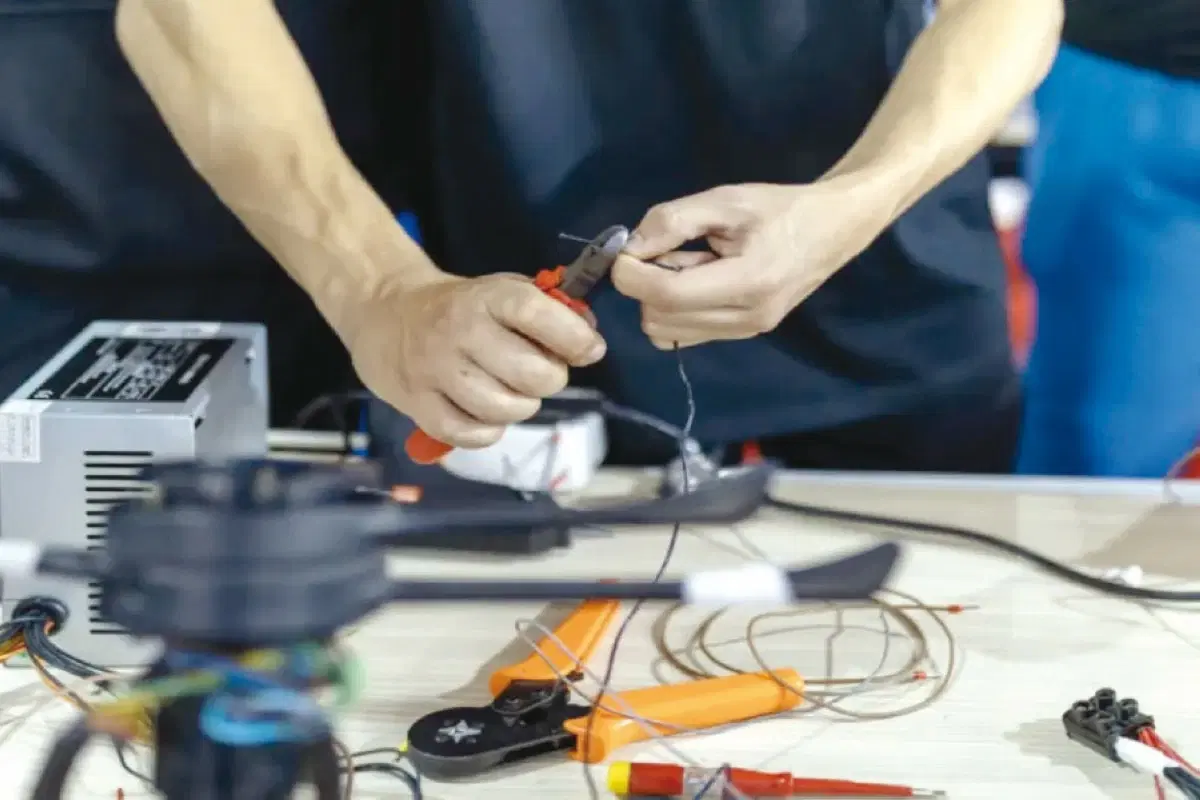
Hence, the expansion of vocational and technical education in the Kingdom emerges as an attempt to reshape the relationship between school and the labor market, and to open educational pathways that give students broader options between continuing university studies and engaging in professional life.
Two educational experts believe that the "BTEC" experience represents an important shift in the philosophy of secondary education, not as a mere alternative path to academic education, but because it pushes towards education that is more connected to application and practice, and restores prestige to the technical and vocational skills that the Jordanian economy increasingly needs.
The two experts agree that the biggest challenge lies in changing the societal culture towards vocational education, so that it does not remain an option that a student resorts to when they do not achieve the grade that qualifies them for the academic path, but rather becomes an educational and professional choice in its own right, which the student chooses based on knowledge and conviction in the opportunities it provides.
For his part, educational expert Ayesh Al-Nawaisa says that the importance of this shift lies in moving from an educational model that focuses heavily on memorizing knowledge and recalling it in exams, to a model that places the student in front of projects, tasks, and practical situations, and requires them to employ what they have learned to produce applicable solutions or work.
Al-Nawaisa emphasizes that the next phase requires investment in educational staff and applied environments, and real partnerships with the private sector, so that the skills the student acquires are compatible with what employers actually need. Meanwhile, Al-Zuwairi believes that private sector participation should not be limited to receiving graduates, but should begin from the moment of identifying the required skills and specializations, all the way to training and practical application.
He confirms in an interview with "Alrai" that the student in this path does not only learn "what they know," but "what they can do with what they know," which is a fundamental shift in the concept of education, especially with the changing nature of the labor market and the rising demand for practical and technical skills.
Al-Nawaisa believes that project-based learning and continuous assessment give the student a greater opportunity to demonstrate their abilities, and also develop their problem-solving, teamwork, communication, research, self-learning, time management, and responsibility skills, which have become an essential part of modern employment standards.
He points out that the true value of any vocational path is not measured by the number of students who enroll in it, but by the extent to which its graduates possess real skills and their ability to transition to the labor market or continue their higher education. Therefore, the success of the experience is linked to its ability to produce a graduate who possesses both a certificate and a skill at the same time.
He adds that providing the opportunity for vocational education graduates to continue their university studies represents an important point in changing the traditional image of vocational education, as choosing a vocational path no longer means closing the road to higher education, but can be the beginning of an academic path more connected to the specialization that the student chose and in which they gained practical experience.
In contrast, educational expert Sufian Al-Zuwairi believes that the growing interest in vocational education reflects a change in the view of students and families towards the future of education, after the conviction that the academic path is the only way to success has gradually begun to recede.
Al-Zuwairi confirms to "Alrai" that the Jordanian market does not only need holders of academic specializations, but increasingly needs technicians and technologists who possess knowledge, skill, and the ability to deal with modern technology. Hence, restoring prestige to vocational education is not just an educational issue, but is directly linked to economic needs and employment opportunities.
In his opinion, one of the most important advantages of this type of education is giving the student an opportunity to discover their inclinations and abilities at an early stage, and to make a professional decision based on experience and practice, instead of their future choice being subject to a grade or the stereotypical social image of certain specializations.
He considers that the expansion of universities in providing specializations and programs that align with what students study in vocational paths represents a necessary link to complete the experience, because true reform cannot stop at school. What is required is to build an integrated chain that begins with vocational guidance, extends to secondary education, then higher education, and ends with the labor market.
Al-Zuwairi stresses that the future of graduates of this path looks promising in light of the shortage that some sectors suffer from in qualified technical staff, in addition to the transformations imposed by technology, digitization, and new professions. As modern economic sectors expand, the need for people who possess specialized technical skills and are able to practice the profession efficiently increases.
Know more about this story?Send us a tip
Ask about this report — answers stay grounded in its text.