UNRWA demands the return of those forcibly displaced in the West Bank and warns against collective punishment
Agencies3 min read
Share
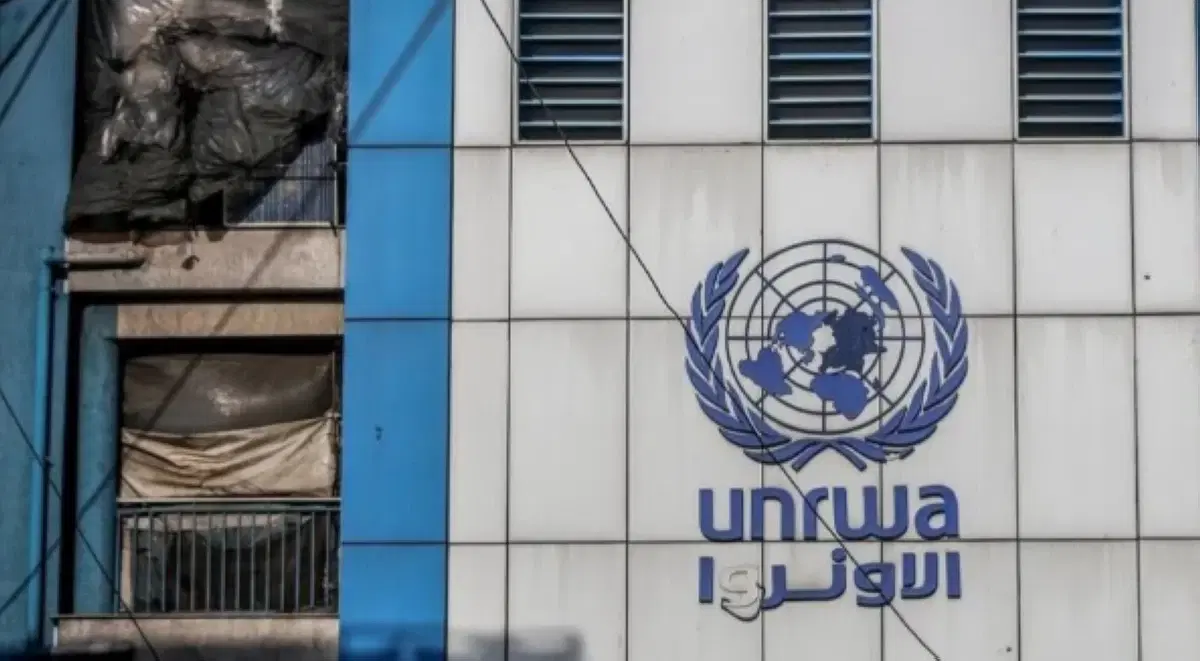
The United Nations Relief and Works Agency for Palestine Refugees (UNRWA) demanded on Tuesday that all those forcibly displaced be allowed to return to their homes in the occupied West Bank, warning that any form of collective punishment is contrary to international law.
This came in a post by the agency's Director of Affairs in the West Bank, Roland Friedrich, on the American platform "X," in which he expressed "grave concern regarding the situation in Hebron" in the southern West Bank.
Friedrich stated: "For about a week, the residents of Hebron, the largest city in the occupied West Bank, have been living under suffocating security conditions imposed by Israeli security forces following a shooting attack that targeted Israeli soldiers on October 23."
He added: "According to reports, more than 3,000 Palestinians have been forcibly displaced from their homes as part of a large-scale Israeli operation, which has also seen widespread demolition of homes and private property."
He pointed out that the Israeli army has imposed a near-total closure on large parts of Hebron, severely restricting the freedom of movement of residents and their ability to access basic services.
Friedrich explained that what is happening in Hebron brings to mind the wave of mass displacement witnessed in the northern West Bank at the beginning of 2025.
He noted that more than 34,000 Palestinian refugees from the Jenin, Tulkarm, and Nur Shams camps remain forcibly displaced from their homes, more than a year after their displacement.
In light of these developments, Friedrich emphasized that "any form of collective punishment is contrary to international law."
He stressed the necessity of allowing all those forcibly displaced to return to their homes, while respecting their dignity and rights guaranteed under international law, and ensuring their access to basic services.
The UN official noted that these developments coincide with the Israeli Knesset elections, which are taking place on Tuesday, amidst ongoing tensions across the occupied West Bank.
He explained that UNRWA is working in coordination with humanitarian partners, the Palestinian Authority, and the Hebron Governorate and its municipality to respond to the urgent needs of the affected residents.
He added that the agency has distributed emergency aid to affected families, including blankets, mattresses, and pillows.
On Friday, the Israeli army began a military operation in the city of Hebron, during which it closed all its entrances, following an attack carried out by two Palestinians that resulted in the death of two Israeli soldiers and the injury of 3 others, before the army later killed the perpetrators of the attack.
On Saturday evening, Israeli Defense Minister Israel Katz admitted to forcing hundreds of Palestinians to leave their homes in Hebron, stating that they would not be able to return before the dismantling of what he described as "Hamas infrastructure" in the city.
Earlier on Tuesday, Hebron Mayor Tayseer Abu Sneineh told Anadolu Agency that about 5,000 Palestinians have become displaced or affected as a result of the military operation and the ongoing Israeli siege on the city for the fifth day.
Palestinians warn that Israel is using these practices to pave the way for the official annexation of the West Bank, which undermines the possibility of establishing an independent Palestinian state in accordance with relevant United Nations resolutions.
In 1948, Israel was established on Palestinian lands occupied by armed Zionist gangs that committed massacres and caused the displacement of at least 750,000 Palestinians, before Israel occupied the rest of the Palestinian territories in 1967 and refused to withdraw from them.