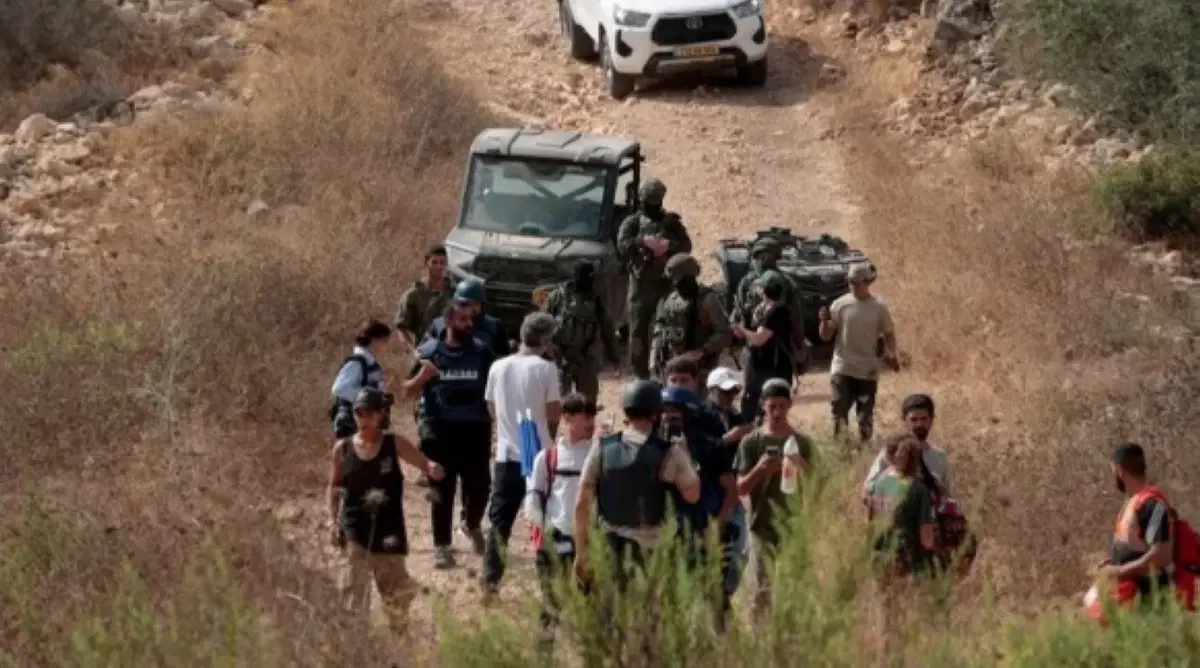
Palestinian human rights center: Israel is carrying out widespread acts of retaliation in Hebron
Agencies4 min read
Share
The Palestinian Center for Human Rights (PCHR) said on Saturday that Israel is carrying out "widespread acts of retaliation" and "collective punishment" against Palestinian civilians in the city of Hebron, in the southern occupied West Bank, following an armed attack that resulted in the death of two Israeli soldiers.
The Israeli measures come a day after an armed attack occurred on Friday near the northern entrance of Hebron, which, according to the Israeli army, resulted in the death of two soldiers and the injury of three others, while the army killed the two Palestinians it said carried out the attack.
In a statement, the independent center condemned the Israeli occupation forces' imposition of "collective punishment and widespread retaliatory measures against Palestinian civilians in the city of Hebron," calling for international intervention to stop them.
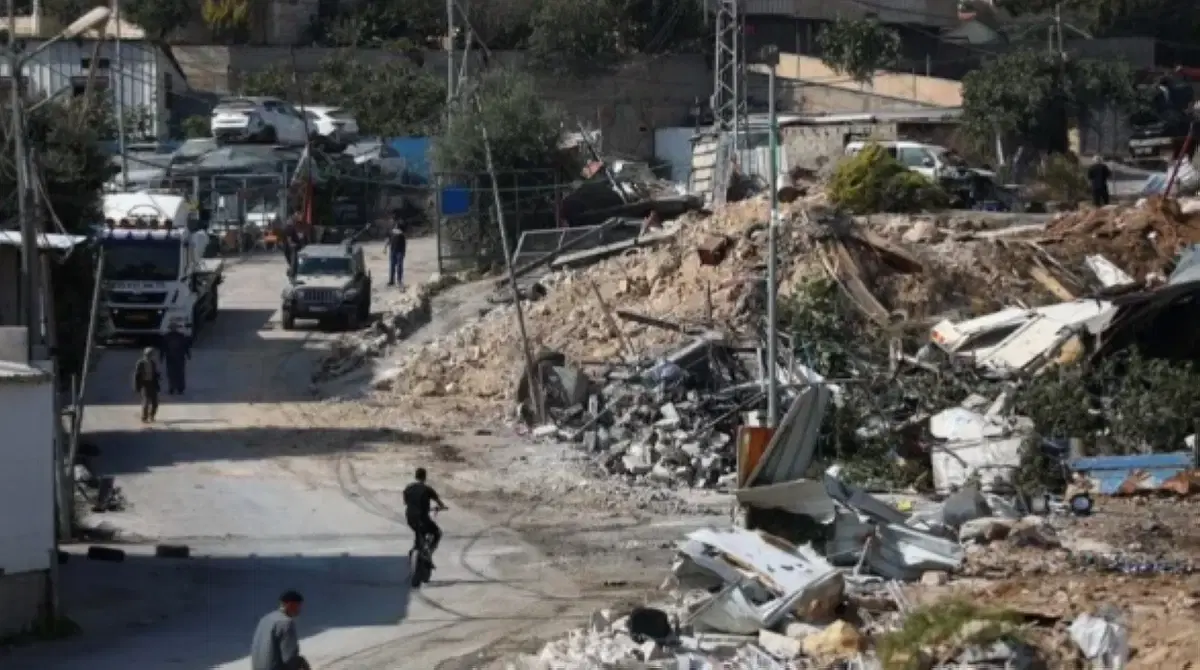
It explained that the measures include closing the city's entrances, isolating neighborhoods, demolishing homes and commercial facilities, confiscating vehicles, and forcing families to evacuate their homes, in addition to arrest campaigns and assaults on residents.
It added that the measures have led, according to its documentation, to the displacement of about 2,500 Palestinians.
Following the attack, Israeli Prime Minister Benjamin Netanyahu ordered a cordon to be imposed on Hebron and the neighboring town of Halhul, and preparations to be made for a broad military operation in the area.
On Friday evening, the Israeli army announced the start of an operation in cooperation with the General Security Service (Shin Bet), the Border Police, and the Civil Administration, which it said targets the area from which the attackers set out.
It explained that the operation includes searching homes, looking for weapons and what it described as "terror infrastructure," and interrogating suspects, while stating that the operation could last for several days.
According to Israeli media, forces evacuated residents from neighborhoods in western Hebron, searched about 200 locations, arrested a number of Palestinians, and began demolishing buildings and facilities near the site of the attack.
In contrast, the Palestinian Center for Human Rights said that what is happening goes beyond pursuing suspects to "imposing collective measures on residents who have no connection to the attack."
It considered that "exploiting the shooting incident to justify collectively punishing residents, displacing them, and destroying their property provides no legal basis for these violations."
It added that Palestinian residents in the occupied territories enjoy protection under international humanitarian law, and that Israel is obligated not to impose collective punishment on them.
The center expressed its fear that the scope of Israeli measures would expand, noting that some residents were informed that the restrictions could last for up to 6 months.
It said that the coincidence of closures, evacuations, demolitions, and confiscations in less than 24 hours raises concerns about turning these measures into a "replicable model" in other cities and towns in the West Bank.
The center linked what is happening in Hebron to a broader context that includes home demolitions, the displacement of Palestinian communities, the expansion of settlements, and the imposition of restrictions on Palestinian movement.
The West Bank is already witnessing a broader Israeli military operation following the Hebron attack, which has included closures, arrests, and the demolition of facilities, while reports indicated that hundreds of families were forced to leave their homes temporarily.
The center demanded that the international community pressure Israel to stop what it described as "collective punishment" measures, cancel evacuation orders, return residents to their homes, open the entrances to Hebron, and stop the demolition and bulldozing of property and the confiscation of vehicles.
It also called on it to take practical steps to ensure the protection of Palestinian civilians and their property.
In its statement, the center relied on the advisory opinion issued by the International Court of Justice on July 19, 2024, which concluded that the continued Israeli presence in the occupied Palestinian territories is "illegal," and that Israel must end this presence and policies related to settlement and annexation.
Israel has occupied the West Bank, including East Jerusalem, since 1967, while the international community considers settlements built on occupied territory to be illegal under international law.
Since the start of the Israeli war on the Gaza Strip in October 2023, the West Bank has witnessed an increasing escalation in Israeli military operations and settler attacks, alongside tightened restrictions on Palestinian movement and the expansion of demolition and settlement operations.