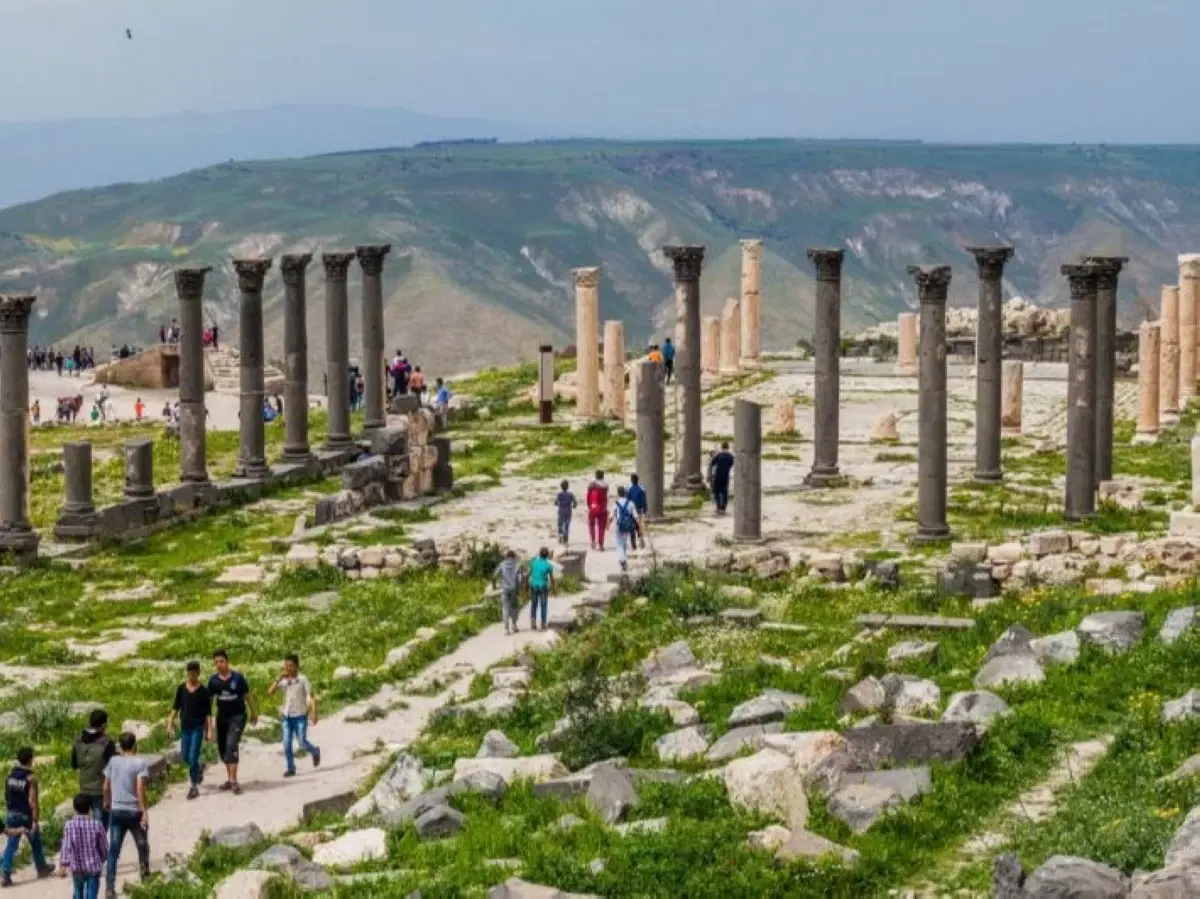
Ahmed Al-Omari, owner of one of the tourist projects in Um Qais, explained how this philosophy was practically embodied; he converted several old and heritage houses into guesthouses that allow tourists the opportunity to stay and live in the heart of the rural environment.
Al-Omari emphasized that the idea provides the visitor with a complete experience; where they are allowed to actively participate in seasonal agricultural activities (such as okra and legumes seasons, etc.), so the tourist lives the rural experience in all its details from working in the land and daily life.
For his part, Ibrahim Al-Jawabrah, owner of «Beit Al-Jawabrah», explained that heritage houses and local initiatives have become an essential part of the eco-tourism map in the region. He pointed out that «Beit Al-Jawabrah» provides a custom stay that accommodates four people to experience an authentic rural experience that reflects the nature of daily life in Um Qais.
Al-Jawabrah added that these experiences are completed by offering tourist trails and eco-camping, noting that these trails are registered and official within «The Jordan Trail» affiliated with the Ministry of Tourism and Antiquities, and provide a unique opportunity to enjoy the archaeological and tourist sites and the enchanting panoramic views that the village is famous for.
Regarding the provision of food for visitors, Ahmed Al-Omari explained that the guesthouses provide tourists with the possibility of ordering any meal from the famous traditional dishes in the region; these meals are prepared directly by local families and families within the village, which ensures the arrival of fresh local food to the guesthouses and gives the visitor the opportunity to taste the authentic flavor of popular dishes or participate in their preparation themselves.
In the same vein, Ibrahim Al-Jawabrah pointed out that this type of hospitality directly links tourist accommodation with the region's food heritage; the tourist can specify their preferred traditional meals, and families and productive kitchens from the region's children will prepare and secure them immediately for the guesthouses, which enhances the direct economic empowerment of families and the local community.
In the context of direct local support for this tourist renaissance, the head of the Khalid bin Al-Walid Municipal Committee, Engineer Rawia Al-Gharaibeh, confirmed that since Um Qais was announced on the global tourist map, the region has witnessed a noticeable and tangible tourist movement. She explained that the municipality fully understands the importance of these historical areas and is working hard to enhance their infrastructure, having issued tenders for infrastructure development worth more than one million dinars, which will begin to be implemented in the coming days.
Gharaibeh also noted the pivotal role of the environmental guesthouse in the Yarmouk Reserve, affirming that it was a landmark and one of the prominent economic drivers for the village and its surroundings. She also pointed to the self-initiatives of the locals who converted their heritage homes into productive kitchens and small guesthouses for visitors' accommodation, which reinforced the concept of sustainable tourism based on the local community.