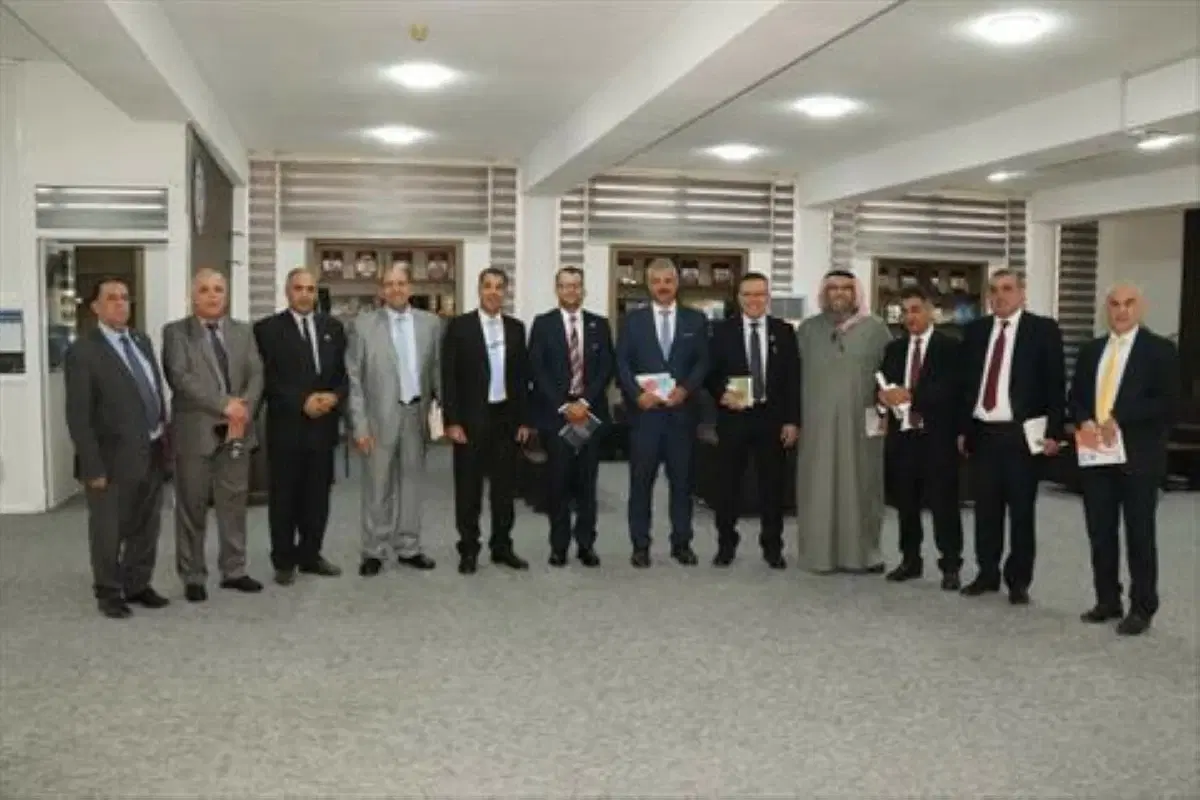
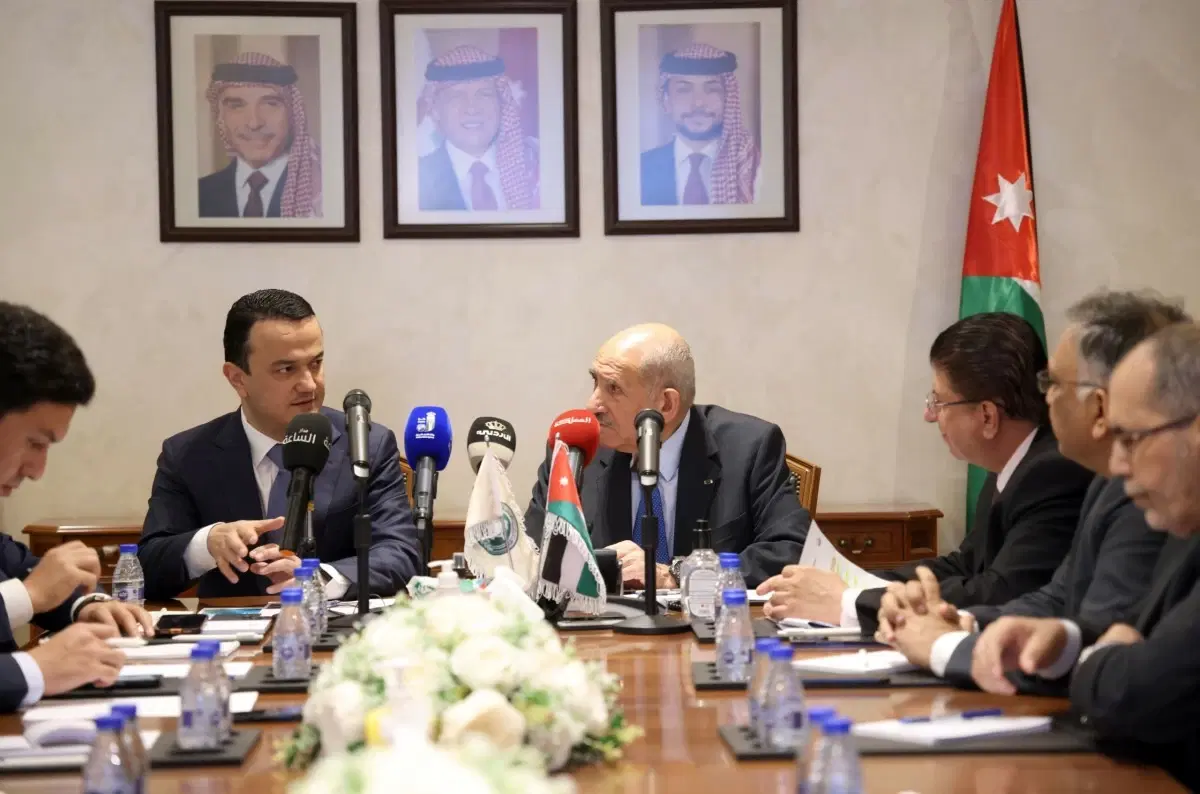
MPs from the Digital Economy and Entrepreneurship Committee and the "MPs in the Field" initiative affirmed their full support and adoption of the demands of private universities in Irbid Governorate, foremost among them addressing the requirements related to academic majors and facilitating procedures for introducing new fields and majors that take into account rapid changes and keep pace with labor market requirements. This came during a field visit that included Irbid National University and Jadara University, carried out by the Digital Economy Committee headed by MP Dr. Moayad Alawneh, and the "MPs in the Field" initiative, which included MPs Abdul Nasser Al-Khasawneh, Abdul Halim Al-Ananbeh, Iyad Jabreen, and Tariq Bani Hani, where the parliamentary delegation met with the presidents and deans of the two universities to examine the reality of available majors and the administrative and financial challenges hindering the opening of new ones.
The MPs emphasized that the work of the Parliamentary Digital Economy and Entrepreneurship Committee and the "MPs in the Field" initiative comes in line with the Royal visions, especially regarding the focus on the technical sector and the necessity of having technical and applied majors in all Jordanian universities, including private ones.
The MPs pointed out that the implementation of the academic fields system witnessed a number of errors and flaws in its beginnings, which require decision-makers in the Ministry of Education and Higher Education to reconsider and rectify them in a way that serves the interests of students and the educational process.
In this context, MP Abdul Nasser Al-Khasawneh confirmed that all field tours carried out by the "MPs in the Field" initiative, including this visit, will have their outcomes and demands turned into parliamentary questions directed at the government under the dome of Parliament. Al-Khasawneh explained that he will address a parliamentary question to the government inquiring about the reasons preventing the concerned authorities from approving the introduction of new majors in these universities, and whether there were violations or exceptions granted to other universities at their expense. Al-Khasawneh also stressed the need to consider mathematics requirements in some new majors and fields so that they are at reduced levels appropriate to the nature of the major, instead of approving them at complex levels (first, second, and third), while simultaneously questioning the extent of interaction by Jordanian embassies abroad and the extent to which universities benefit from Ministry of Labor programs in the technical aspect.
For his part, the head of the Digital Economy and Entrepreneurship Committee, MP Dr. Moayad Alawneh, stressed that the primary goal is to see real work and tangible achievement on the ground, emphasizing the necessity of moving out of the "we are not a party" box and moving towards taking immediate practical and field measures that serve the educational sector. Alawneh confirmed the committee's full agreement with the "MPs in the Field" initiative on the inevitability of having technical majors in private universities, considering them a primary supporter of the government sector and a partner in development.
For his part, MP Abdul Halim Al-Ananbeh stressed that the MPs believe in the essential role of private universities, confirming that real investment is investment in humans, and that universities are true incubators for creativity. In turn, MP Iyad Jabreen pointed out that the rapid global talk about smart cities and the green transition requires early university preparation, citing efforts to transform the Bani Obeid area into a green zone. Meanwhile, MP Tariq Bani Hani pointed to the long-standing history of northern universities and their historical role in graduating competencies, confirming the MPs' commitment to adopting the demands of students and universities.
For his part, the President of Jadara University, Dr. Habes Al-Zaboun, reviewed the reality of majors and academic updates at the university, confirming that private universities keep pace with labor market requirements and have withstood financial and competitive challenges for years, noting that Jadara University includes about 14,050 male and female students, with a teaching and administrative staff of 1,050 employees.
In turn, the President of Irbid National University, Dr. Majid Abu Zureiq, reviewed the university's academic vision as the first private university established in the northern region, confirming its resilience and academic legacy and its continuous endeavor to keep pace with developments and the needs of the labor market, noting that the number of its students reaches about 7,500 male and female students with a staff of 500 employees.
At the conclusion of the tour, and after the presentations and touring the university facilities and laboratories, the MPs renewed their confirmation of following up on and adopting all the demands that were raised, praising the advanced level and developmental touches in the universities of Irbid Governorate.