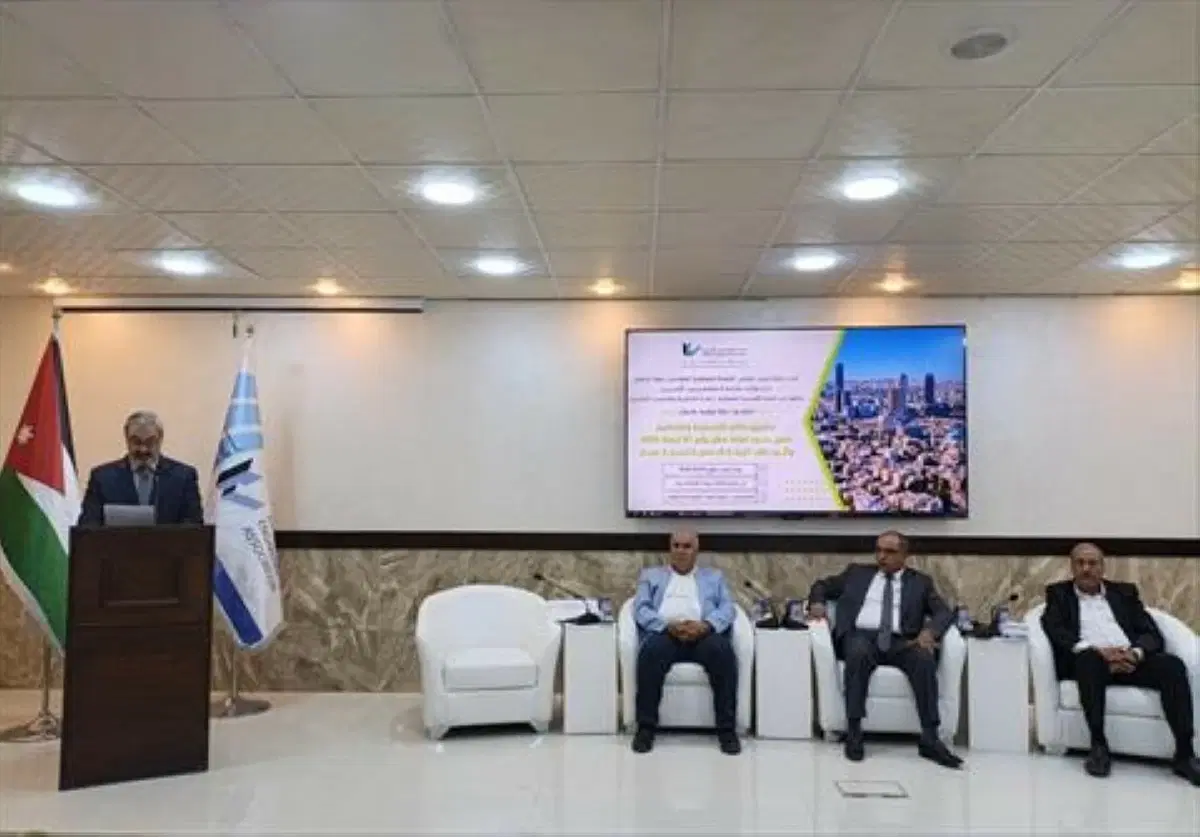
This was stated during a dialogue seminar organized by the Architectural Engineering Division at the Jordanian Engineers Association, represented by the Urban Planning and Design Committee, titled "Implementing the Planning and Organization System within the Boundaries of the Amman Municipality No. 81 for the Year 2025 and Its Impact on the Urban Environment of Amman City," held at the Professional Unions Complex in Shmeisani, under the patronage of the Chairman of the Branch Council, Engineer Imad Al-Dabbas, and in the presence of the Secretary-General of the Association, Engineer Ali Nasser.
Al-Dabbas said that the Association participated in developing the system and reviewing its texts, noting that Amman is witnessing significant expansion that requires legislation capable of addressing its challenges. He added that the system allowed the local community to be part of organizing its neighborhoods and making decisions in them, after establishing a clear definition of the neighborhood, the area, and the city.
He added that the Association is a partner with the Amman Municipality and puts its technical and academic expertise at the service of the nation, considering that the system's establishment confirms the path towards the right direction, and called on everyone to join efforts to implement it to the fullest.
For his part, the Deputy Director of the City for Planning and Economic Development Affairs at the Greater Amman Municipality, Engineer Adel Al-Sahba, explained that the system came in response to the city's challenges and to keep pace with its developments, to make planning proactive rather than reactive. He pointed out that it takes into account land use, investment, and quality of life, and that its positive impact on the ground requires the cooperation of all parties.
The President of the Engineering Offices Authority, Engineer Issa Hamdan, considered the system a significant turning point that places engineering offices and planners before a historical responsibility to align with global standards, and an opportunity to restore trust between the citizen and the city. He confirmed that the Authority will be at the forefront of those committed to implementing it.
The Chairman of the Urban Planning and Design Committee at the Branch, Dr. Khaled Al-Momani, pointed out that the system came into effect at the beginning of this year, and its implementation requires training and qualifying the Municipality's cadres. He stressed that the biggest challenge lies in how to implement the texts, not in the texts themselves, and described it as a courageous step towards an organized and sustainable city.
The seminar program included two sessions. The opening ceremony was hosted by Engineer Naha Qateesh. In the first session, which was moderated by Al-Momani, Engineer Lobna Abu Ayn gave a lecture on the legal framework, governance, and the planning vision of the system, followed by a lecture by Engineer Safwat Al-Momani on urban planning mechanisms and directing urban growth.
In the second session, which was moderated by Dr. Rania Qateishat, Engineer Salam Daradka discussed the practical application of the system by comparing procedures and efficiency, while Engineer Abdul-Karim Al-Kharba talked about participatory planning and its impact on making planning and organizational decisions. This was followed by a dialogue and recommendations, and then the lecturers were honored.