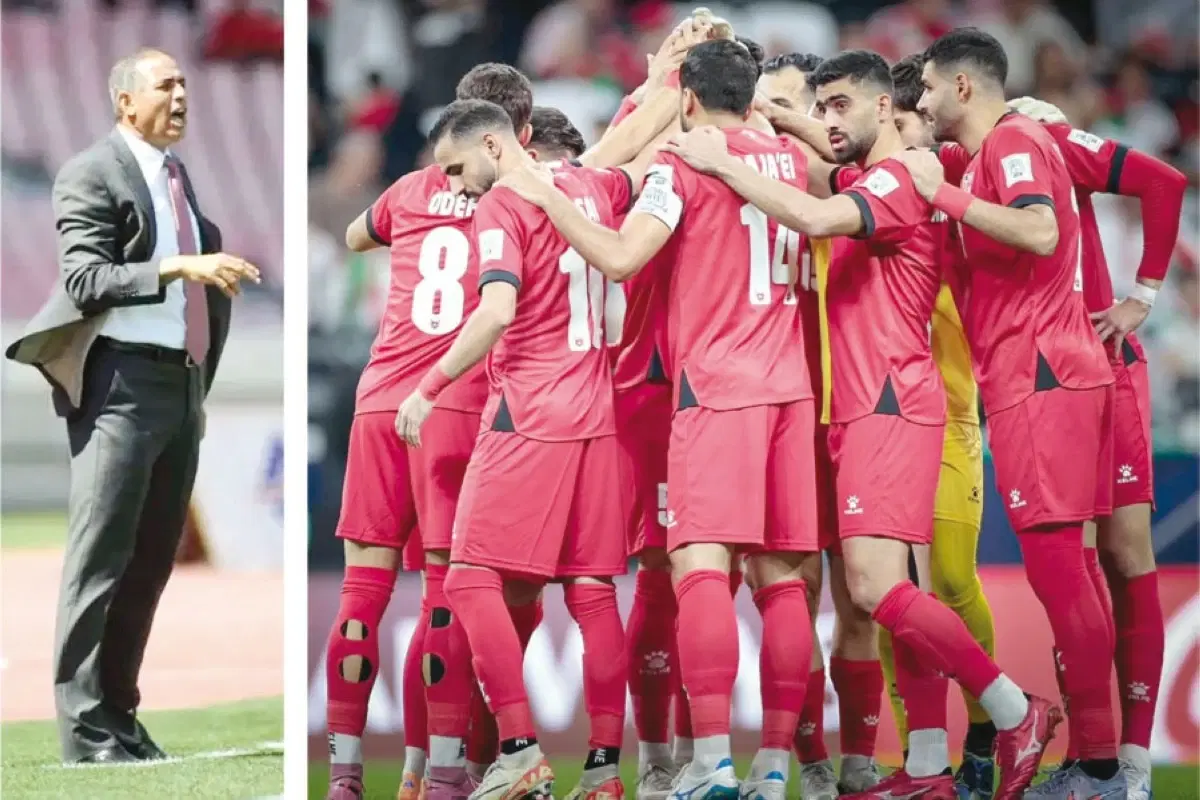
The Football Association appointed El-Zaaki as the technical director of Al-Nashamy on August 20th, succeeding coach Jamal Salami, who led the team during the qualifying phase and the historic participation in the World Cup, and the Moroccan coach begins his actual mission with a list of 28 players, whom he selected after local and foreign monitoring, while confirming that the door of the team will remain open to all players, and that readiness, output, work, and diligence will be the criteria for selection in the next phase.
The first meeting with El-Zaaki
The gathering gains double importance as it is the first under the leadership of El-Zaaki, who will get the first opportunity to closely watch his players and get to know the group he inherited after the World Cup achievement, before starting the process of putting his technical mark.
The time factor will be strongly present, as only five days separate the start of training and the Syrian confrontation, which makes the first days more dedicated to getting to know, blending, and setting the basic principles that the technical staff wants to apply, in addition to evaluating the physical and technical condition of the players.
El-Zaaki confirmed that the goal of the matches against Syria and Venezuela is not only related to the results, but also to the technical benefit, trying more than one option and formation, and closely examining the capabilities of the group, and he stressed that the next phase will be open to competition, including the goalkeeper position.
World Cup Experience and New Blood
The new list is a mixture of experienced elements that have created the presence of Al-Nashamy in recent years, and new or returning players that El-Zaaki seeks to test, in line with his approach to expanding the base of options.
The list included; in goalkeeping: Yazid Abu Laila, Abdullah Al-Fakhuri, Alik Samir, and Ahmed Jaaidi.
Defense: Yazan Al-Arab, Abdullah Naseeb, Muhammad Abu Al-Nadi, Saad Al-Roussan, Hadi Al-Hourani, Mohannad Abu Taha, Ihsan Haddad, and Ahmed Assaf.
Midfield: Anas Badawi, Nour Al-Rawabdeh, Nizar Al-Rashad, Ibrahim Saada, Yousef Qashi, Amer Jamous, Mahmoud Shawkat, and Yousef Abu Jalbush.
Attack: Mousa Al-Taamari, Mahmoud Marzi, Tamer Bani Awdah, Ahmed Arsan, Ali Azaizah, A'ida Al-Fakhuri, Muhammad Abu Zariq, and Ali Ala'wan.
The list highlights names such as Al-Taamari, Ala'wan, Al-Arab, Naseeb, and Abu Laila, who have important international and World Cup experience, along with new or young names that are expected to get more space to prove their presence, and the professional players outside Jordan are also part of El-Zaaki's calculations, foremost among them Al-Taamari, in addition to A'ida Al-Fakhuri, who plays for Pyramids, as well as Alik Samir, who plays in the United States, and Muhammad Abu Zariq and Nizar Al-Rashad, who play in the Moroccan league, which gives the technical staff an opportunity to compare the options coming from different schools and experiences.
As the professionals join the gathering in succession, the group gradually forms, and then the technical picture becomes clear to El-Zaaki, especially as the coach wants to get to know the players on the field and not be content with following them through previous matches.
Injured File
Yazan Al-Naimat remains one of the most prominent files present in the team's calculations, despite not being included in the current gathering list, in light of the continued monitoring of his health condition.
El-Zaaki confirmed that the technical staff is in contact with the player and the medical staff, and that Al-Naimat will be present with Al-Nashamy in the Asian Cup if his readiness is complete, without specifying an exact date for his return, due to the different periods of recovery from injuries.
This means that the door of return for the injured will remain open to all players, and we should not forget here the star Adham Al-Qurashi, the striker Ibrahim Sabra, and a number of names that have given a lot to Jordanian football.
Syria.. First Test
On the other hand, the first confrontation for El-Zaaki against the Syrian national team comes at a time close to the start of the new phase for both teams, as the Syrian team is also preparing for its upcoming commitments, and during the current break, it will play two matches, the first against Al-Nashamy, and the second against Uzbekistan in Tashkent on October 1st.
The Syrian list includes experienced names, including Omar Al-Souma, as well as Ayham Ousou, Abdullah Al-Shami, Omar Maidani, and Abdul-Razzaq Muhammad, in addition to a group of players in the midfield and attack, which makes the confrontation a suitable test for El-Zaaki at the beginning of his work, away from official calculations and the pressure of points.
The match is expected to give the technical staff the first opportunity to measure the players' ability to implement his ideas, to know the level of harmony, and to test some names that did not get much space in the previous phase, in addition to following the elements that were present in the World Cup.
Towards the Asian Station
These friendly matches come within a broader plan aimed at providing diverse tests for the team, leading up to the Asian Cup finals, which will be held in Saudi Arabia from January 7th to February 5th, 2027.
The draw placed Al-Nashamy in Group Two alongside Uzbekistan, Bahrain, and North Korea, where the team will start its journey by facing Uzbekistan on January 8th in Jeddah, then Bahrain on January 13th in the same stadium, before facing North Korea on January 17th in Riyadh.
Between the start of training and the Syrian confrontation, then Venezuela and the following stations, El-Zaaki begins the process of building a new phase, the title of which is preserving what has been achieved, expanding options, and raising the level of readiness before reaching Saudi Arabia.
Success in the next phase will not be measured only by the number of victories in friendly matches, but by the ability of the technical staff to form a deeper group, find alternatives, raise competition for positions, and preserve the spirit of the group that made Al-Nashamy's presence in the recent commitments.
Today, the work begins, and with the arrival of the professionals and the completion of the group, the ball is in El-Zaaki's and his players' court.. The start is from Syria, but the bigger title remains: How can Al-Nashamy turn the World Cup experience and the Asian runner-up into a new step on the path of Asian competition?