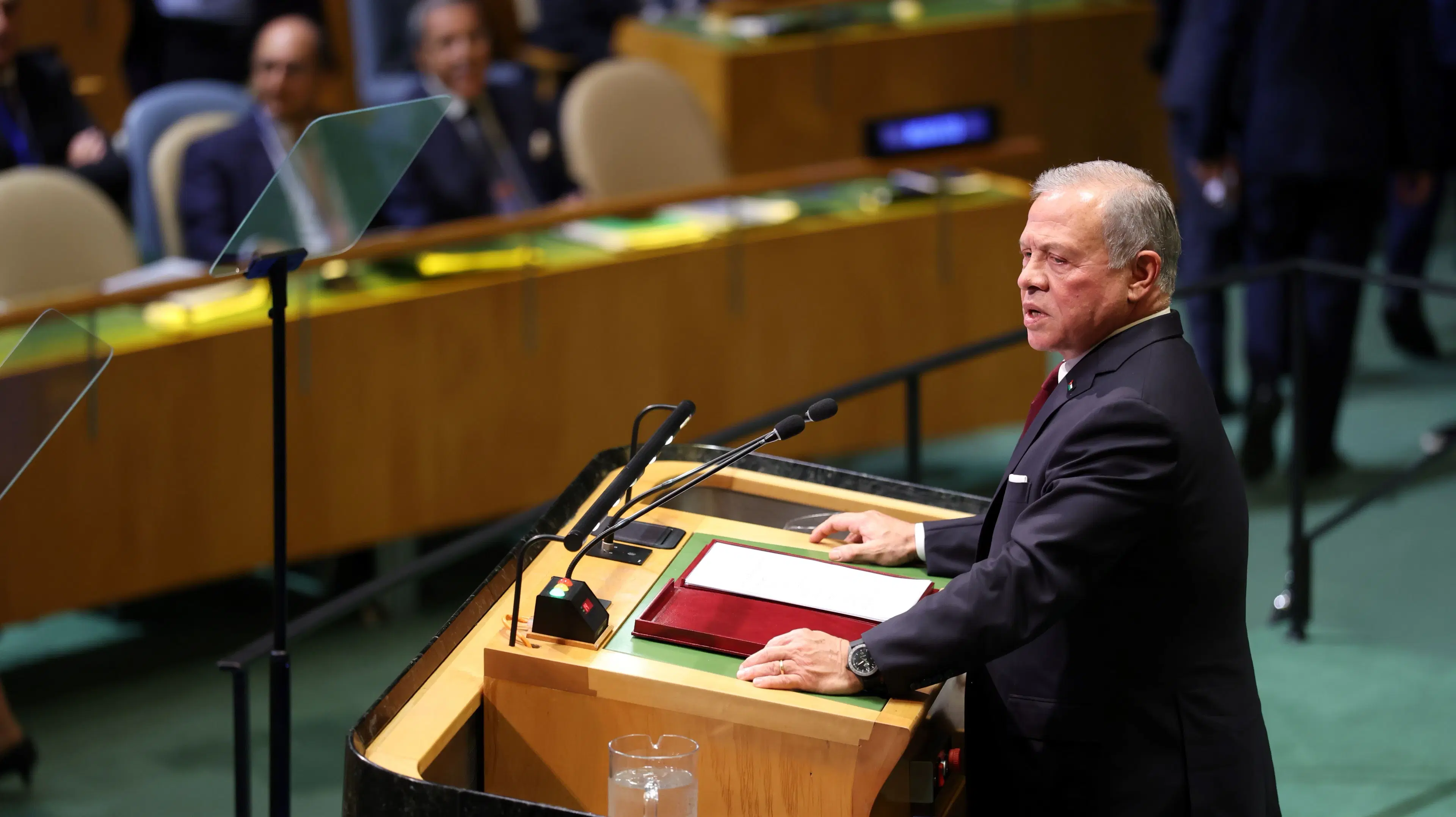
It explained that the importance of the speech lies in placing regional developments in their broader context, amid the widening circle of conflicts and the overlap of their security, economic, and humanitarian repercussions, which makes continuing to deal with them as temporary crises a matter that exacerbates risks and threatens regional and international stability.
It pointed out that the speech contained strict messages of utmost importance to the West and the international community, that the state that has been accustomed to diplomacy, dialogue, and the pursuit of peace cannot accept what Israel is doing to threaten regional and international security and the stability of countries, describing it with multiple descriptions for committing war crimes, and that it is not a democratic state in addition to its expansionist settlement policy, and attempts to impose a fait accompli, and that this entity will not change and its policy will not change.
The Council appreciated what the speech contained, which no one has spoken in such a language, and through which it calls for imposing sanctions on Israel, from emphasizing the seriousness of the ongoing war in Gaza, and what the Palestinian people are subjected to in terms of killing, destruction, displacement, and attempts to impose a new reality, alongside what the West Bank is witnessing in terms of policies of displacement, settlement, and seizure of lands.
The Council affirmed that the continuation of violations against the Palestinian people, with the absence of effective accountability, and impunity, places the international system before a historic responsibility, especially in light of the international community's possession of political, economic, and diplomatic tools capable of influencing, stopping violations, and protecting civilians.
The Syndicate Council stressed the importance of what His Majesty the King's speech included regarding the protection of truth and human rights, and his affirmation that journalists in conflict areas must be able to perform their professional duty without targeting, intimidation, or restriction, and that the protection of journalists and media freedom is a fundamental part of protecting the right of peoples to knowledge.
In this context, the Council renewed its support for His Majesty the King's positions and for the Jordanian role in defending the Palestinian cause, the longest in history, and for the steadfastness of the Palestinian people, and for the Hashemite custodianship of Islamic and Christian holy sites in Jerusalem, affirming the importance of continuing Jordanian political and diplomatic efforts to protect these constants.
It stressed that His Majesty the King wanted to point out the international community's disregard for what is happening in the region and the failure to deal fairly with all crises in the world with the same perspective, and that resolving the Palestinian issue is the basis for regional and global stability, and the necessity of not ignoring what is happening in southern Syria from Israeli attempts to impose a fait accompli policy, and threatening the security and stability of the region.
The Council affirmed that His Majesty the King's speech carried a clear message to the international community of the need to move from crisis management to addressing their causes, and from being content with recording positions to taking practical steps that protect human beings, enforce respect for international law, and prevent the continuation of the policy of imposing a fait accompli.