The government approves measures to address port and supply chain challenges
Amman3 min read
Share
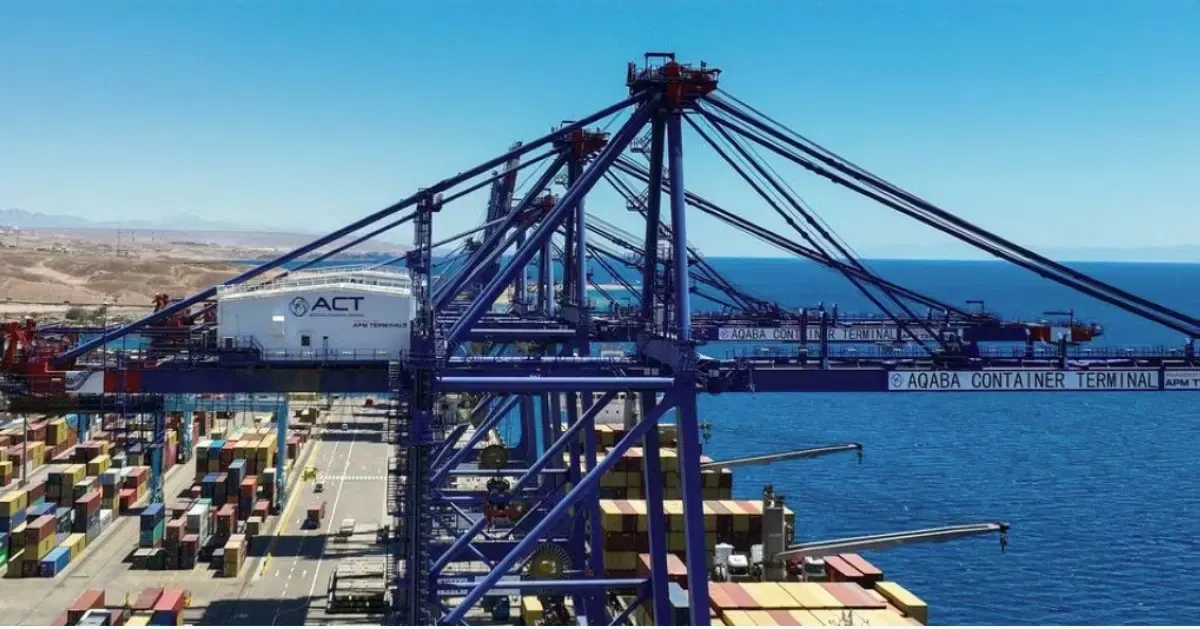
The Council of Ministers, in its meeting held on Wednesday under the chairmanship of Prime Minister Jafar Hassan, approved a number of measures to address the operational challenges facing the port system and supply chains in the Kingdom.
The measures included increasing the grace period for national exports at the Aqaba Container Port from 7 days to 14 days, for a period of 6 months, starting from the date of issuance.
The measures also included exempting taxpayers from paying a fee of 450 dinars for the destruction of goods per ton or part thereof, making the amount collected 50 dinars per ton or part thereof, in coordination with the Ministry of Finance for a period of three months, starting from the date of issuance, and according to the conditions specified by the Council of Ministers.
These measures are a continuation of previous actions taken by the government to increase capacity and flexibility, such as expanding storage yards and logistics centers, developing supporting infrastructure and logistics services, and preparing alternative routes such as the multi-modal sea and land transport system; to ensure flexibility and speed, alongside speeding up customs clearance procedures, reducing the duration of goods stay, transferring part of the clearance to the Amman Customs, and exempting transit flights operating on border crossings from the number of flights in use, for a period of three months.
They also included increasing the number of daily trips allowed for container trucks to 9 trips, allowing technically equipped trucks that meet general safety requirements to carry two standard 20-foot containers per truck, giving priority in handling, clearance, and exit to national food and imports intended for the local market and national exports, and other procedures.
The decision comes within the framework of the government's efforts to enhance the readiness of Aqaba ports and the transport and logistics system in the face of the repercussions of regional circumstances on shipping operations and supply chains, speeding up clearance and handling procedures, increasing capacity, providing alternative supply routes, and supporting national exports; in order to maintain the flow of goods into the Kingdom, and reduce the costs of delay on the consumer and economic sectors.
All these measures directly benefit citizens and the national economy, by maintaining the regular flow of goods to the markets, reducing waiting periods, and limiting additional costs resulting from delays, alongside supporting national exports and trade movement; thereby enhancing the availability of goods needed by citizens, and increasing the efficiency and reliability of Aqaba Port as the main economic gateway for the Kingdom and a key hub for regional trade movement.
The measures taken by the government over the past period have achieved tangible results; the average stay of transit containers in the port decreased from about 15 days to about 12 days, and the average stay of local incoming containers was about 8 days, while the daily capacity of container exit gates increased from about 900 to 1200 containers; which contributed to relieving pressure on the port and the arrival of goods, especially food, to local markets faster and more regularly.