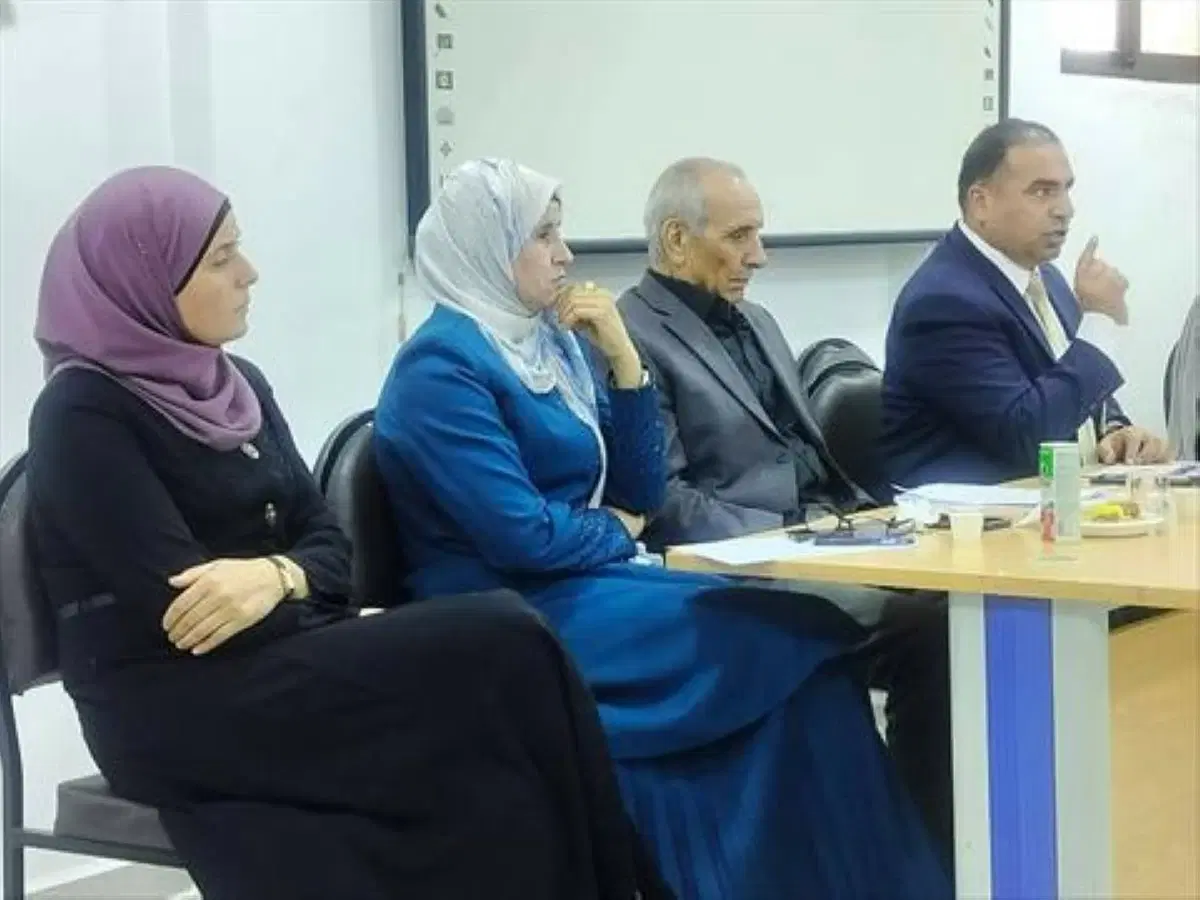
Al-Jaafra said that school administrations need continuous support and follow-up to enable them to perform their duties efficiently, noting the importance of addressing the administrative, financial, and service needs of schools, and dealing with them according to a clear methodology that ensures directing resources and capabilities towards the priorities that have the most impact on the educational environment.
She added that the Directorate is keen to strengthen communication channels with schools and educational development councils, considering them an active partner in identifying challenges and proposing suggestions, confirming that developing the school environment is a participatory responsibility that requires the integration of roles between the educational administration, schools, and the local community.
For his part, the Director of Educational and Technical Affairs, Muhammad Naji Al-Saraireh, confirmed that the meeting comes out of the importance of basing educational development plans on the reality of the field and the needs of schools, and that educational priorities should be built on realistic observations and suggestions emanating from field workers and members of the educational development councils.
Al-Saraireh pointed out that following up on the needs of schools is not limited to material and service aspects, but includes various aspects related to the educational process, including supporting teachers, developing educational practices, improving the school environment, and enhancing programs and activities that contribute to raising the level of achievement and developing the personality of students.
He explained that the Directorate is working to follow up on the issues and suggestions raised by the Educational Development Council, each according to their specialization, and in accordance with the available systems, instructions, and capabilities, emphasizing the importance of continuing dialogue and communication between the Directorate and the educational field to reach practical solutions that can be implemented, and to improve the level of educational services provided to students.
The meeting discussed a number of issues and topics related to the needs of schools, the most prominent challenges they face, as well as ways to improve the educational and administrative environment, and enhance communication and follow-up mechanisms between schools, the Directorate, and the Educational Development Council.
The Council emphasized the importance of continuing these meetings as a platform for direct dialogue about the reality of schools and their needs, and enhancing its role as a link between the educational field, the local community, and the educational administration, which contributes to formulating practical solutions more closely linked to the actual needs of schools, and supporting efforts aimed at advancing the educational and pedagogical process.